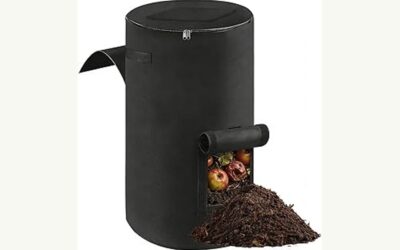



Att börja med en maskkompost kan kännas skrämmande första gången: du behöver en behållare, en rutin för matrester, en plan för strömaterial och ett sätt att skörda färdig vermikompost utan att skapa lukt eller stök. Den här guiden om hur du gör med en maskkompostbehållare är skriven för husägare, nybörjare inom odling, balkongodlare, äldre trädgårdsentusiaster som vill ha enklare hantering och alla som försöker omvandla köksavfall till användbar kompost på en begränsad yta.
Vi jämförde den medföljande listan med 17 produkter och granskade sedan varje produkt utifrån dess lämplighet för maskkompostering, vermikompostering och kategorin Kompost, jord och täckmaterial. De mest relevanta alternativen omfattar stapelbara maskkomposter, maskkomposter för nedgrävning i trädgården, en maskkompostbehållare i tyg samt nybörjarböcker som förklarar hur man sätter upp och sköter en maskkompost. En vanlig komposttrumma för utomhusbruk behandlades inte som en rekommendation för maskkompostering eftersom de medföljande uppgifterna beskriver varmkompostering genom tumling snarare än vermikompostering.
Pris, åtkomst, ledtrådar om kapacitet, utformning med brickor eller för nedgrävning, enkel skörd, placering och vägledning för nybörjare är viktigare än överdriven marknadsföring. Det angivna prisintervallet sträcker sig från $9.95 – $139.00, så rätt val beror på om du behöver en billig introduktionsresurs, en liten kompostbehållare för odlingsbädden eller ett mer komplett maskkomposteringssystem för hemmet.
Worm Factory 360 Vermicomposting System for Compact Food-Waste Recycling Urban Worm Bag Version 2 Worm Composting Bin for Continuous, Easy Casting Harvest VermiHut Plus 5-Tray Worm Compost Bin for Compact Indoor and Outdoor Food Scrap Recycling JupiterForce 80-Gallon Compost Bin, Ventilated Outdoor Composter for Kitchen Scraps and Yard Waste Prices and availability can change. We may earn a commission from qualifying purchases.


Vissa produktuppgifter nedan är fortfarande på engelska; översättningen granskas.
Pros
- Compact four-tray format suits homes, patios, and other areas where floor space is limited.
- Nested trays are intended to make ongoing composting and finished-compost removal more organized.
- Clear setup process can be approachable for gardeners new to vermicomposting.
Cons
- It requires worms, bedding, and regular food-scrap management, so it is not a passive storage container.
- Gardeners needing a larger-capacity system may find the four-tray, compact format less suitable for higher food-waste volumes.
The Worm Factory 360 is a four-tray vermicomposting system for recycling household food scraps with the help of composting worms. It is suited to homeowners, beginner gardeners, and small-space growers who want an organized way to handle food waste without dedicating much floor space to a composting setup.
Its main practical benefit is the nested-tray arrangement. As worms process material, the feature design encourages them to move upward, leaving more finished compost in the lower trays for removal. This can make the composting cycle easier to organize than a single open container that must be emptied and mixed.
The system is listed at 17.95 by 17.95 by 14.95 inches and weighs 11 pounds. The setup instructions call for assembling the stand, placing the first tray, adding bedding, food scraps, and worms, then continuing to add materials to the top tray. Its black plastic construction and compact shape may fit conveniently in a designated home or garden area.
For backyard and patio use, the four-tray layout provides a structured way to process kitchen food scraps while keeping active and finished material in separate levels. The customizable tray approach may also help households adjust the setup to their available space and food-waste routine, rather than requiring a larger composting unit from the start.
This system requires ongoing attention to bedding, worms, and food scraps, so it may be less suitable for anyone seeking a maintenance-free waste container. Based on the listed features, it is a practical choice for gardeners who want compact, organized vermicomposting at home, while those with unusually high food-waste volumes may prefer a larger-capacity option.
Best For / Avoid If
Best for buyers prioritizing
- Compact four-tray format suits homes, patios, and other areas where floor space is limited.
- Nested trays are intended to make ongoing composting and finished-compost removal more organized.
- Clear setup process can be approachable for gardeners new to vermicomposting.
Consider another option if
- It requires worms, bedding, and regular food-scrap management, so it is not a passive storage container.
- Gardeners needing a larger-capacity system may find the four-tray, compact format less suitable for higher food-waste volumes.
Pros
- Harvesting from the bottom is simpler than managing multiple worm-composting trays.
- The continuous-flow format allows feeding and harvesting as separate routine tasks.
- Tool-free assembly and adjustable opening make the bin straightforward to set up and manage.
Cons
- Its approximately 27-inch square footprint and nearly 32-inch height may be too large for very limited indoor or balcony spaces.
- Gardeners who prefer a rigid bin or need specific capacity measurements may want a different composting setup.
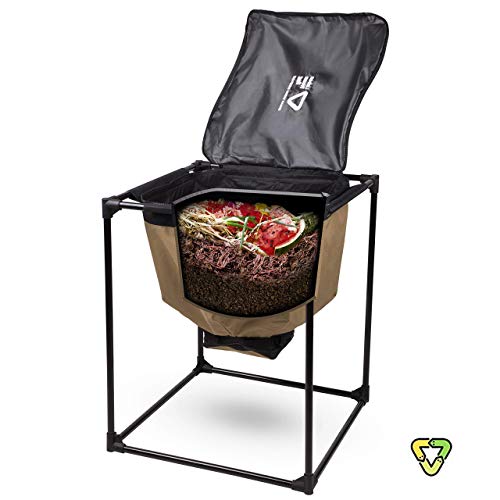
The Urban Worm Bag Version 2 is a fabric worm composting bin for gardeners who want to process organic material and collect worm castings in a continuous-flow system. It is best suited to homeowners and small-space gardeners with a dedicated patio, utility area, or backyard location that can accommodate its listed dimensions.
Its main practical benefit is the bottom-harvest design. Gardeners feed material through the top and remove finished castings from the bottom, without sorting worms from a series of trays. The design is intended to let the worm population remain in place while harvesting takes place.
The bin uses 900D Oxford fabric and includes a detachable opening that can be kept open or closed to help control moisture. Based on the listed specifications, the brown and black bin measures 26.75 by 26.75 by 31.75 inches and weighs about 10.6 pounds, so placement should allow enough room for access to both the top and bottom.
Assembly is described as taking less than five minutes and requiring no tools, glue, or complicated instructions. The top-feed and bottom-collection arrangement could be useful for a gardener who wants a repeatable composting routine without lifting or managing separate trays.
The product information does not provide a numeric capacity, moisture range, weather-suitability statement, or maintenance schedule. Gardeners will need to monitor conditions themselves and choose a suitable location, while those needing a compact rigid container or clearly measured capacity may prefer another option.
This bin is a reasonable fit for users who value easy casting access, flexible moisture management, and minimal assembly. It may be less suitable for very tight spaces or for gardeners who prefer a conventional stackable worm-bin format.
Best For / Avoid If
Best for buyers prioritizing
- Harvesting from the bottom is simpler than managing multiple worm-composting trays.
- The continuous-flow format allows feeding and harvesting as separate routine tasks.
- Tool-free assembly and adjustable opening make the bin straightforward to set up and manage.
Consider another option if
- Its approximately 27-inch square footprint and nearly 32-inch height may be too large for very limited indoor or balcony spaces.
- Gardeners who prefer a rigid bin or need specific capacity measurements may want a different composting setup.
Pros
- Compact vertical layout can make vermicomposting more practical where floor space is limited.
- Moisture and airflow features address two important routine needs for worm composting.
- Integrated liquid collection base simplifies the lower section of the bin and avoids extra base assembly.
Cons
- Its 33-inch height may be less convenient for gardeners who prefer a low-profile composting container or have limited vertical clearance.
- Worm composting still requires suitable food scraps, moisture management, and routine care, so it may not suit gardeners seeking a maintenance-free waste solution.
- The listed specifications do not provide tray capacity or detailed placement guidance, so gardeners should confirm that the dimensions fit their intended location.
The VermiHut Plus is a five-tray worm composting bin for recycling food scraps into organic compost for gardening. Its vertical format and 17 by 17 inch footprint make it particularly relevant for homeowners, patio gardeners, and small-space growers who want a dedicated vermicomposting system without using a broad floor area.
The feature set focuses on maintaining a suitable worm habitat. The built-in V-Board and coconut mat are designed to support airflow and moisture balance, while the product information indicates that composting worms help consume food scraps and reduce odors. These features may make routine vermicomposting more manageable when the bin is supplied with appropriate organic material and kept under suitable conditions.
The system stands 33 inches tall and includes a worm saver tray, an integrated liquid collection base, and protective base feet. The worm saver tray helps prevent worms and compost from dropping into the liquid collection area. Because the collection tray and base are molded as one piece, the lower section is designed to avoid extra assembly and provide a dedicated place to collect excess liquid.
For backyard or patio use, the dark green bin can serve as a compact food-scrap recycling station near a gardening area, utility space, or other suitable indoor or outdoor location. The vertical five-tray arrangement may be useful for gardeners who want to work with stacked composting layers rather than a traditional ground-level pile.
Worm composting is not completely hands-off. Gardeners should monitor moisture, provide appropriate food scraps, and keep the system in a location that accommodates its 33-inch height. The base feet can be used with water to help discourage ants, but placement and routine observation remain important. Overall, this bin is a sensible option for small-space gardeners who want a structured vermicomposting system, while those needing a larger-capacity or lower-profile container may prefer a different design.
Best For / Avoid If
Best for buyers prioritizing
- Compact vertical layout can make vermicomposting more practical where floor space is limited.
- Moisture and airflow features address two important routine needs for worm composting.
- Integrated liquid collection base simplifies the lower section of the bin and avoids extra base assembly.
Consider another option if
- Its 33-inch height may be less convenient for gardeners who prefer a low-profile composting container or have limited vertical clearance.
- Worm composting still requires suitable food scraps, moisture management, and routine care, so it may not suit gardeners seeking a maintenance-free waste solution.
- The listed specifications do not provide tray capacity or detailed placement guidance, so gardeners should confirm that the dimensions fit their intended location.
Pros
- Generous 80-gallon capacity for regular household and yard waste.
- Bottom access door can make harvesting compost more convenient.
- Lightweight, tool-free assembly is suitable for many home gardeners.
Cons
- It does not include a base and is intended to sit directly on the ground.
- Its roughly 23.2 by 22.4 inch footprint and 31.9 inch height require a dedicated outdoor location.
- Gardeners who want adjustable aeration, tumbling, or a raised working height may prefer a different composting design.
The JupiterForce 80-gallon compost bin is designed for turning household and yard organic waste into compost outdoors. Its capacity and straightforward layout make it a practical fit for homeowners, beginner composters, and gardeners with enough ground space for a dedicated bin.
The product information highlights four ventilation openings on each side to support air circulation during decomposition. The large chamber can hold kitchen scraps, leaves, grass clippings, and similar organic material, although successful composting still depends on using suitable inputs and maintaining an appropriate mix.
New material is added through the top lid, while a sliding door at the bottom provides a separate route for collecting compost. The closed lid may help discourage small animals from entering. At 23.2 by 22.4 by 31.9 inches and 11.9 pounds, the bin is relatively lightweight before filling and does not require tools for its four-step assembly.
This composter could work well beside a backyard garden, near a raised-bed area, or in another outdoor spot where kitchen and yard waste can be added regularly. Its listed frost and rain resistance supports outdoor use throughout the year, and the black finish provides a simple, unobtrusive appearance.
The main setup consideration is that no base is included, so the bin must be placed directly on the ground. Choose a stable location with enough clearance to open the lid and use the bottom door, and follow the assembly instructions before adding material. It is a sensible choice for gardeners wanting a spacious, simple stationary composter, while those seeking a raised, tumbling, or more adjustable system should compare other designs.
Best For / Avoid If
Best for buyers prioritizing
- Generous 80-gallon capacity for regular household and yard waste.
- Bottom access door can make harvesting compost more convenient.
- Lightweight, tool-free assembly is suitable for many home gardeners.
Consider another option if
- It does not include a base and is intended to sit directly on the ground.
- Its roughly 23.2 by 22.4 inch footprint and 31.9 inch height require a dedicated outdoor location.
- Gardeners who want adjustable aeration, tumbling, or a raised working height may prefer a different composting design.

Pros
- Compact footprint at 23 inches long, 23.5 inches wide, and 29.5 inches high makes it easier to place than many larger compost bins.
- Tumbler format reduces the need for digging into a compost pile with a shovel or garden fork.
- Single sliding door keeps loading and unloading straightforward for new composters.
- Product information lists UV-protected plastic, tight seals, and a galvanized steel base for an outdoor composting setup.
Cons
- Single-chamber design means you may need to stop adding fresh scraps while a batch finishes, so heavy compost users may prefer a dual-chamber model.
- Several reviewers mention assembly can be tricky, especially snapping the side pieces and connectors together.
- Aeration openings and compost moisture may make it less suitable for clean patio surfaces unless placed where drips or small particles are acceptable.
The Miracle-Gro 18.5-gallon single chamber compost tumbler is built for homeowners who want a contained way to compost kitchen scraps and garden waste outdoors. It is especially relevant for beginners, small-yard gardeners, and raised-bed growers who do not want to manage an open compost pile.
The main gardening benefit is easier mixing. Instead of turning a pile with a fork, the product information indicates that you spin the tumbler every few days, while internal mixing bars and aeration support the breakdown process. Miracle-Gro lists a 4 to 6 week composting timeline, though real results will depend on the balance of greens and browns, moisture, temperature, and how consistently the bin is turned.
This model has a 70-liter capacity and measures 23 inches long, 23.5 inches wide, and 29.5 inches high, so it is more compact than many full-size compost bins. The listed design includes one sliding door, a hexagonal shape, side-locking mechanisms, tight seals, UV-protected BPA-free food-grade plastic, and a galvanized steel base. Garden gloves are also included.
In a typical backyard, this tumbler can sit near vegetable beds, flower borders, or a utility area where scraps are easy to add and finished compost is close to where it will be used. For small spaces, it offers a more orderly option than an open pile, but it is still best placed on flat ground or another surface where occasional moisture or small particles will not be a problem.
There are a few practical cautions. Reviewers commonly mention that assembly can require patience, especially aligning and snapping plastic parts together, so it may not be ideal for gardeners who struggle with hand strength or dexterity unless help is available. Like any compost system, it also needs the right mix of materials and regular turning to avoid slow decomposition or odors.
Overall, this is a sensible choice for gardeners who want a compact starter tumbler from a familiar garden brand and who produce a moderate amount of compostable waste. Gardeners with larger households, frequent yard cleanup, or a desire to start a new batch while another finishes may want to consider a larger or dual-chamber composter.
Best For / Avoid If
Best for buyers prioritizing
- Compact footprint at 23 inches long, 23.5 inches wide, and 29.5 inches high makes it easier to place than many larger compost bins.
- Tumbler format reduces the need for digging into a compost pile with a shovel or garden fork.
- Single sliding door keeps loading and unloading straightforward for new composters.
Consider another option if
- Single-chamber design means you may need to stop adding fresh scraps while a batch finishes, so heavy compost users may prefer a dual-chamber model.
- Several reviewers mention assembly can be tricky, especially snapping the side pieces and connectors together.
- Aeration openings and compost moisture may make it less suitable for clean patio surfaces unless placed where drips or small particles are acceptable.

Pros
- Compact underground format is useful where a full-size compost bin would not fit.
- Ventilation features are intended to support airflow and help manage heat inside the bin.
- Locking lid design helps protect the opening from rain while allowing gas to escape.
Cons
- The listed dimensions indicate limited capacity, so households producing substantial food waste may need a larger composting system.
- Installation requires digging a suitable hole and choosing a location that can remain accessible for adding organic waste.
- The product information does not specify included worm quantities, composting capacity, or detailed guidance for preparing the bin.
The Bumaeu Underground Worm Farm is a small vermicomposting bin for outdoor garden use. It is intended to receive kitchen food waste underground, where organic material can contribute to a localized composting setup. Its compact format is best suited to homeowners, beginner gardeners, and small-space growers who want an alternative to a larger above-ground compost bin.
The feature set focuses on ventilation and outdoor usability. A breathable valve and multiple 360-degree inlets are designed to improve airflow and heat dissipation, which may help maintain a more suitable environment for the composting process. The product information also describes the system as a way to turn organic waste into nutrient-rich garden material, although the actual results will depend on setup and ongoing care.
Based on the listed specifications, the bin measures 4.33 x 4.33 x 10.24 inches and weighs about 0.76 pounds. Installation involves digging a hole, placing the bin underground, adding organic waste, and fitting the lid. The safety-lock cover is designed to allow gas to discharge while helping prevent rainwater from entering. No material, internal capacity, or additional accessories are specified.
This design may work well beside garden plants, in a small backyard growing area, or near a raised bed where an underground composting point is convenient. The listed product information suggests a soil-improvement radius of about 3 feet, but gardeners should treat that as a stated design claim rather than a guaranteed result. The small footprint also makes it more practical than a bulky compost container for space-limited areas.
Because the bin is compact, it may be less suitable for households generating large amounts of food waste or gardeners seeking substantial quantities of finished compost. Choose an accessible installation site, follow appropriate composting practices, and avoid assuming that all kitchen waste is suitable without checking the product guidance. Overall, it is a simple, space-conscious option for localized outdoor vermicomposting, while gardeners needing higher capacity or more detailed control may prefer a larger system.
Best For / Avoid If
Best for buyers prioritizing
- Compact underground format is useful where a full-size compost bin would not fit.
- Ventilation features are intended to support airflow and help manage heat inside the bin.
- Locking lid design helps protect the opening from rain while allowing gas to escape.
Consider another option if
- The listed dimensions indicate limited capacity, so households producing substantial food waste may need a larger composting system.
- Installation requires digging a suitable hole and choosing a location that can remain accessible for adding organic waste.
- The product information does not specify included worm quantities, composting capacity, or detailed guidance for preparing the bin.

Pros
- Compact dimensions are a practical fit for garden beds and smaller outdoor spaces.
- Includes two composters for a more flexible rotation between active use and maintenance.
- Accepts common organic inputs such as kitchen scraps, paper, and leaves.
- Removable lids and ventilation holes simplify access and airflow management.
Cons
- The 8L capacity may be less suitable for households producing large amounts of compostable waste.
- Installation requires digging a hole and choosing a suitable in-ground location.
- Earthworms are not included, so they must be sourced separately before vermicomposting can begin.
The TOP XIAN 2-Pack Inground Worm Composter is designed for vermicomposting in garden beds or other outdoor soil locations. It is aimed at beginners, eco-conscious households, and gardeners who want to recycle kitchen scraps, paper, and leaves without setting up a large freestanding compost bin.
Based on the listed specifications, each composter has an 8L capacity and measures 9.5 by 9.5 by 10.8 inches. The compact format can work well where space is limited, while the in-ground placement keeps the composting activity located close to the area where the finished material may be used.
The feature set is straightforward. Gardeners dig a hole, place the bin, add suitable organic material, and use the removable lid for access. The 360-degree ventilation holes are intended to provide airflow, and the PP construction is described as sturdy for outdoor use. No complex assembly is listed.
For a small backyard or raised-bed setup, one bin could receive fresh material while the second is maintained or used in another suitable location. The two-bin arrangement may also help gardeners organize ongoing composting, although the listed 8L size is better suited to modest household or garden waste volumes than to large-scale composting.
Gardeners should plan the installation location carefully because the bins are intended to be buried and may require digging for placement. Earthworms are not included, so they must be obtained separately. This set is a sensible option for beginners who want compact in-ground vermicomposting, while gardeners with higher waste volumes or no suitable digging area may prefer a larger above-ground system.
Best For / Avoid If
Best for buyers prioritizing
- Compact dimensions are a practical fit for garden beds and smaller outdoor spaces.
- Includes two composters for a more flexible rotation between active use and maintenance.
- Accepts common organic inputs such as kitchen scraps, paper, and leaves.
Consider another option if
- The 8L capacity may be less suitable for households producing large amounts of compostable waste.
- Installation requires digging a hole and choosing a suitable in-ground location.
- Earthworms are not included, so they must be sourced separately before vermicomposting can begin.

Pros
- Stackable tray system supports continuous vermicomposting and staged harvesting.
- Included bedding material and maintenance tools reduce the need to gather setup accessories separately.
- Moisture, light, and pH measurements can help gardeners monitor basic conditions during routine care.
Cons
- Composting worms are not included, so buyers must source suitable worms separately.
- The bin needs protection from direct sunlight, heavy rain, and freezing temperatures, which limits fully exposed outdoor placement.
- Gardeners needing a large horizontal composting area or a system requiring little routine moisture management may prefer a different design.
The JupiterForce 5-Tray Worm Compost Bin is designed for vermicomposting, using stacked working trays to process organic material and produce worm castings. It suits beginners, homeowners, and small-space gardeners who want an indoor or outdoor setup in a protected location rather than a traditional open compost pile.
Its five removable trays provide a listed total capacity of 72.5 liters, or 19.2 gallons. Gardeners can begin with one tray and add levels as material builds, while the stacked arrangement is intended to let worms move between layers and make lower-level harvesting more manageable.
Each working tray has a perforated base to support airflow and drainage. A bottom reservoir collects excess moisture, and the built-in spigot provides a way to drain it without tipping the composter. The raised four-leg base also leaves clearance for the included collection tray. The listed tray dimensions are approximately 15.4 by 15.4 by 5 inches, while the overall dimensions vary across the supplied product information, so buyers should confirm the current measurements before assigning a tight location.
The vertical format can work well in a garage, basement, utility room, covered balcony, porch, or garden shed where floor space is limited. The included coco coir helps with bedding preparation, while the soil meter checks moisture, light, and pH. A measuring cup, hand cultivator, scraper, and gardening gloves with digging claws support basic feeding and maintenance tasks.
This system still requires regular attention to bedding moisture, drainage, and suitable placement. It should be protected from direct sunlight, heavy rain, and freezing temperatures, and worms must be purchased separately. Based on the listed features, it is a practical fit for gardeners seeking a compact, expandable worm farm, while those wanting a fully exposed outdoor bin or a composting system with minimal ongoing monitoring may want another option.
Best For / Avoid If
Best for buyers prioritizing
- Stackable tray system supports continuous vermicomposting and staged harvesting.
- Included bedding material and maintenance tools reduce the need to gather setup accessories separately.
- Moisture, light, and pH measurements can help gardeners monitor basic conditions during routine care.
Consider another option if
- Composting worms are not included, so buyers must source suitable worms separately.
- The bin needs protection from direct sunlight, heavy rain, and freezing temperatures, which limits fully exposed outdoor placement.
- Gardeners needing a large horizontal composting area or a system requiring little routine moisture management may prefer a different design.
Praktisk köpguide: så gör du med en maskkompostbehållare
Välj rätt typ av maskkompost först
Den medföljande produktuppsättningen innehåller flera olika lösningar. Stapelbara system med brickor, som The Original VermiHut® Plus 5-Tray Worm Compost Bin, Worm Factory® 360 Black US Made Composting System och VIVOSUN 3-Layer Worm Compost Bin, riktar sig till personer som vill ha en avgränsad maskodling för återvinning av matavfall hemma. Dessa system är vanligtvis enklare att placera i ett garage, förråd, på en uteplats eller i ett skyddat hörn av trädgården än en öppen komposthög.
Alternativ för nedgrävning, däribland 2-Pack Inground Worm Composter och Underground Worm Farm, Garden Mini vermicomposting bin, är avsedda för utomhusodling med köksavfall som råvara. De passar bättre när du redan odlar i bäddar eller vill ha maskarnas aktivitet nära planteringsområdet. Om du även planerar utformningen av odlingsbäddarna kan avsnittet Odlingsbäddar och planteringskärl hjälpa dig att tänka igenom utrymme och arbetshöjd.
Anpassa kapacitet och storlek efter hushållet
Endast vissa av de medföljande produkterna anger storlek eller kapacitet. VIVOSUN 3-Layer Worm Compost Bin anges som en maskkompost med 30 L volym. 2-Pack Inground Worm Composter anges till 9.5×9.5×10.8 inches, medan Underground Worm Farm anges till 10.2×4.3×4.3 inches. Dessa uppgifter hjälper dig att bedöma om enheten passar i en liten odlingsbädd, på en uteplats eller i en rutin där den flyttas mellan inne och ute.
För en nybörjare är mindre ofta enklare att hantera, eftersom du kan lära dig hur mycket matavfall maskarna klarar utan att överbelasta behållaren. Större system, som modeller med flera brickor eller kontinuerligt flöde, kan vara mer användbara när du har en regelbunden rutin för köksrester och en plats där behållaren är lättillgänglig.
Tänk på åtkomsten vid skörd innan du köper
Vid skörd av färdig maskkompost spelar behållarens konstruktion stor roll. Urban Worm Bag Worm Composting Bin Version 2 beskrivs med en lättskött skördeutformning och en helt avtagbar, dragkedjefri botten. Den uppsättningen kan passa trädgårdsentusiaster som vill ta ut färdigt material underifrån i stället för att sortera genom brickor.
Stapelbara brickor, som de som anges för The Original VermiHut® Plus 5-Tray Worm Compost Bin, Worm Factory® 360 och VIVOSUN 3-Layer Worm Compost Bin, ger nybörjare en tydlig modulär lösning. Nedgrävda komposter fungerar annorlunda: de placeras direkt i trädgårdsjorden eller odlingsbäddarna, så åtkomsten handlar mer om att lyfta locket och mata systemet än om att ta ut en separat sats med maskgödsel.
Välj böcker när du behöver instruktioner, inte bara en behållare
Om sökfrasen så gör du med en maskkompostbehållare beskriver ditt verkliga behov kan en handbok vara lika värdefull som själva behållaren. Worms Eat My Garbage, 35th Anniversary Edition beskrivs specifikt som en bok som förklarar hur man sätter upp och sköter ett maskkomposteringssystem, komposterar matavfall, producerar gödsel för krukväxter och trädgård samt lär barn och familj. How To Start A Worm Bin är också direkt relevant för nybörjare som vill ha en fokuserad introduktion.
Composting and Worm Farming: All You Need to Know About Creating an Organic Compost, Vermiculture, Vermicomposting, and Making Worm Bins är en annan relevant kunskapsresurs. Böcker är särskilt användbara om du planerar att bygga din egen behållare eller vill förstå den löpande skötseln innan du köper ett komplett maskkomposteringssystem.
Planera placeringen för komfort, åtkomst och regelbunden matning
En maskkompost fungerar bäst när den är tillräckligt lätt att använda regelbundet. Äldre trädgårdsentusiaster och personer med begränsad rörlighet bör tänka på att böja sig, lyfta lock, flytta brickor och bära matrester innan de väljer modell. Ett upphöjt, stapelbart system eller ett system i påsform kan vara bekvämare än en nedgrävd enhet om det är svårt att knäböja eller sträcka sig in i bäddar.
Odling på liten yta kräver att du funderar på var behållaren ska stå när den matas, kontrolleras eller skördas. Ett kompakt system med brickor kan vara enklare att placera i ett förråd eller annat praktiskt utrymme, medan nedgrävda komposter passar bäst när du har bäddar som är lätta att nå från köket eller trädgårdsgången.
Undvik vanliga nybörjarmisstag
Det största köpmisstaget är att välja behållare innan du bestämt var den ska stå och hur du ska använda den varje vecka. Ett stort system är inte automatiskt bättre om du bara producerar små mängder matavfall, och en liten nedgrävd enhet kan kännas begränsande om du lagar mycket mat och vill behandla matrester regelbundet.
Ett annat misstag är att blanda ihop vanliga komposttrummor med maskkomposter. Miracle-Gro Compost Tumbler Single Chamber är en komposttrumma med kapaciteten 18.5-gallon / 70-liter, skjutlucka, luftningssystem, invändiga blandningsstavar, galvaniserad stålbas och roterande konstruktion för underhåll, men de medföljande uppgifterna beskriver den inte som ett maskkomposteringssystem. Den kan vara relevant för allmän kompostering, men är inte det mest direkta svaret på hur du gör med en maskkompostbehållare.
Överväg underhåll och förvaring
Vid vermikompostering handlar underhållet främst om regelbunden matning, kontroll av fukten, att hålla behållaren lättillgänglig och att skörda färdigt material när systemet är redo. Följ tillverkarens anvisningar för den specifika behållaren, särskilt gällande montering, brickornas ordning, lockets användning, dränering och eventuell vägledning om placering inne eller ute.
Förvara extra strömaterial, små verktyg och behållare för matrester på ett organiserat sätt så att rutinen förblir enkel. Om trädgårdsförvaring är en utmaning har Dove Creek Gardens även råd om hur du organiserar ett litet trädgårdsskjul, vilket kan hjälpa dig att planera förvaring av kompostmaterial och säsongsverktyg.
Jämför de rekommenderade alternativen efter användningsområde
| Användningsområde | Relevanta medföljande alternativ | Varför det passar |
|---|---|---|
| Lärande för nybörjare | Worms Eat My Garbage, 35th Anniversary Edition; How To Start A Worm Bin; Composting and Worm Farming | Det här är böcker med fokus på maskkompostering, maskodling, vermikompostering samt att bygga eller sköta maskkomposter. |
| Stapelbart system för hemmet | The Original VermiHut® Plus 5-Tray Worm Compost Bin; Worm Factory® 360; VIVOSUN 3-Layer Worm Compost Bin | Produktnamnen beskriver brickbaserade system för maskkompostering och återvinning av matavfall. |
| Matning av odlingsbäddar | 2-Pack Inground Worm Composter; Underground Worm Farm, Garden Mini vermicomposting bin | Båda beskrivs för användning utomhus eller nedgrävda i trädgården med köksavfall som råvara. |
| Fokus på enkel skörd | Urban Worm Bag Worm Composting Bin Version 2 | Det medföljande namnet lyfter fram enkel skörd och en helt avtagbar, dragkedjefri botten. |
Metod och förtroende
Den här guiden bygger på undersökning och jämförelse av de medföljande produktuppgifterna, inte på fysiska tester. Vi granskade varje listning utifrån relevans för maskkompostering, maskkomposter, maskodling, vermikompostering och återvinning av matavfall i hemmaträdgården. Produkter som tydligt motsvarade uppgiften togs upp som giltiga alternativ.
Bedömningsfaktorerna omfattade behållartyp, angiven kapacitet eller mått när sådana uppgifter fanns, ledtrådar om åtkomst och skörd i produktnamnet, lämplighet för nybörjare, pris, betyg, antal recensioner och om produkten hjälper till med själva processen. Böckerna behölls i guiden eftersom sökordet handlar om hur man använder eller börjar med en maskkompost, och de medföljande titlarna tar direkt upp uppsättning, underhåll och kunskap om maskkomposter.
Under juli 2026 kontrollerade vi även kategoritillhörigheten. Miracle-Gro Compost Tumbler Single Chamber behandlades som en vanlig komposttrumma snarare än en maskkompost, eftersom den medföljande funktionslistan fokuserar på tumling, luftning, invändiga blandningsstavar och snabb kompostering, inte på maskar eller vermikompostering.
Slutliga rekommendationer
Bästa helhetsval: Worm Factory® 360 Black US Made Composting System for Recycling Food Waste at Home passar bra för trädgårdsentusiaster som vill ha ett komplett maskkomposteringssystem för hemmet. Det medföljande namnet lyfter fram 4 brickor, effektiv vermikompostering, en hållbar och utrymmeseffektiv konstruktion, enkel montering och ingen lukt, vilket gör den till ett av de mest direkt relevanta behållaralternativen på listan.
Bästa valet för nybörjare: Worms Eat My Garbage, 35th Anniversary Edition passar bäst om ditt främsta behov är att lära dig hur man gör med en maskkompostbehållare innan du investerar i ett system. Den medföljande titeln tar specifikt upp hur man sätter upp och sköter ett maskkomposteringssystem, komposterar matavfall, producerar gödsel för krukväxter och trädgård samt lär barn och familj.
Bästa valet för liten yta eller odlingsbädd: 2-Pack Inground Worm Composter är ett praktiskt alternativ för trädgårdsentusiaster som vill ha en maskkompost utomhus för odlingsbäddar och hemmabruk. För den som prioriterar åtkomst vid skörd är Urban Worm Bag Worm Composting Bin Version 2 också värd att överväga, eftersom det medföljande namnet betonar enkel skörd och en helt avtagbar, dragkedjefri botten.
Vanliga frågor
Vilket är det enklaste alternativet för nybörjare som vill lära sig hur man gör med en maskkompostbehållare?
Om du främst vill ha instruktioner kan du välja en nybörjarbok som Worms Eat My Garbage, 35th Anniversary Edition eller How To Start A Worm Bin. Om du vill ha en färdig behållare är ett brickbaserat system som Worm Factory® 360, The Original VermiHut® Plus 5-Tray Worm Compost Bin eller VIVOSUN 3-Layer Worm Compost Bin mer direkt utformat för vermikompostering än en vanlig komposttrumma.
Kan jag använda en vanlig komposttrumma som maskkompost?
Utgå inte från att en vanlig komposttrumma är en maskkompost om inte tillverkaren uttryckligen anger att den är avsedd för vermikompostering. De medföljande uppgifterna om Miracle-Gro Compost Tumbler beskriver en roterande komposttrumma med luftning och blandningsstavar, inte ett maskkomposteringssystem.
Vilken maskkompost passar en odlingsbädd eller liten trädgård?
2-Pack Inground Worm Composter och Underground Worm Farm, Garden Mini vermicomposting bin beskrivs tydligast för användning utomhus eller nedgrävda i trädgården. De angivna måtten kan hjälpa dig att avgöra om de passar i din bädd och fungerar utifrån dina behov av åtkomst.
Hur mycket bör jag lägga på en maskkompost när jag vill lära mig hur den sätts upp?
I de medföljande uppgifterna börjar relevanta böcker på $9.95, medan större maskkomposteringssystem kostar betydligt mer, upp till $139.00 i det angivna intervallet. Lägg mindre om du främst behöver instruktioner och mer om du vill ha ett särskilt behållarsystem med brickor eller enklare åtkomst vid skörd.
Passar maskkomposter för äldre trädgårdsentusiaster?
Det kan de göra, men det bästa valet beror på hur lätt det är att lyfta, böja sig och komma åt vid skörd. Ett system i bekväm arbetshöjd kan vara enklare än en nedgrävd kompost om det är svårt att knäböja eller sträcka sig in i bäddar.
Hur sköter jag en maskkompost på ett säkert sätt?
Följ tillverkarens anvisningar för montering, placering, matning, dränering och skörd. Överbelasta inte behållaren med matrester, placera systemet där du kan kontrollera det regelbundet och använd vägledningen i en särskild bok om vermikompostering om du är osäker på den löpande skötseln.