


I robot tagliaerba valgono la pena per un normale prato domestico? Per molti proprietari, la risposta dipende meno dalla novità della macchina e più dalla forma del giardino, dalla pendenza, dalla quantità di rifiniture ancora necessarie e dal tempo che il taglio regolare sottrae alla settimana. Questa guida è pensata per giardinieri principianti, proprietari più anziani che desiderano spingere e piegarsi meno e chiunque voglia mantenere un prato piccolo o medio con meno lavoro di routine.
Per questo aggiornamento di luglio 2026, abbiamo confrontato 16 prodotti di robot tagliaerba presenti nella selezione fornita, concentrando poi i consigli sui modelli chiaramente adatti al lavoro di cura del prato. Abbiamo valutato l’idoneità alle dimensioni del giardino, la configurazione senza filo o guidata, lo stile di navigazione, le pendenze dichiarate, l’intervallo di altezza di taglio quando indicato, il rilevamento degli ostacoli, i controlli tramite app, la rumorosità quando documentata e la fascia di prezzo da $249.00 – $5,999.00. Se la difficoltà principale è un terreno irregolare anziché l’automazione, può aiutarti anche la nostra guida al miglior tagliaerba per terreni irregolari per confrontare le opzioni tradizionali.
In breve: i robot tagliaerba possono valere la pena quando copertura, sistema di navigazione e gestione delle pendenze corrispondono al prato reale. Sono meno convincenti per giardini con giocattoli lasciati spesso sul prato, ostacoli temporanei, molte aree erbose separate o proprietari che non vogliono dedicare tempo alla configurazione dell’app, alla mappatura, alla sostituzione delle lame e alla rifinitura occasionale dei bordi.
BESTMOW Robot Lawn Mower for Automated, Quiet Lawn Maintenance ANTHBOT M9 Robot Lawn Mower for Wire-Free Multi-Zone Yard Care NAVIMOW X430 Wire-Free Robot Lawn Mower for Sloped, Complex Lawns YARDCARE M800Plus Robot Lawn Mower with GPS and 3D Vision for Easier Wire-Free Lawn Care Prices and availability can change. We may earn a commission from qualifying purchases.


Pros
- Automates regular mowing with programmable schedules and self-charging.
- Designed to navigate moderate slopes of approximately 25 to 30 percent, depending on conditions.
- Remote app control and real-time updates provide convenient oversight.
- The listed 41-pound weight and compact dimensions may make the unit manageable for lawn equipment storage.
Cons
- Initial setup requires a one-time activation code before the mower can be used.
- The supplied information does not specify battery capacity, charging time, installation requirements, or detailed maintenance needs.
- Gardeners with heavily uneven terrain or complex obstacles may still need to supervise operation despite the mapping and sensor features.
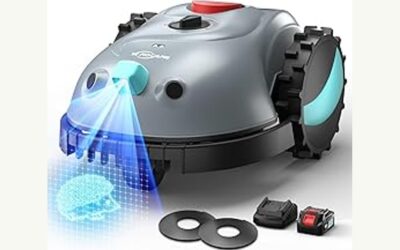
The BESTMOW is a robotic lawn mower intended to handle recurring grass-cutting duties with less hands-on effort. Its listed feature set makes it a potential fit for homeowners with larger lawns, including properties described as covering up to 1.5 acres, who want scheduled mowing rather than frequent manual passes.
Its main practical benefits are automated scheduling, adjustable cutting height up to 4 inches, GPS-based mapping, and route planning. The product information indicates that it is designed to maintain coverage across lawns with changing elevations and to handle moderate slopes of about 25 to 30 percent, depending on conditions.
When the battery is low, the mower automatically returns to its charging station and resumes work after charging. Smartphone app control allows users to change settings, schedule mowing, and monitor progress remotely. The listed dimensions are 22.4 by 17.98 by 10.2 inches, and the mower weighs 41 pounds, details that may help with planning storage and moving it when needed.
This type of mower may be useful for larger residential lawns where regular trimming is time-consuming. Quiet operation could also be helpful in neighborhoods or households where conventional mower noise is inconvenient. The app and mapping features may be particularly useful for owners who want to check mowing activity without walking the entire yard.
Setup should be planned carefully because the product requires a one-time activation code before first use. Although built-in sensors are described as detecting pets and obstacles, users should not assume that automated detection removes the need for supervision, especially around children, animals, slopes, or cluttered areas. The supplied information does not provide battery specifications, charging duration, installation details, or maintenance instructions.
This mower is best suited to homeowners seeking automated routine lawn care and app-based oversight. Those with highly irregular terrain, complicated lawn boundaries, or a preference for detailed control over every mowing pass may want to compare it with another robotic mower after confirming setup and compatibility requirements.
Best For / Avoid If
Best for buyers prioritizing
- Automates regular mowing with programmable schedules and self-charging.
- Designed to navigate moderate slopes of approximately 25 to 30 percent, depending on conditions.
- Remote app control and real-time updates provide convenient oversight.
Consider another option if
- Initial setup requires a one-time activation code before the mower can be used.
- The supplied information does not specify battery capacity, charging time, installation requirements, or detailed maintenance needs.
- Gardeners with heavily uneven terrain or complex obstacles may still need to supervise operation despite the mapping and sensor features.
Pros
- No perimeter wire is required according to the product information, which can simplify installation compared with traditional robotic mowers.
- Supports app-based mapping, mowing paths, no-go zones, and multi-zone control for more customized lawn care.
- Includes the mower, charging base station, RTK reference station, and a blade set with five blades.
- Compact 7.9-inch cutting width and 21.6-pound listed weight may suit small to medium residential lawns where large equipment feels cumbersome.
Cons
- The listed maximum mowing size is 0.3 acre, so gardeners with larger lawns may need a different model or a more traditional mower.
- The 7.9-inch cutting width may require more passes than wider walk-behind equipment on open lawn areas.
- Because it depends on app control, RTK positioning, and vision technology, setup and routine use may require comfort with connected lawn equipment.
The ANTHBOT M9 is a robotic lawn mower built for homeowners who want to automate routine lawn trimming on small to medium yards. Based on the listed specifications, it is a battery-powered mower with app control, a charging base station, an RTK reference station, and a no-perimeter-wire setup. It is best matched to users who want less time behind a mower and are comfortable managing lawn zones through a mobile app.
The main appeal is its navigation package. The product information describes dual AI vision with full-band RTK positioning, adaptive cruise control, and centimeter-level positioning. In practical terms, these features are intended to help the mower map the lawn, follow planned mowing paths, avoid common objects, and manage complex yard layouts without a buried or staked boundary wire.
For cutting, the M9 lists a 7.9-inch cutting width, five free-rotating blades, and an adjustable cutting height from 1.2 to 2.7 inches. It is also listed for slopes up to a 45% gradient, which may be useful for many residential yards that are not perfectly flat. The app can manage up to 30 work zones, create paths between areas, and set no-go zones, giving homeowners more control around beds, patios, trees, or other landscape features.
The mower measures 19.61 inches deep by 15.43 inches wide by 9.88 inches high and has a listed weight of 21.6 pounds. Assembly is listed as not required, and the package includes the robotic mower, charging base station, blade set, and RTK reference station, though the product information notes that items may ship in separate packages. The self-charging function allows the mower to return to its base and resume work automatically, which is one of the major conveniences of this style of lawn care equipment.
In a typical backyard, the M9 makes the most sense for homeowners with a defined lawn area up to the listed 0.3-acre maximum, especially where quiet operation and frequent light trimming are preferred. The listed 58 dB or lower operating noise may be helpful in neighborhoods where early or frequent mowing with louder equipment would be disruptive. It may also appeal to older gardeners or busy homeowners who want to reduce the physical effort of regular mowing.
There are still practical considerations. Robotic mowers are not a complete substitute for all lawn tools, and edges, tight corners, heavy debris, or areas outside the mapped zones may still need attention. Users should keep children, pets, hoses, toys, and loose garden items clear during mowing and follow the manufacturer’s safety guidance, especially because the mower uses blades. Gardeners with larger properties, very simple open lawns where speed matters most, or those who prefer non-app equipment may be better served by a different mower type.
Best For / Avoid If
Best for buyers prioritizing
- No perimeter wire is required according to the product information, which can simplify installation compared with traditional robotic mowers.
- Supports app-based mapping, mowing paths, no-go zones, and multi-zone control for more customized lawn care.
- Includes the mower, charging base station, RTK reference station, and a blade set with five blades.
Consider another option if
- The listed maximum mowing size is 0.3 acre, so gardeners with larger lawns may need a different model or a more traditional mower.
- The 7.9-inch cutting width may require more passes than wider walk-behind equipment on open lawn areas.
- Because it depends on app control, RTK positioning, and vision technology, setup and routine use may require comfort with connected lawn equipment.
Pros
- Designed for lawns up to 1 acre, making it suitable for many larger residential yards.
- Wire-free mapping reduces installation complexity compared with traditional perimeter-wire robot mowers.
- All-wheel drive, smart traction control, and slope capability are useful for challenging terrain.
- 17-inch cutting width and dual cutting discs should help cover ground more efficiently than smaller robotic mower decks.
- Smart home compatibility and GPS-based alerts add convenience for users who prefer app-connected yard equipment.
Cons
- At 63.7 pounds, it may be awkward for some users to lift or reposition when needed.
- Battery runtime and charging time are not listed, so buyers cannot easily estimate exact mowing cycles from the supplied specifications.
- Automatic operation still requires safe setup, map review, blade maintenance, and keeping the lawn clear of small objects that could interfere with mowing.
The NAVIMOW X430 is a battery-powered robotic lawn mower for homeowners who want automated lawn care without installing a physical boundary wire. Based on the listed specifications, it is intended for lawns up to 1 acre and is especially relevant for yards with slopes, uneven areas, trees, fences, or more complex mowing zones.
The main strength of this mower is its terrain-focused feature set. The product information lists all-wheel drive, an ORV-tuned dual suspension system, smart traction control, and the ability to climb slopes up to 84% or 40 degrees. It is also described as crossing obstacles up to 2.8 inches, which may help on bumpy residential lawns where a flatter-yard robotic mower could struggle.
For cutting performance, the X430 uses dual 180W motors, dual cutting discs, 12 blades, and a 17-inch cutting width. The cutting height range of 0.75 to 4 inches gives homeowners room to adjust mowing height for different lawn looks and growing conditions. EdgeSense is listed to reduce trimming margins to under 2 inches, although some hand trimming may still be needed around walls, garden edging, raised beds, and tight corners.
Setup and control are centered around wire-free mapping. The product information lists one-tap Auto Mapping, GeoSketch map editing, GPS tracking, GeoFence and lift alerts, and voice control through Alexa or Google Home. It also lists EFLS tri-frequency Network RTK, 360-degree vision, VIO, and AI-powered VisionFence obstacle recognition, which together are meant to help the mower navigate accurately and avoid common yard obstacles.
The mower measures 33.5 inches deep by 24 inches wide by 13.8 inches high and weighs 63.7 pounds, so storage space and lifting ability are worth considering before purchase. Like any robotic mower, it should be set up carefully, monitored during early runs, and kept away from children, pets, loose toys, hoses, and debris while operating. Blade condition and the mowing area should be checked regularly for safe, consistent results.
This model is best suited to homeowners with a larger lawn who want a smart, wire-free mower with strong listed slope and terrain capabilities. Gardeners with very small, simple lawns, limited storage space, or a preference for manual control may be better served by a lighter mower or a simpler lawn-care setup.
Best For / Avoid If
Best for buyers prioritizing
- Designed for lawns up to 1 acre, making it suitable for many larger residential yards.
- Wire-free mapping reduces installation complexity compared with traditional perimeter-wire robot mowers.
- All-wheel drive, smart traction control, and slope capability are useful for challenging terrain.
Consider another option if
- At 63.7 pounds, it may be awkward for some users to lift or reposition when needed.
- Battery runtime and charging time are not listed, so buyers cannot easily estimate exact mowing cycles from the supplied specifications.
- Automatic operation still requires safe setup, map review, blade maintenance, and keeping the lawn clear of small objects that could interfere with mowing.
Pros
- Wire-free navigation may simplify setup for yards with clearly defined grass boundaries.
- Magnetic-strip no-go zoning offers a flexible way to restrict access to selected lawn areas.
- App scheduling and automatic charging can reduce the need for frequent manual mowing.
- The 28.7-pound design and compact 23 x 15.8 x 9.5-inch dimensions may be practical for homeowners managing limited storage space.
Cons
- It may be less suitable for lawns without clear visual boundaries, since the vision-navigation system is designed around defined grass and non-grass areas.
- Grass taller than 2.6 inches should be manually trimmed before initial use, which adds preparation work.
- Routine blade replacement is recommended, and gardeners with complex obstacles or changing lawn layouts may need to manage no-go zones carefully.
The YARDCARE M800Plus is a robotic lawn mower designed for routine grass cutting on residential lawns up to 8611 square feet. Its cordless GPS and 3D vision navigation is intended for yards with clear visual boundaries, making it a potential fit for homeowners who want scheduled mowing without installing traditional boundary wires.
The feature set focuses on reducing routine lawn-care effort. Vision-based navigation identifies grass and non-grass areas, while obstacle detection is designed to recognize common lawn objects and adjust movement. The mower also supports slopes up to 35 percent, or 20 degrees, which may help it manage many typical residential lawn sections.
Homeowners can use the YARDCARE App to set schedules, adjust mowing patterns, and access firmware updates. The included 32.8-foot magnetic strip provides a no-go zone option without digging or using an external power source. The mower measures 23 by 15.8 by 9.5 inches and weighs 28.7 pounds, so storage planning is still worthwhile even though the listed dimensions are relatively compact for a lawn machine.
The adjustable cutting height spans 0.8 to 2.4 inches, and the three-blade cutting disc has a 7-inch cutting width. Spiral spot mowing is intended for thicker or faster-growing patches, while automatic charging supports unattended mowing sessions. These functions may be useful for homeowners who prefer regular lawn maintenance rather than occasional heavy cutting.
Before initial use, grass taller than 2.6 inches should be manually trimmed according to the product information. Routine blade replacement is also recommended to maintain consistent cutting performance. Because navigation depends on clear visual boundaries, gardeners with highly irregular edges, complex obstacles, or frequently changing lawn layouts may prefer a mower with another boundary-management approach.
This model is a reasonable option for homeowners who want app-controlled, wire-free mowing and have a clearly defined lawn with manageable slopes. It may be less suitable for overgrown lawns at startup or properties where grass boundaries are difficult for a vision-based system to distinguish.
Best For / Avoid If
Best for buyers prioritizing
- Wire-free navigation may simplify setup for yards with clearly defined grass boundaries.
- Magnetic-strip no-go zoning offers a flexible way to restrict access to selected lawn areas.
- App scheduling and automatic charging can reduce the need for frequent manual mowing.
Consider another option if
- It may be less suitable for lawns without clear visual boundaries, since the vision-navigation system is designed around defined grass and non-grass areas.
- Grass taller than 2.6 inches should be manually trimmed before initial use, which adds preparation work.
- Routine blade replacement is recommended, and gardeners with complex obstacles or changing lawn layouts may need to manage no-go zones carefully.

Pros
- No perimeter wire is required, which simplifies the physical installation compared with older robotic mower systems.
- Supports app control, virtual boundaries, AI-assisted mapping, and multi-zone lawn management.
- Quiet 58dB(A) operation is well suited to routine residential mowing schedules.
- Includes spare blades and a 3-year warranty according to the product information.
- Battery-powered automatic operation can reduce the amount of weekly push mowing needed on suitable lawns.
Cons
- Assembly and mapping are required, and reviewer feedback commonly suggests setup may take patience and boundary adjustments.
- Rough, dipped, steep, or very thick lawns may be less suitable and could require extra trimming or route changes.
- The 4G module for anti-theft tracking is listed as an optional add-on rather than included.
The NAVIMOW i110N is a robotic lawn mower for homeowners who want regular automated mowing on lawns up to 1/4 acre. It is designed for automatic operation with app control, virtual boundaries, and multi-zone management, making it most relevant for suburban yards, small front-and-back lawns, and homeowners who want to reduce routine mowing time without installing perimeter wire.
The key appeal is its EFLS 2.0 navigation system, which combines customized RTK positioning with vision sensors. In plain terms, the mower uses satellite-based positioning and camera-assisted mapping to understand where it should mow. The product information also lists AI-assisted mapping, planned mowing patterns, intelligent recharging, and continued mowing until the job is done, which are useful features for maintaining a consistent lawn height over repeated mowing sessions.
Design details are practical for residential storage and handling. The mower is battery powered, weighs 24 pounds, and measures 21.5 inches deep by 15.2 inches wide by 11.2 inches high. It has 5 cutting-height positions listed in the specifications, a stated average battery life of 60 minutes, and quiet 58dB(A) operation. Required assembly is noted, and the package includes the charging station, GNSS antenna kit, power supply, extension cable, pegs, installation kits, spare blades and bolts, and user materials.
For backyard use, this mower is best matched to lawns where the charging station and GNSS antenna can be placed with a suitable signal and where the mowing area can be mapped clearly. The multi-zone feature can help with separate front, side, and back lawn areas, while no-go zones and virtual boundaries are useful around beds, trees, drains, or other landscape features. Reviewers commonly mention that repeated mowing helps keep lawns looking consistently maintained, but also that occasional string trimming is still needed along borders and tight edges.
There are important limitations to keep in mind. Robotic mowers are not a full replacement for every lawn task, and this model may need boundary refinements, no-go zones, or manual trimming in areas with roots, dips, curbs, narrow passages, or unclear lawn-to-bed transitions. The obstacle-detection system is a helpful safety feature, but it should not replace basic precautions: clear tools, toys, hoses, and small objects before mowing, and supervise operation around pets, children, and delicate plantings.
The NAVIMOW i110N is a strong candidate for a homeowner with a modest-size lawn who values wire-free setup, quiet operation, and app-based control. Gardeners with very uneven ground, heavy slopes, dense tall grass, or poor antenna placement options may want to consider whether a different mower, added accessories, or some lawn leveling work would be needed before expecting reliable automation.
Best For / Avoid If
Best for buyers prioritizing
- No perimeter wire is required, which simplifies the physical installation compared with older robotic mower systems.
- Supports app control, virtual boundaries, AI-assisted mapping, and multi-zone lawn management.
- Quiet 58dB(A) operation is well suited to routine residential mowing schedules.
Consider another option if
- Assembly and mapping are required, and reviewer feedback commonly suggests setup may take patience and boundary adjustments.
- Rough, dipped, steep, or very thick lawns may be less suitable and could require extra trimming or route changes.
- The 4G module for anti-theft tracking is listed as an optional add-on rather than included.

Pros
- Avoids the need for complicated boundary-wire installation by using visual navigation and magnetic no-go strips.
- Offers flexible cutting-height adjustment and obstacle response for varied small-lawn layouts.
- Includes several automatic safety responses, including blade stopping when lifted and pausing when rain is detected.
Cons
- The 32-foot magnetic strip may be limiting for gardeners who need to protect many separate areas or larger boundaries.
- Its listed small-lawn size and 6.3-inch cutting width may be less suitable for larger properties or faster mowing coverage.
- Gardeners should still inspect the lawn and follow operating and blade-handling precautions, since obstacle detection may not eliminate every collision risk.
The YARDCARE V100 is a battery-powered robotic lawn mower intended for routine grass cutting on small lawns up to 1,600 square feet. It is most relevant for homeowners who want to reduce manual mowing, especially where a compact mower can work around ordinary garden features.
Its camera-based visual navigation is designed to distinguish grass from non-grass areas and detect up to 150 different obstacles. The bumper and visual sensors help it adjust its route, while collision detection is intended to redirect the mower if an object reaches a blind spot.
Setup is designed to avoid digging or installing conventional boundary wires. The included 32-foot magnetic strip and 20 pegs can mark no-go areas around flower beds, pools, paths, or play spaces. The mower measures 21 by 16 by 11 inches, uses an 18V 4000mAh battery, and includes a charger plus replacement blade-and-screw sets.
For a compact backyard lawn, the 6.3-inch cutting width and adjustable 0.8 to 2.4-inch cutting height provide a practical range for regular grass maintenance. The listed slope suitability of up to 20 degrees may also help in yards with moderate inclines, though the exact layout and surface conditions will affect how well any robotic mower moves.
Safety features include a tilt sensor that stops the blades when the mower is lifted, an emergency stop switch, and a rain sensor that pauses operation during rain. Gardeners should keep the mowing area arranged for safe navigation, check the no-go strip placement, and handle blade replacement carefully. Based on the listed specifications, this is a reasonable option for small-lawn owners who value simpler installation, while larger properties or more complex boundaries may require a different mower design.
Best For / Avoid If
Best for buyers prioritizing
- Avoids the need for complicated boundary-wire installation by using visual navigation and magnetic no-go strips.
- Offers flexible cutting-height adjustment and obstacle response for varied small-lawn layouts.
- Includes several automatic safety responses, including blade stopping when lifted and pausing when rain is detected.
Consider another option if
- The 32-foot magnetic strip may be limiting for gardeners who need to protect many separate areas or larger boundaries.
- Its listed small-lawn size and 6.3-inch cutting width may be less suitable for larger properties or faster mowing coverage.
- Gardeners should still inspect the lawn and follow operating and blade-handling precautions, since obstacle detection may not eliminate every collision risk.

Pros
- Supports lawns up to 1/2 acre and can manage multiple mowing zones through the app.
- The 22.7 by 18.1 by 11.3 inch design and listed two-wheel drive configuration are suited to automated residential lawn care.
- Cut-to-edge behavior is designed to reduce missed grass along ridable edges and fixed borders.
Cons
- At 44.5 pounds, it may be less convenient to move or store than a smaller robotic mower.
- The feature set may require time to configure, especially when creating maps, pathways, zones, and no-go areas.
- The supplied information does not specify battery runtime, charging details, maintenance requirements, or how it handles unusually complex terrain.
The WORX WR320 is a robotic lawn mower for residential lawns up to 1/2 acre. Its main purpose is routine grass cutting with less manual mowing, making it a practical option for homeowners who want app-managed lawn care and prefer not to install a local perimeter antenna.
Its most notable feature is RTK Cloud navigation, which is described as providing centimeter-level accuracy through the cloud without additional cloud costs. Vision AI adds automatic mapping, boundary recognition, and obstacle understanding, while V-SLAM-based sensor fusion is intended to help maintain navigation in shaded or partially covered parts of the lawn.
Controls are handled through the app, where users can manage unlimited mowing zones, create custom pathways, set no-go areas, edit the lawn map, and monitor the mower remotely. The mower also supports Parallel, Checkerboard, Diamond, and Natural mowing patterns, giving homeowners a choice between visible geometric stripes and a less formal finish.
With listed dimensions of 22.7 by 18.1 by 11.3 inches and a weight of 44.5 pounds, the WR320 is sized for substantial residential lawn coverage rather than small patio or balcony gardening. It may work well for homeowners with multiple lawn sections or varied boundary types, provided the yard is within the stated coverage and the mapping system can be configured for the property.
The product information does not provide battery runtime, charging specifications, maintenance instructions, weather suitability, or detailed terrain limitations, so those points should be confirmed before purchase. Users should also review the operating guidance and keep people, pets, and loose objects clear of the mower while it is running, even though AI obstacle avoidance is included.
This mower is best for homeowners who value wire-free mapping, remote controls, multi-zone management, and adjustable mowing patterns. Gardeners seeking a simpler setup, a lighter machine, or clearly documented runtime and maintenance details may prefer to compare other robotic mower options before deciding.

Pros
- Wire-free mapping can be useful for complex lawns and separate mowing areas.
- The combination of edge-focused cutting, obstacle avoidance, and slope handling suits varied residential yards.
- A listed 3-year warranty and 24/7 after-sales service provide useful support for a technical lawn-care product.
Cons
- The listed 0.25-acre capacity may be less suitable for larger properties or lawns that require substantial unmapped space.
- Homeowners should still keep the lawn clear of unexpected items and monitor initial mapping, obstacle recognition, and boundary behavior.
- At 34 x 20 x 16 inches and 30 pounds, it requires dedicated storage and a suitable location for the charging tower.
The MOVA LiDAX Ultra 1000 is a wireless robotic lawn mower intended to handle routine grass cutting on lawns listed for up to 0.25 acre. Its feature set is aimed at homeowners who want automated mowing without installing boundary wire, especially those with complex layouts, separate lawn areas, slopes, or regular obstacles.
Its main operating advantage is the combination of 360° 3D LiDAR, AI vision, and automatic 3D mapping. The mower is designed to plan U-shaped mowing paths, return to its charging tower when needed, and resume where it stopped. The movable disc is also designed to cut within 2 inches of walls, hedges, and raised edges, which can reduce the amount of trimming required after mowing.
Based on the listed specifications, the mower measures 34 x 20 x 16 inches and weighs 30 pounds. Cutting height can be adjusted through the MOVAhome App from 1.2 to 3.9 inches. The package information lists a charging tower, power supply, screws, cleaning brush, and one set of nine blades. The charging tower will need a suitable, accessible installation location, although specific placement requirements are not provided.
For a residential backyard, the dual-map feature can be useful when the front and back lawns are separate or when a property includes multiple mapped lawn areas. Up to 150 managed zones may help organize mowing schedules and exclusions. Rear-wheel drive, off-road wheels, and the listed ability to handle slopes up to 45% may also suit yards with uneven ground, narrow paths, and modest raised obstacles.
As with any autonomous mower, the initial map should be checked carefully, and the lawn should be cleared of items that could interfere with movement or cutting. The product information describes obstacle recognition for more than 300 types of objects, but it does not provide independent testing details or guarantee detection in every situation. Routine blade care, cleaning with the included brush, and attention to anti-theft alerts are sensible maintenance steps. This mower is a strong match for homeowners seeking wire-free automation and app control, while gardeners with larger lawns or a preference for manual oversight may want a different solution.
Best For / Avoid If
Best for buyers prioritizing
- Wire-free mapping can be useful for complex lawns and separate mowing areas.
- The combination of edge-focused cutting, obstacle avoidance, and slope handling suits varied residential yards.
- A listed 3-year warranty and 24/7 after-sales service provide useful support for a technical lawn-care product.
Consider another option if
- The listed 0.25-acre capacity may be less suitable for larger properties or lawns that require substantial unmapped space.
- Homeowners should still keep the lawn clear of unexpected items and monitor initial mapping, obstacle recognition, and boundary behavior.
- At 34 x 20 x 16 inches and 30 pounds, it requires dedicated storage and a suitable location for the charging tower.

Pros
- Combines app scheduling with AI vision obstacle sensing for convenient routine mowing.
- Magnetic-strip no-go zones provide a practical way to protect selected lawn areas.
- Compact 17 x 14 x 8.6-inch dimensions and wire-free design may suit homeowners seeking a simpler robotic mower setup.
Cons
- The listed lawn coverage is limited to lawns up to 1,600 square feet, so larger properties may need a different model or more mowing management.
- No battery runtime or charging-cycle information is provided, making it difficult to estimate how long it can mow between charges.
- Gardeners should plan magnetic-strip placement carefully around beds, decorations, and pet spaces because the product does not use installed perimeter cable.
The LEBOSBO V3 is a robotic lawn mower intended to handle routine grass cutting on lawns up to 1,600 square feet. Its combination of app control, adjustable cutting height, and wire-free design makes it a reasonable fit for homeowners, older gardeners, and people who want to reduce the amount of manual mowing involved in maintaining a smaller yard.
Its most useful supported features are AI vision obstacle sensing and smartphone control. The vision system is designed to help the mower detect obstacles and navigate more accurately, while the app allows users to schedule mowing, monitor operation, and manage mowing tasks remotely. These functions may be especially helpful for maintaining a regular mowing routine.
The mower measures 17 x 14 x 8.6 inches and is listed in black. Setup does not require perimeter cable installation, according to the product information, but the included 32-foot magnetic strip is used to create no-go zones. Ground stakes are included to help position the strip, and the package also provides an MX 18V 4000mAh battery, 18V charger, replacement blades, and a user manual.
In a typical backyard, the magnetic strip can be arranged around garden beds, decorative features, or pet spaces that should remain outside the mowing area. Adjustable cutting height gives homeowners more control over the desired grass length, while the listed low-noise operation may be useful when mowing near living areas or during quieter parts of the day.
Important details are not provided for battery runtime, charging time, weather resistance, slope handling, or long-term blade life, so buyers should review the manual and confirm that the mower suits their lawn layout before relying on unattended schedules. The magnetic boundary will also require thoughtful placement and occasional checking. Overall, this model appears best for smaller lawns where app-based scheduling and a no-cable setup are more important than advanced specifications that are not listed.

Pros
- App-based scheduling can make regular lawn maintenance more convenient.
- Automatic charging and rain response reduce hands-on supervision.
- Adjustable cutting height and a triple-blade system support a more tailored, even trim.
- The 29.3-pound, 21-by-15-by-9-inch design offers a defined footprint for planning storage and installation.
Cons
- Boundary-wire installation requires initial planning and setup around the mowing area.
- The listed coverage is limited to lawns up to 1/8 acre, so larger properties may need a different mower.
- Battery runtime, charging duration, and replacement-part information are not provided.
The YARDCARE robotic lawn mower is designed to automate routine grass cutting on lawns listed up to 1/8 acre. Its app control, automatic charging, and obstacle detection make it a practical option for homeowners who want less frequent manual mowing, including those managing a defined backyard lawn.
The feature set focuses on consistent maintenance rather than one-time heavy cutting. The app allows users to schedule mowing, set mowing times, and start or pause operation. A brushless motor is described as quiet and efficient, while the triple-blade cutting system and adjustable height are intended to provide a clean, even trim.
Cutting height can be manually adjusted from 0.8 to 2.4 inches, giving gardeners some control for different grass types and seasonal growth. The mower measures 21 by 15 by 9 inches and weighs 29.3 pounds, so its footprint should be considered when choosing a charging and storage location.
Installation uses boundary wire and the included listed components, with the product information indicating that no special tools or professional assistance are required. Once the mowing area is defined, app scheduling can be useful for maintaining a small residential lawn while the mower works around listed obstacles such as trees and garden beds.
The bumper sensor is intended to detect obstacles and alter the mower's path, but users should still prepare the lawn by removing loose objects and following the installation and operating instructions. The rain sensor is designed to send the mower back to its charging station, and the IPX5 rating is listed for outdoor weather resistance. Battery runtime, charging time, and maintenance intervals are not supplied, so gardeners needing those details should confirm them before purchase.
This mower is best suited to homeowners with a relatively defined lawn within the stated coverage area who value scheduled care and app control. Those with larger properties, complex lawn layouts, or a preference for avoiding boundary-wire installation may want to consider a different robotic mower design.
Best For / Avoid If
Best for buyers prioritizing
- App-based scheduling can make regular lawn maintenance more convenient.
- Automatic charging and rain response reduce hands-on supervision.
- Adjustable cutting height and a triple-blade system support a more tailored, even trim.
Consider another option if
- Boundary-wire installation requires initial planning and setup around the mowing area.
- The listed coverage is limited to lawns up to 1/8 acre, so larger properties may need a different mower.
- Battery runtime, charging duration, and replacement-part information are not provided.

Pros
- No perimeter wire or RTK antenna required for setup.
- Built-in edge trimming adds functionality many robotic mowers do not include.
- Custom zones, schedules, and no-go areas support more tailored mowing plans.
- Designed for tight paths and shaded yards where navigation can be challenging.
- Reviewers commonly mention easy setup, quiet operation, and even routine cutting.
Cons
- Initial mapping and fine-tuning may take several adjustments, especially in complex yards.
- Edge trimming may still require manual follow-up around sharp corners, raised edges, narrow gaps, fences, or obstacles.
- May be less suitable for lawns with exposed sand, mulch transitions, or very uneven borders based on mixed reviewer feedback.
The ECOVACS GOAT O1000 LiDAR PRO is an automatic, battery-powered robotic lawn mower for homeowners who want frequent mowing support on lawns up to 1/4 acre. It is best understood as a routine maintenance mower rather than a full replacement for every lawn-care task, especially where borders, fences, mulch beds, and tight corners are involved.
The main advantage is its wire-free mapping system. The product information states that its HoloScope 360 degree Dual-LiDAR navigation does not require buried perimeter wire or an RTK antenna, and is designed to work under trees, near fences, and in shaded areas. For gardeners with established beds or hardscaping, avoiding perimeter wire can make installation less disruptive.
This model also includes the TruEdge trimming feature, which is meant to cut closer along driveways, sidewalks, flower beds, and irregular borders than a standard robot mower. That can reduce the amount of string trimming after mowing, but the product information and user feedback both suggest that highly complex corners, narrow gaps, raised edges, and fence lines may still need occasional manual trimming.
Control is handled through the ECOVACS app, where users can create mowing zones, schedule tasks, and set no-go areas. The mower uses AI Vision and 3D ToF LiDAR obstacle detection to navigate around common yard objects, and the narrow body is designed to pass through corridors as slim as 0.8 m. Assembly is required, and the trimmer module installation calls for the included screws and a PH2 Phillips screwdriver.
For small lawns, side yards, compact backyards, and layouts with trees or play equipment, the feature set is well matched to homeowners who prefer frequent light mowing over occasional heavy cutting. The listed cutting width is 8.66 inches, and the cutting height range is 1.2 to 3.6 inches, so gardeners who maintain taller cool-season turf should confirm that this height range fits their grass-care goals.
The balanced verdict is that the GOAT O1000 LiDAR PRO is a strong candidate for tech-comfortable homeowners who want wire-free robotic mowing with more edge help than many basic models provide. Consider a different mower if your lawn has exposed sand, frequent mulch transitions, very rough edges, or if you expect completely hands-off trimming along every fence and corner.
Best For / Avoid If
Best for buyers prioritizing
- No perimeter wire or RTK antenna required for setup.
- Built-in edge trimming adds functionality many robotic mowers do not include.
- Custom zones, schedules, and no-go areas support more tailored mowing plans.
Consider another option if
- Initial mapping and fine-tuning may take several adjustments, especially in complex yards.
- Edge trimming may still require manual follow-up around sharp corners, raised edges, narrow gaps, fences, or obstacles.
- May be less suitable for lawns with exposed sand, mulch transitions, or very uneven borders based on mixed reviewer feedback.

Pros
- Recommended for lawns up to 600 square meters, with a listed maximum coverage area of 1000 square meters.
- Automatic boundary-wire break detection can reduce the time spent locating damaged cable.
- The 20 cm cutting width and adjustable 3 to 7 cm mowing height provide flexible routine lawn maintenance.
- App-based scheduling and real-time tracking make it easier to monitor mowing without being beside the machine.
Cons
- The supplied information does not document installation details, so setting up the boundary wire and charging station may require planning.
- Lawns larger than the recommended 600 square meters or with complex terrain may need an additional charging station and boundary wires for better efficiency.
- The 27.34-pound mower and 23.85 by 16.54 by 10.16-inch dimensions may require a dedicated storage location when not in use.
The ANTHBOT is an automated robot lawn mower designed for routine grass cutting within a boundary-wire layout. Its listed specifications recommend it for lawns up to 600 square meters, although the maximum coverage is stated as 1000 square meters, making it a practical option for homeowners who want less hands-on mowing.
Its main performance feature is CABLE-TOF positioning with coded signals for route planning. Based on the product information, this system is intended to create a more organized grid-shaped mowing path than random movement. The mower also offers a 20 cm cutting width and automatically adjusts its cutting height between 3 and 7 cm to handle changing lawn conditions.
Control is centered on the companion app, which provides scheduling, progress monitoring, real-time position and coverage information, and mowing alerts. The mower returns to its charging station when the battery level drops below 15 percent and resumes after reaching 90 percent charge. The product information also states that the app can help locate a boundary-wire break and that cable connectors are included for repairs.
This mower may fit suburban backyards and moderately sized lawns where a boundary wire can be installed around the mowing area. Its stated ability to handle slopes up to 45 percent, collision sensors, and fast mode for a 7-square-meter area may also be useful for lawns with inclines, obstacles, or smaller sections, provided the layout is suitable for the installation requirements.
Limitations include the recommended 600-square-meter working area and the lack of supplied installation details, so buyers should plan the boundary-wire and charging-station setup carefully. The IPX6 rating supports light rain and hose cleaning, but the app's rain-delay feature is useful when the lawn should remain dry. Overall, this is a reasonable choice for homeowners seeking scheduled, app-monitored mowing, while gardeners with larger or highly complex lawns may prefer a system designed for broader coverage or a different navigation method.
Best For / Avoid If
Best for buyers prioritizing
- Recommended for lawns up to 600 square meters, with a listed maximum coverage area of 1000 square meters.
- Automatic boundary-wire break detection can reduce the time spent locating damaged cable.
- The 20 cm cutting width and adjustable 3 to 7 cm mowing height provide flexible routine lawn maintenance.
Consider another option if
- The supplied information does not document installation details, so setting up the boundary wire and charging station may require planning.
- Lawns larger than the recommended 600 square meters or with complex terrain may need an additional charging station and boundary wires for better efficiency.
- The 27.34-pound mower and 23.85 by 16.54 by 10.16-inch dimensions may require a dedicated storage location when not in use.

Pros
- App control makes it easier to manage mowing schedules and pause operation when needed.
- Automatic charging and rain response reduce the need for frequent supervision.
- Adjustable cutting height gives homeowners more control over lawn appearance and seasonal mowing.
- The listed 1/8-acre capacity fits many smaller residential lawns.
Cons
- Boundary-wire installation still requires careful planning and setup around the mowing area.
- The bumper sensor may not replace clearing toys, hoses, branches, and other lawn obstacles before operation.
- Gardeners with lawns larger than 1/8 acre or complex layouts may need a different mower.
The YARDCARE robot lawn mower is designed for automated maintenance of lawns up to 1/8 acre. Its app control, automatic charging, adjustable cutting height, and obstacle detection make it a practical option for homeowners who want scheduled mowing with less routine walking behind a traditional mower.
The feature set focuses on consistent trimming rather than occasional heavy cutting. The cutting height can be manually adjusted from 0.8 to 2.4 inches, while the triple-blade system is intended to provide an even trim. The brushless motor is listed as high efficiency and quiet in operation, with reduced maintenance compared with the maintenance needs typically associated with brushed motors.
At 21 x 15 x 9 inches, the gray mower has a compact footprint for a residential lawn tool. The YARDCARE app allows users to set mowing times, start or pause operation, and manage a schedule. Installation uses the included boundary wire and other listed components, so setup depends on routing the wire carefully around the intended mowing area.
This mower may fit smaller backyards where regular grass trimming is more useful than high-powered clearing. The collision-detection bumper is designed to help it alter its path around trees, garden beds, and uneven terrain, while the rain sensor can direct it back to the charging station when rain is detected. Its IPX5 weather-resistant design supports outdoor use, but the lawn should still be prepared by removing loose objects before mowing.
Important limitations include the stated 1/8-acre lawn coverage and the need for boundary-wire installation. The bumper sensor can help with detected obstacles, but it should not be treated as a substitute for routine lawn inspection. Gardeners should also follow the supplied operating and charging instructions, keep the mowing area appropriately defined, and adjust the cutting height to match lawn conditions.
This model is a reasonable fit for homeowners with smaller lawns who value scheduled mowing and app-based control. Those with larger properties, complicated lawn sections, or a need for heavy-duty cutting may prefer equipment designed for greater coverage or more intensive lawn work.
Best For / Avoid If
Best for buyers prioritizing
- App control makes it easier to manage mowing schedules and pause operation when needed.
- Automatic charging and rain response reduce the need for frequent supervision.
- Adjustable cutting height gives homeowners more control over lawn appearance and seasonal mowing.
Consider another option if
- Boundary-wire installation still requires careful planning and setup around the mowing area.
- The bumper sensor may not replace clearing toys, hoses, branches, and other lawn obstacles before operation.
- Gardeners with lawns larger than 1/8 acre or complex layouts may need a different mower.

Pros
- No boundary wires or antennas are required, which may make initial setup less disruptive.
- The combination of LiDAR, vision sensing, obstacle detection, and zone editing offers detailed navigation control.
- A 7.1-inch cutting width, six-blade disc, and 2 to 4-inch height range support routine lawn maintenance across varied grass conditions.
- Its listed 59 dB(A) operating noise may be more neighbor-friendly than louder conventional mowing equipment.
Cons
- At 32.41 pounds and 25 x 17.6 x 11.3 inches, it needs a suitable location for docking and storage when not in use.
- Gardeners with lawns larger than the listed 0.37-acre coverage or highly complex boundaries may need a different mower or additional planning.
- The supplied information does not specify battery runtime, maintenance intervals, or included accessories, so those details should be confirmed before purchase.
The Segway Navimow i215 is a wire-free robotic lawn mower for maintaining residential lawns up to the listed 0.37-acre coverage area. Its automatic mapping and app controls make it a good match for homeowners, older gardeners, and busy households seeking a more automated approach to routine mowing.
Its main performance advantage is the combination of solid-state LiDAR and vision sensors. The feature set suggests stable, satellite-free navigation with three-dimensional awareness during both daytime and nighttime operation. AI VisionFence is listed as detecting more than 200 obstacle types, while GeoSketch allows up to 20 mowing zones to be edited on an interactive map.
The mower uses off-road wheels and electronic stability control for slopes up to 45%, which may help on yards that are difficult to manage with a standard push mower. A 100-watt motor, six-blade cutting disc, 7.1-inch cutting width, and adjustable 2 to 4-inch cutting height provide useful control for regular lawn maintenance. The listed 59 dB(A) noise level may also be helpful where quieter operation matters.
Wire-free installation, one-tap auto mapping, and Alexa and Google Home support can reduce the amount of routine interaction needed after setup. EdgeSense ride-on mode is intended to help the mower work closer to fences and pathways. Measuring 25 by 17.6 by 11.3 inches and weighing 32.41 pounds, the gray mower should have a planned docking and storage location with enough clearance for its dimensions.
Homeowners should still inspect the lawn for objects, loose material, and areas that could interfere with safe operation, even with automated obstacle detection. The supplied information does not state battery runtime, maintenance requirements, weather-resistance details, or included accessories, so those factors should be checked before buying. Overall, this model is most suitable for homeowners wanting wire-free, app-managed mowing on lawns within its stated coverage area, while those with larger properties or a need for detailed runtime information may prefer an option with more fully documented specifications.
Best For / Avoid If
Best for buyers prioritizing
- No boundary wires or antennas are required, which may make initial setup less disruptive.
- The combination of LiDAR, vision sensing, obstacle detection, and zone editing offers detailed navigation control.
- A 7.1-inch cutting width, six-blade disc, and 2 to 4-inch height range support routine lawn maintenance across varied grass conditions.
Consider another option if
- At 32.41 pounds and 25 x 17.6 x 11.3 inches, it needs a suitable location for docking and storage when not in use.
- Gardeners with lawns larger than the listed 0.37-acre coverage or highly complex boundaries may need a different mower or additional planning.
- The supplied information does not specify battery runtime, maintenance intervals, or included accessories, so those details should be confirmed before purchase.
Pros
- All-wheel drive is a useful feature for sloped or rough lawn areas.
- Wire-free mapping avoids the installation of a traditional perimeter wire.
- Adjustable cutting height and zero-turn steering support a more controlled mowing pattern.
- GPS alerts and multi-zone management add useful remote oversight.
Cons
- The listed 0.15-acre mowing capacity may be limiting for larger properties or lawns with multiple extensive sections.
- Gardeners who want a simple setup without mapping technology may find the RTK and Vision feature set more involved than a basic robotic mower.
- The supplied information does not detail routine maintenance, weather suitability, or storage requirements.
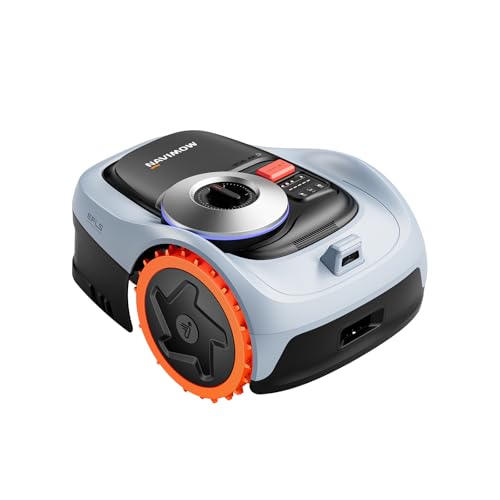
The NAVIMOW i206 AWD is a robotic lawn mower intended to automate grass cutting on residential lawns, particularly where slopes and uneven ground make basic models less suitable. Based on the listed capacity, it is best matched with smaller to medium-sized properties covering up to 0.15 acre, with the product information also stating coverage of up to 1,350 square feet per charge.
Its main performance advantage is the all-wheel-drive system paired with automotive-grade stability control. The manufacturer states that it can tackle slopes up to 45%, which may make it a practical choice for homeowners with hilly sections or rougher lawn surfaces. Zero-turn steering is designed to let the mower pivot smoothly, while the adjustable 2 to 3.6 inch cutting height provides flexibility for different lawn preferences.
This model uses EFLS Network RTK and Vision for wire-free, one-tap auto mapping rather than a traditional perimeter wire. The feature set suggests that careful mapping is central to setup and operation. Once configured, the mower can manage up to 20 mowing zones, use optimized routes, return to charge, and resume mowing automatically. Its listed dimensions are 33.5 by 24 by 13.8 inches, and the color is black.
For a backyard with sloped sections, several separate lawn areas, or a layout where installing boundary wire would be inconvenient, the i206 AWD offers a centralized way to manage mowing. Real-time GPS alerts may also help homeowners monitor the mower if it is lifted or moves off course. The stated 2.5Ah battery and automatic charging are suited to routine mowing within the product's listed lawn-size limits.
The main limitation is coverage. Larger properties or lawns requiring more than the listed 0.15-acre capacity may need a different mower or a model designed for broader areas. The supplied information does not specify weather resistance, maintenance intervals, storage guidance, or installation requirements beyond the wire-free mapping system, so buyers should confirm those details before purchase. Overall, it appears best for homeowners who value automated mowing, slope capability, and multi-zone GPS control, while gardeners wanting a simpler or higher-capacity solution may prefer another option.

Pros
- Designed for very large lawns, with listed coverage up to 6 acres.
- Does not require perimeter wire, using RTK, vision, and sensor-based navigation instead.
- Wide 20-inch cutting width helps cover more ground per pass than smaller robotic mowers.
- Tracks, skid shoes, and a 70 percent listed climbing ability make it suitable for more complex terrain.
- Includes both razor blades and straight blades for different grass conditions, according to the product information.
Cons
- At about 215 pounds and shipped in 4 boxes, assembly and placement could be challenging without two adults.
- The Data Center Set needs a 120-degree unobstructed sky view, so heavily treed or obstructed properties may require careful planning.
- Remote control is listed as sold separately, which may matter to users who want manual control capability.
The YARBO Lawn Mower Pro is a robotic lawn mower aimed at homeowners and property managers with large, demanding turf areas. Based on the listed specifications, it is designed for lawns up to 6 acres and uses perimeter wire free navigation, making it a fit for users who want automated mowing without installing a traditional boundary wire system.
Its strongest lawn-care benefits are its large-area capacity, 20-inch cutting width, and adjustable 0.8 to 4.0 inch cutting height. The product information also lists a 300W dual-motor cutting system, straight blades plus razor blades, and a grass ejection design intended to reduce clogging in thick, damp, or overgrown grass.
Navigation is a major part of this mower’s design. YARBO lists RTK-GPS, NetRTK support, binocular vision, and multi-sensor PPVS for positioning and obstacle avoidance. In plain terms, the mower is built to map and move through the lawn using satellite positioning, camera vision, and onboard sensors rather than relying on buried wire.
The mower is large and heavy, measuring 50 inches deep, 27 inches wide, and 20 inches high, with an item weight listed at 215 pounds. It requires assembly, ships in 4 separate boxes, and the manufacturer recommends two adults for assembly. Setup also depends on placing the Data Center Set where it has a 120-degree unobstructed view of the sky, so site planning matters before purchase.
For real backyard use, this model makes the most sense on large residential lawns, estate properties, turf areas, and yards with slopes or uneven ground. The listed multi-terrain tracks, all-steel skid shoes, and 70 percent maximum climbing ability suggest it is built for more challenging terrain than a lightweight mower, though users should still follow the installation guidance and keep children, pets, and loose objects away during operation.
The main tradeoffs are size, setup complexity, and the need for a suitable open-sky location for the navigation equipment. Gardeners with small lawns, narrow passages, heavy tree cover, or limited help for assembly may prefer a smaller robotic mower. For large-property owners who want an autonomous, app-controlled mower with strong terrain capability, the YARBO Lawn Mower Pro is a feature-rich option to consider.
Best For / Avoid If
Best for buyers prioritizing
- Designed for very large lawns, with listed coverage up to 6 acres.
- Does not require perimeter wire, using RTK, vision, and sensor-based navigation instead.
- Wide 20-inch cutting width helps cover more ground per pass than smaller robotic mowers.
Consider another option if
- At about 215 pounds and shipped in 4 boxes, assembly and placement could be challenging without two adults.
- The Data Center Set needs a 120-degree unobstructed sky view, so heavily treed or obstructed properties may require careful planning.
- Remote control is listed as sold separately, which may matter to users who want manual control capability.
Guida all’acquisto: i robot tagliaerba valgono la pena?
Parti dalle dimensioni del prato, non dalle funzioni
La domanda più importante è se il robot è progettato per l’effettiva superficie da tagliare. Un modello compatto come YARDCARE V100 Robot Lawn Mower è descritto per prati fino a 1,600 sq ft, mentre Segway Navimow i110N ed ECOVACS Goat O1000 LiDAR PRO sono indicati per un massimo di 1/4 acre. Segway Navimow X430 è indicato per un massimo di 1 acre e YARBO Robot Lawn Mower Pro per grandi giardini fino a 6 acres.
Non dimensionare un robot tagliaerba in base alla sola superficie totale della proprietà. Sottrai casa, vialetto, aiuole, patio, capanno e aree pacciamate. Se hai più zone erbose separate, cerca la gestione multizona oppure verifica che il robot possa spostarsi in sicurezza tra le aree senza dover essere trasportato.
| Situazione del giardino | Specifiche più importanti |
|---|---|
| Piccolo prato urbano o laterale | Struttura compatta, mappatura semplice, zone da evitare e copertura vicina a 1,600 sq ft o 1/4 acre quando supportata |
| Prato residenziale medio | Taglio programmato, pianificazione tramite app, rilevamento degli ostacoli e configurazione affidabile dei confini |
| Prato in pendenza o irregolare | Valore di pendenza documentato, trazione, ruote fuoristrada, cingoli o trazione integrale quando indicati |
| Grande proprietà | Elevata superficie coperta, sistema di taglio efficace, navigazione precisa e requisiti di configurazione realistici |
Scegli tra mappatura senza filo e sistemi con delimitazione
Molti robot tagliaerba più recenti di questo gruppo puntano sulla configurazione senza filo. Segway Navimow i110N utilizza RTK e visione con confini virtuali, ANTHBOT M9 usa la visione doppia con RTK full-band ed ECOVACS Goat O1000 LiDAR PRO usa la navigazione LiDAR senza filo perimetrale o antenna RTK. I sistemi senza filo possono ridurre gli scavi e la posa dei cavi, ma richiedono comunque una mappatura accurata e occasionali regolazioni.
YARDCARE 2026 New M800Plus include GPS e visione 3D con una striscia magnetica da 32.8 ft, in base al titolo fornito. Può essere interessante per chi desidera una guida fisica in una parte del giardino. La scelta migliore dipende dal fatto che il prato abbia bordi netti, passaggi stretti, copertura arborea, recinzioni e aree che vuoi evitare.
Controlla pendenze, terreno irregolare e trazione
La gestione delle pendenze è uno dei motivi principali per cui un robot tagliaerba può valere la pena oppure diventare frustrante. Segway Navimow X430 indica la trazione integrale 4WD e una pendenza dell’84%, oltre a un sistema di sospensioni doppie ORV-tuned per terreni irregolari e ostacoli fino a 2.8 in. YARBO Robot Lawn Mower Pro indica cingoli brevettati per terreni diversi e una pendenza massima del 70%. ANTHBOT M9, Segway Navimow i215 LiDAR e MOVA LiDAX Ultra 1000 indicano ciascuno una pendenza del 45%.
Per giardini sconnessi, solcati o con pendenze variabili, la trazione può contare quanto la potenza di taglio. Un robot efficace su un prato piano può slittare, bloccarsi o lasciare una copertura irregolare sulle pendenze. Se il problema del prato include terreno compattato, migliorare la salute del tappeto erboso con strumenti come un arieggiatore per terreno compattato può rendere più uniformi i risultati del taglio nel tempo.
Confronta altezza di taglio e rifinitura dei bordi
I robot tagliaerba sono progettati per il taglio frequente di mantenimento, non generalmente per abbassare in un solo passaggio l’erba trascurata. Segway Navimow X430 indica un intervallo di altezza di taglio da 0.75 a 4 in e una larghezza di taglio di 17 in con due dischi di taglio. YARBO Robot Lawn Mower Pro indica un intervallo da 0.8 a 4.0 in, mentre MOVA LiDAX Ultra 1000 indica da 1.2 a 3.9 in e ANTHBOT M9 da 1.2 a 2.7 in.
È importante avere aspettative realistiche anche sui bordi. ECOVACS Goat O1000 LiDAR PRO include un rifinitore TruEdge integrato pensato per ridurre l’uso manuale del decespugliatore lungo vialetti, marciapiedi, aiuole e bordi irregolari, anche se i dati forniti segnalano che angoli complessi, spazi stretti o bordi rialzati possono comunque richiedere una rifinitura manuale occasionale. Se il prato presenta molti bordi di aiuole, letti di coltivazione e superfici dure, prevedi qualche intervento di rifinitura.
Valuta attentamente rilevamento degli ostacoli e funzioni di sicurezza
Il rilevamento degli ostacoli è importante nei giardini familiari, dove giocattoli, tubi, mobili da esterno, animali domestici e fauna selvatica possono comparire all’improvviso. ANTHBOT M9 indica due fotocamere HDR da 150° con algoritmi IA in grado di riconoscere oltre 1,000 oggetti comuni da giardino. Segway Navimow X430 indica VisionFence basato sull’IA, che identifica oltre 200 tipi di ostacoli, mentre ECOVACS Goat O1000 LiDAR PRO indica AI Vision e LiDAR 3D ToF per più di 200 tipi di ostacoli.
Anche con sensori avanzati, un robot tagliaerba rimane un’attrezzatura elettrica dotata di lame. Libera il prato prima del taglio programmato, tieni lontani bambini e animali durante il funzionamento e segui le istruzioni di sicurezza del produttore per configurazione, sostituzione delle lame, ricarica e arresto di emergenza. Non presumere che il rilevamento degli ostacoli possa individuare ogni piccolo oggetto in qualsiasi condizione di luce o di erba.
Considera controlli tramite app, mappatura e facilità per principianti
Il controllo tramite app può essere utile, ma aggiunge anche una curva di apprendimento. ANTHBOT M9 è descritto come adatto ai principianti e, in base all’elenco delle funzioni fornito, crea una mappa virtuale nell’app in circa 10 minuti. Segway Navimow i110N offre mappatura assistita dall’IA, confini virtuali, controllo tramite app e gestione multizona. ECOVACS Goat O1000 LiDAR PRO utilizza un’app per creare zone di taglio, programmi e aree da evitare.
I giardinieri più anziani e i proprietari che desiderano maggiore comodità dovrebbero guardare oltre la promessa di automazione. Chiediti se la stazione di ricarica, l’antenna o il data center quando richiesti, il processo di mappatura, la sostituzione delle lame e la risoluzione dei problemi possono essere gestiti comodamente. YARBO Robot Lawn Mower Pro, per esempio, è indicato con un peso di circa 210 lbs e i suggerimenti forniti raccomandano due adulti per il montaggio.
Organizza manutenzione, lame e rimessaggio
Un robot tagliaerba riduce il lavoro di spinta, ma non elimina la manutenzione. Prevedi di controllare le lame, mantenere pulita la parte inferiore secondo il manuale, curare l’area di ricarica, aggiornare il software quando richiesto dall’app o dal produttore e verificare che le zone da evitare corrispondano ancora alla disposizione del giardino. La confezione di Segway Navimow i110N include lame e bulloni di ricambio, un elemento utile perché le lame sono soggette alla normale usura.
Anche il rimessaggio è importante. Mantieni la stazione di ricarica e il robot nella posizione consentita dal produttore e segui il manuale per il rimessaggio stagionale, la pulizia e la cura della batteria. Se gli attrezzi da giardino competono già per lo spazio disponibile, una soluzione di rimessaggio protetta dalle intemperie, come un’apposita cassapanca per attrezzi da giardino o una zona del capanno, può aiutarti a organizzare accessori e lame di ricambio.
Evita gli errori di acquisto più comuni
L’errore più grande è acquistare in base alla tecnologia pubblicizzata anziché al prato. Un robot con navigazione avanzata può comunque essere inadatto se il giardino supera la copertura indicata, presenta spesso oggetti sul prato o richiede più rifinitura dei bordi di quanto immagini. Un altro errore è trascurare l’installazione: alcuni modelli sono presentati come senza filo, ma richiedono comunque una stazione di ricarica, la mappatura, condizioni di segnale nitide o una configurazione accurata.
Anche il prezzo va valutato in rapporto alla quantità di taglio che svolgi attualmente. Un modello meno costoso per prati piccoli può valere la pena per un giardino compatto se svolge il lavoro di base, mentre un’unità premium come YARBO Robot Lawn Mower Pro ha senso solo quando la sua capacità per grandi superfici, il design modulare, i cingoli e il potente sistema di taglio corrispondono a una proprietà grande o complessa. Per la concimazione stagionale e la trasemina, uno spandiconcime per un prato piccolo può comunque far parte di una routine completa di cura.
Metodo di ricerca e affidabilità
Questa guida si basa sulla ricerca e sul confronto delle specifiche, non su test fisici effettuati su un prato di Dove Creek Gardens. Abbiamo esaminato i dati dei prodotti forniti per verificarne la rilevanza rispetto alla parola chiave i robot tagliaerba valgono la pena e alla categoria Lawn Care & Power Equipment, escludendo poi qualsiasi linguaggio di raccomandazione che avrebbe richiesto risultati pratici non supportati.
Per la classificazione e la discussione abbiamo dato maggiore peso all’idoneità alle dimensioni del giardino, al metodo di delimitazione e navigazione, alla gestione delle pendenze, al rilevamento degli ostacoli, all’intervallo di altezza di taglio, alle funzioni dell’app e della mappatura, ai livelli di rumorosità documentati quando forniti e alla difficoltà pratica di configurazione. Abbiamo considerato anche valutazioni e numero di recensioni disponibili come indicatori del feedback dei proprietari, riconoscendo però che questi numeri non sostituiscono i test a lungo termine.
Durante l’aggiornamento di luglio, abbiamo confrontato modelli di SegwayNavimowOfficial, YARBO, ANTHBOT e altri prodotti di robot tagliaerba presenti nei dati forniti. Le schede dei prodotti possono cambiare, quindi verifica prezzo attuale, componenti inclusi, condizioni di garanzia, requisiti dell’app e istruzioni di installazione prima dell’acquisto. Per altri confronti sulle attrezzature da giardino, visita la nostra sezione Lawn Care & Power Equipment.
Raccomandazioni finali
Scelta complessiva: Segway Navimow X430 Robot Lawn Mower Wire Free, for up to 1 Acre, 4WD for 84% Slopes, Zero-Turn for Damage-Free Mowing, ORV-Tuned Lawnmower, MowMentum with 2 × 180W Motors, 0.75–4 in Cutting Height è il modello più adatto, secondo i dati forniti, ai proprietari di prati residenziali più grandi, irregolari o in pendenza. La trazione integrale 4WD indicata, la pendenza dell’84%, la larghezza di taglio di 17 in, i due motori da 180W, la mappatura automatica senza filo e il riconoscimento degli ostacoli lo rendono una scelta premium completa quando il prezzo rientra nel budget.
Scelta per principianti: ANTHBOT M9 Robot Lawn Mower 1/4 Acre, Dual Vision+Full-Band RTK Robotic Lawnmower, No Perimeter Wire, App Control Obstacle Avoidance, 45% Slope, Cutting Height, Multi-Zone Mapping si distingue per i giardini piccoli e medi perché i dati forniti lo descrivono come adatto ai principianti, senza filo, controllabile tramite app e capace di creare una mappa virtuale in circa 10 minuti. È una scelta sensata per chi desidera l’automazione senza passare a una macchina destinata a grandi proprietà.
Scelta per lavori pesanti: YARBO Robot Lawn Mower Pro with Modular Design for Large Yard up to 6 Acres, Perimeter Wire Free APP Control Robotic Lawnmower with 0.8″-4.0″ Cutting Height, AI Vision & RTK for Navigation è l’opzione più specializzata per grandi proprietà tra i dati forniti. I cingoli indicati, la pendenza del 70%, il sistema a doppio motore da 300W, l’intervallo di altezza di taglio da 0.8 a 4.0 in e il design modulare possono giustificare il prezzo elevato per proprietà premium, ma il peso di circa 210 lb e la raccomandazione di montaggio da parte di due adulti lo rendono meno pratico per semplici prati suburbani.
FAQ
I robot tagliaerba valgono la pena per i giardini piccoli?
Possono valere la pena per i giardini piccoli se il robot è dimensionato correttamente e il prato ha confini ben definiti. I modelli indicati per 1,600 sq ft o 1/4 acre possono essere più adatti ai prati compatti rispetto alle macchine premium per grandi superfici. Dovrai comunque prevedere configurazione, rifiniture occasionali e manutenzione delle lame.
I robot tagliaerba valgono la pena sui terreni in pendenza?
È più probabile che valgano la pena sui terreni in pendenza quando il valore di pendenza indicato corrisponde al tuo giardino. Nei dati forniti, le pendenze dichiarate arrivano all’84% per Segway Navimow X430, al 70% per YARBO Robot Lawn Mower Pro e al 45% per diversi altri modelli. Confronta sempre il valore del robot con la zona più ripida da tagliare, non solo con la pendenza media.
I robot tagliaerba eliminano la necessità di rifinire i bordi?
Di solito no, non completamente. Alcuni modelli riducono la rifinitura dei bordi e ECOVACS Goat O1000 LiDAR PRO include un rifinitore TruEdge integrato per i confini. Tuttavia, i dati forniti indicano che angoli complessi, spazi stretti o bordi rialzati possono richiedere ancora una rifinitura manuale occasionale.
Come scelgo la dimensione giusta di un robot tagliaerba?
Abbina il robot all’effettiva superficie erbosa, non alla dimensione totale del lotto. Sottrai edifici, aiuole, patio, vialetto e aree prive di prato. Se il giardino presenta zone separate, verifica la presenza della gestione multizona o di funzioni tramite app per le aree da evitare e i percorsi nelle specifiche indicate.
I robot tagliaerba sono sicuri vicino ad animali domestici e bambini?
I robot tagliaerba possono includere rilevamento degli ostacoli, avvisi di sollevamento, frenata di emergenza o visione IA a seconda del modello, ma rimangono attrezzature da taglio. Tieni lontani bambini e animali mentre il robot è in funzione, rimuovi giocattoli e tubi prima del taglio e segui le istruzioni di sicurezza del produttore. Non affidarti ai sensori come sostituto della supervisione e di una programmazione sicura.
Quale manutenzione richiedono i robot tagliaerba?
La manutenzione ordinaria comprende generalmente il controllo e la sostituzione delle lame, la pulizia del robot e dell’area di ricarica, gli aggiornamenti software quando necessari e l’ispezione del prato alla ricerca di ostacoli prima dei cicli programmati. Segui il manuale del produttore per pulizia, cura della batteria, rimessaggio e gestione delle lame. Un robot tagliaerba riduce il lavoro di taglio, ma non è privo di manutenzione.