

Una pila de compost compactada se descompone lentamente, puede retener bolsas de humedad excesiva y resulta más difícil de manejar con una pala o un cultivador de jardín convencional. La herramienta aireadora de compost adecuada ayuda a incorporar aire, levantar el material de las capas más profundas y mezclar hojas, recortes de césped y restos de cocina sin tener que vaciar todo el cubo.
Para esta guía de julio de 2026, comparamos 15 productos proporcionados dentro del rango de precios indicado de $8.94 – $96.38, incluidas opciones de YardButler, LotechProducts, Walensee y otras marcas. Nos centramos en herramientas que se ajustan claramente a las tareas de remover y airear compost, no en cultivadores generales de suelo ni aireadores sacabocados para césped, porque un cubo de compost necesita un tipo de herramienta diferente al de un parterre o un césped.
Esta guía está dirigida a propietarios de viviendas, principiantes en el compostaje, jardineros con patios pequeños y personas mayores que quieren agacharse menos y levantar menos peso. Para consultar más temas sobre la mejora del suelo, visita nuestra sección Compost, suelo y acolchado.
EJWOX 3313-N Stainless Steel Compost Aerator Tool for Easier Bin and Pile Turning Lotech Products Compost Crank Aerator for Easier Bin Turning Sewiden 80-15 Compost Turning Tool for Easier Bin Mixing and Aeration moonateen Compost Turner Aerator Tool for Easier Bin Mixing and Airflow Prices and availability can change. We may earn a commission from qualifying purchases.


Algunas fichas siguen en inglés; su traducción está pendiente de revisión.
Pros
- Purpose-built for aerating and mixing compost rather than general digging.
- Reviewers commonly mention that it is easier on the back than using a pitchfork in compost bins.
- Corkscrew design helps pull material up from deeper in the pile instead of only stirring the top layer.
- Light listed weight should be manageable for many homeowners and older gardeners.
- Product information describes durable metal construction with a hardwood handle.
Cons
- Manual twisting and lifting can still require arm effort, especially in dense or compacted compost.
- At 23 inches long, it may be less suitable for very deep piles where a longer aerator is preferred.
- Gardeners who need to move large volumes of finished compost may still want a fork or shovel in addition to this tool.
The EJWOX 3313-N Stainless Steel Compost Aerator Tool is a manual compost turner made for adding air and mixing materials in compost bins, tumblers, and backyard piles. Instead of lifting and flipping a pile with a pitchfork, the tool is designed to twist down into the compost and pull lower material upward. That makes it a practical choice for homeowners, beginner composters, and older gardeners who want a more focused tool for routine aeration.
Compost needs air to help materials break down evenly, and this tool is built around that specific task. The corkscrew-like design can help mix grass clippings, leaves, and vegetable scraps while also breaking up clumps. Based on the product information and recurring reviewer feedback, its main appeal is making regular compost turning feel less awkward than using a broad fork inside a bin.
The listed dimensions are 23 x 4.5 x 4.5 inches, with an item weight of 1.9 pounds. The product title describes stainless steel construction, and the feature details note sturdy steel with a free-spinning hardwood handle. That handle design is intended to support the twisting motion, while the compact size should make the aerator easy to hang or store with other garden hand tools.
In a typical backyard setup, this aerator is most useful for compost bins, pallet bins, leaf compost, and tumbler-style systems where a full-size pitchfork can be cumbersome. The basic method is straightforward: place the tool end deep into the compost, turn it, pull material upward, and repeat in several spots. For small-space gardeners, it offers a low-tech way to maintain a compost bin without needing powered equipment.
There are a few limitations to keep in mind. This is still a manual tool, so dense, wet, or heavily compacted compost may take effort to penetrate and lift. Its 23-inch length may not be ideal for very tall or deep piles, and it is not a replacement for a shovel when the goal is moving finished compost from one place to another. As with any compost tool, gloves, steady footing, and rinsing or wiping after use are sensible habits.
Overall, the EJWOX 3313-N is best for gardeners who already compost and want a dedicated aerating tool that is easier to maneuver in bins than a pitchfork. Gardeners managing very large composting systems or frequently relocating heavy material may prefer a longer aerator or a traditional fork as a companion tool.
Pros
- Stainless steel and glass-filled nylon materials are well suited to repeated contact with damp compost.
- The corkscrew shape is designed to pull material up from lower layers rather than just poking holes.
- Long reach can be useful in barrels, Geobin-style bins, trash-can composters, and other contained setups.
- No assembly is required, and the simple design has fewer parts than folding-tine aerators.
Cons
- Very deep, heavy, or compacted compost may need to be loosened layer by layer before the tool can reach full depth.
- Brushy piles with long branches, tough stems, or large uncut material may still be better handled with a fork or other heavy-duty turning tool.
- Gardeners with limited grip, elbow, or shoulder strength should consider whether the lift-and-pull motion is comfortable for them.
The Lotech Products Compost Crank is a manual compost aerator designed for gardeners who manage bins, barrels, or smaller backyard piles and want a cleaner, more targeted way to add air and mix materials. Instead of flipping an entire pile with a shovel or pitchfork, the tool cranks into the compost like a corkscrew and lifts material upward from below.
The main benefit is aeration through lifting and mixing. The product information describes a simple motion: crank clockwise into the pile, then lift without turning so the spiral pulls compost from the bottom toward the top. That can be especially useful when adding kitchen scraps, garden waste, browns, or moisture to a bin where the lower layers are hard to reach.
Based on the listed specifications, the tool is 46 inches tall overall with a 30-inch effective depth from the spiral tip to the first bend. The spiral section measures about 3-3/4 inches wide and 6 inches tall, and the tool weighs 2 pounds. It is made from solid 3/8-inch stainless steel with free-spinning glass-filled nylon handles and stainless steel washers, and it arrives ready to use with no assembly.
This design makes the most sense for contained compost systems, such as backyard bins, barrel-style composters, trash-can compost setups, or small-space compost piles where a full-size fork is awkward. Reviewers commonly mention using it in drums, Geobin-style bins, and compact compost areas, with many appreciating that it reaches down into the pile and can be worked across the surface in repeated pulls.
There are a few practical limits to keep in mind. The product information notes that heavy compost may need to be worked layer by layer because a full pull can be too heavy, and long vines, branches, or tough fibrous material may still benefit from being cut up before composting. As with any compost tool, use steady body mechanics, avoid twisting under strain, and rinse or wipe the spiral after use to keep buildup from drying on the metal.
For homeowners, older gardeners, and beginners who want a durable manual aerator for routine compost care, the Compost Crank is a strong fit based on its materials, reach, and straightforward motion. Gardeners managing very large brushy piles or who prefer to fully rebuild their heap during each turn may still want a sturdy fork or shovel alongside it.
Best For / Avoid If
Best for buyers prioritizing
- Stainless steel and glass-filled nylon materials are well suited to repeated contact with damp compost.
- The corkscrew shape is designed to pull material up from lower layers rather than just poking holes.
- Long reach can be useful in barrels, Geobin-style bins, trash-can composters, and other contained setups.
Consider another option if
- Very deep, heavy, or compacted compost may need to be loosened layer by layer before the tool can reach full depth.
- Brushy piles with long branches, tough stems, or large uncut material may still be better handled with a fork or other heavy-duty turning tool.
- Gardeners with limited grip, elbow, or shoulder strength should consider whether the lift-and-pull motion is comfortable for them.
Pros
- Purpose-built for compost stirring rather than general digging, with a spiral head intended to lift and churn material.
- Lightweight and compact enough for regular backyard use and simple storage.
- Reviewers commonly mention that it is easy to assemble and manageable to use.
- The product information lists a rust- and corrosion-resistant design with a smooth surface for easier cleaning.
Cons
- Plastic construction may be less suitable for gardeners who prefer metal compost tools for very dense or woody piles.
- A spiral tool can be harder to control around bin edges, and one reviewer noted less precision in what material it brings up.
- If twisted too deeply into a packed pile, it may require extra effort to pull back out, based on one user’s experience.
The Sewiden 80-15 Compost Turning Tool is a manual compost aerator made for stirring and mixing organic material in outdoor compost bins, tumbler bins, and compost bags. Its main job is to help gardeners add air and move material through the pile without relying on a shovel or garden fork. It is especially relevant for homeowners, small-space composters, and older gardeners who want a lighter tool for routine compost maintenance.
The key feature is the 5.9-inch spiral head, which is designed to twist clockwise into compost and lift material as it turns. That motion can help mix grass clippings, leaves, and vegetable scraps so the pile is less compacted. The product information indicates that this added aeration is intended to support the composting process, though actual results will still depend on moisture, material balance, pile size, and how often the compost is turned.
Based on the listed specifications, the tool measures about 5.9 inches wide by 33.5 inches high and weighs 0.4 pounds. The material is listed as plastic, and the product description notes a smooth surface for easier cleaning. There is no complicated setup described, so routine use appears straightforward: insert the spiral into the compost, turn the handle, then pull the tool upward to bring lower material toward the surface.
In a backyard bin, this type of compost stirrer can be useful when the pile needs oxygen but there is not enough room to work a full-size fork. Reviewers commonly mention easy handling, and one user specifically described using it in an Earth Machine-style compost bin. It may also suit gardeners managing aging compost piles, small outdoor bins, or compost bags where periodic stirring is easier than emptying the container.
There are a few practical limits to keep in mind. Because the tool is designed to twist into compost, very compacted or woody material may take more effort, and gardeners may need to work gradually rather than driving it all the way to the bottom at once. It may also be less precise near bin walls, where a spiral head can pull up whatever it catches rather than targeting one exact area. Gloves are a good idea when handling compost, and the tool should be rinsed and stored after use to keep it clean.
Overall, the Sewiden 80-15 is a sensible choice for gardeners who want a lightweight, manual compost mixing tool for regular aeration in outdoor bins. Gardeners with very large, dense piles or a preference for heavy-duty metal tools may want to compare other options, but for routine home compost care, the feature set is practical and easy to understand.
Best For / Avoid If
Best for buyers prioritizing
- Purpose-built for compost stirring rather than general digging, with a spiral head intended to lift and churn material.
- Lightweight and compact enough for regular backyard use and simple storage.
- Reviewers commonly mention that it is easy to assemble and manageable to use.
Consider another option if
- Plastic construction may be less suitable for gardeners who prefer metal compost tools for very dense or woody piles.
- A spiral tool can be harder to control around bin edges, and one reviewer noted less precision in what material it brings up.
- If twisted too deeply into a packed pile, it may require extra effort to pull back out, based on one user’s experience.
Pros
- Purpose-built for compost aeration rather than general digging
- Listed spiral width and standing height make it suitable for reaching into common compost containers
- Reviewers commonly mention that it is easy to use for bin or container composting
- Simple manual operation with no powered parts, batteries, or complicated setup described
Cons
- May require firm pulling if the spiral is driven deep into dense or compacted compost
- Not a substitute for a full-size fork or shovel when moving large amounts of finished compost
- One reviewer reported breakage, so gardeners working very heavy, compacted material may want to use reasonable force and avoid prying
The moonateen compost turner is a manual compost aerator made for stirring and loosening organic material in outdoor compost bins, tumblers, bags, and similar home composting setups. It is aimed at gardeners who want to get air down into a compost mix without relying on a shovel, pitchfork, or small hand tool.
Based on the product information, the main benefit is improved aeration through mixing. By turning grass clippings, leaves, and vegetable scraps, the tool helps distribute air through the pile, which is an important part of active composting. It is especially relevant for bin composting, where material can settle and become harder to stir by hand as the container fills.
The listed design includes a 33.4-inch height and a 5.9-inch wide spiral with a rotating drill-style mechanism. That shape is intended to twist into compost and pull material upward or loosen it as you stir. The product information also describes a rust- and corrosion-resistant construction with a smooth surface for easier cleaning after use.
For backyard gardeners, this type of tool is most useful for routine compost maintenance rather than bulk material moving. It can fit small-space composting routines, such as a patio bin, a tote-style compost container, or a compact outdoor compost bag, where a full-size fork may be awkward. Reviewers commonly mention easier turning in bins and containers, although those comments should be read as user experiences rather than verified performance testing.
There are a few practical limits to keep in mind. Dense, wet, or compacted compost may take more effort, and one reviewer noted that it can take hard yanks to remove the tool when twisted all the way down. As with any manual compost tool, use steady twisting pressure rather than using it as a pry bar, wear gloves, and rinse or wipe it clean before storage to reduce buildup.
This is a sensible choice for gardeners who maintain a compost bin and want a dedicated aerating tool for regular mixing. Gardeners managing very large open piles, heavy woody debris, or frequent bulk compost moving may still prefer a sturdy garden fork or shovel alongside it.
Best For / Avoid If
Best for buyers prioritizing
- Purpose-built for compost aeration rather than general digging
- Listed spiral width and standing height make it suitable for reaching into common compost containers
- Reviewers commonly mention that it is easy to use for bin or container composting
Consider another option if
- May require firm pulling if the spiral is driven deep into dense or compacted compost
- Not a substitute for a full-size fork or shovel when moving large amounts of finished compost
- One reviewer reported breakage, so gardeners working very heavy, compacted material may want to use reasonable force and avoid prying
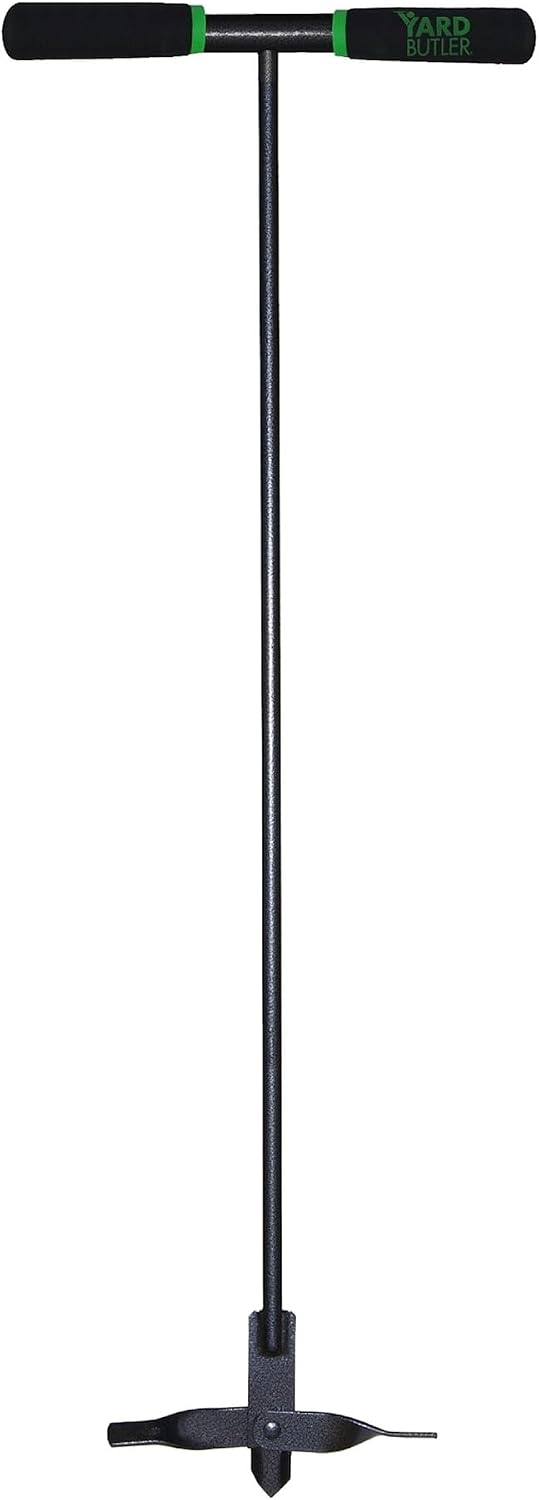
Pros
- Purpose-built for compost aeration rather than general digging
- Steel construction with a protective powder-coated finish
- Long-handled design may reduce bending during compost work
- Reviewers commonly describe it as sturdy and relatively easy to use when the wings deploy properly
Cons
- Several reviewers report that one or both folding wings may not always open consistently in compacted or wet compost
- Gardeners who want a multipurpose digging and turning tool may prefer a garden fork
- Very dense piles may require repeated plunges and occasional clearing around the wing mechanism
The Yard Butler ICA-36 Compost Aerator is a manual garden tool made for adding air and movement to a compost pile or bin. Instead of scooping and flipping material with a shovel or fork, it is designed to be pushed down into the compost and pulled back up so the folding wings can lift and loosen the pile. It is best suited to homeowners, beginner composters, and gardeners who want a simpler way to maintain a backyard compost system.
The main benefit is airflow. Compost piles work better when dense layers are loosened and oxygen can move through the material, and the product information indicates that this tool is intended to speed decomposition by improving aeration without full pile turning. It can also help mix fresh carbon material from the top into older material below, depending on the pile texture and how easily the wings open.
The listed construction is powder-coated steel, which gives it a more durable feel than lightweight plastic compost tools. The long handle is meant to provide leverage and reduce bending, while the cushioned handle is a useful comfort feature for repeated plunging motions. The item is listed at 1.4 pounds, so it should be manageable for many gardeners, although actual ease of use will depend on pile density and user strength.
In practical backyard use, this type of aerator makes the most sense for upright compost bins, small to medium compost piles, and gardeners who do not want to empty a bin just to mix the contents. It may be especially helpful where a shovel is awkward inside a narrow bin. Reviewers commonly mention using it to stir material, bring up lower layers, and mix in fresh additions, though experiences vary with wet or compacted compost.
The main limitation is the folding wing mechanism. Some reviewers say the wings open and mix well, while others report that one or both wings can stay folded or become clogged with compost, especially in dense material. For best results, gardeners may need to plunge at a slight angle, twist before lifting, and clear packed material from the wings as needed. Gloves are sensible when handling compost tools, and the tool should be cleaned and stored dry after use to help preserve the finish.
Overall, the Yard Butler ICA-36 is a focused compost aeration tool for gardeners who want less lifting than traditional turning. It is a good fit if you maintain a compost bin and want a simple manual way to add air, but a garden fork may be more versatile if you also need to dig, move bulky material, or fully turn large open piles.
Best For / Avoid If
Best for buyers prioritizing
- Purpose-built for compost aeration rather than general digging
- Steel construction with a protective powder-coated finish
- Long-handled design may reduce bending during compost work
Consider another option if
- Several reviewers report that one or both folding wings may not always open consistently in compacted or wet compost
- Gardeners who want a multipurpose digging and turning tool may prefer a garden fork
- Very dense piles may require repeated plunges and occasional clearing around the wing mechanism

Pros
- Purpose-built for compost aeration rather than general digging or raking.
- Ergonomic S-shaped handlebar may make turning compost feel less awkward than using a straight tool.
- Profiled teeth are intended to lift and mix material for better airflow through the compost.
- Tall handle length is helpful for gardeners who want to limit deep bending.
Cons
- Manual operation could require effort in dense, wet, or heavily compacted compost.
- The narrow working end may take more passes in a large compost pile than a broad fork or powered option.
- No accessory, cover, or storage feature is listed in the supplied specifications.
The Leborgne Naturovert 320061 is a manual compost aerator made for mixing and loosening compost in bins, heaps, and larger garden compost areas. It is best suited to gardeners who want a dedicated tool for improving airflow and turning organic material without relying on a shovel or garden fork.
The main benefit is its profiled tooth design, which the product information says can mix compost both horizontally and vertically. In practical terms, that means the tool is intended to pull up and shift material through the pile, helping reduce compacted pockets and supporting a more even composting process.
The listed design includes an S-shaped handlebar for a more comfortable grip and a 59.06-inch overall height, which may help reduce bending during regular compost maintenance. At 1.55 kg, it has some weight for working into material while still remaining a hand tool that many homeowners can manage.
This aerator makes sense for backyard gardeners who add kitchen scraps, leaves, grass clippings, or garden waste to a compost bin and need to stir the contents periodically. It can also be useful in small-space gardens where a full-size fork is awkward around bins, raised-bed areas, or compact compost stations.
Because it is manually operated, it may still take effort in wet, dense, or neglected compost, and very large piles may require multiple passes. Gardeners should use steady movements, avoid forcing the tool if it catches, and clean off stuck organic matter after use to keep the alloy steel working end ready for the next turning session.
Choose this Leborgne compost aerator if you want a long-handled, purpose-built tool for routine compost mixing with an ergonomic handle design. If you need to move large volumes of finished compost, dig soil, or break up heavy ground, a garden fork, shovel, or broader compost-turning tool may be the more suitable companion.
Best For / Avoid If
Best for buyers prioritizing
- Purpose-built for compost aeration rather than general digging or raking.
- Ergonomic S-shaped handlebar may make turning compost feel less awkward than using a straight tool.
- Profiled teeth are intended to lift and mix material for better airflow through the compost.
Consider another option if
- Manual operation could require effort in dense, wet, or heavily compacted compost.
- The narrow working end may take more passes in a large compost pile than a broad fork or powered option.
- No accessory, cover, or storage feature is listed in the supplied specifications.

Pros
- Long shaft is useful for reaching into deeper compost bins and backyard piles.
- Stainless steel construction supports outdoor garden use and easy rinsing after compost work.
- No sharp cutting blades, which may appeal to gardeners who prefer a less aggressive aerating tool.
- Reviewers commonly mention comfortable handling and usefulness for compost piles or lighter organic material.
Cons
- May be less suitable for very hard, compacted compost, based on one reviewer’s experience with dense ground-based material.
- The blunt, blade-free spiral design could require regular use before the pile dries out or packs down.
- Gardeners who need to break apart heavy, mature compost may prefer a fork or more aggressive turning tool.
The BIOGRN 46.5-inch Compost Aerator is a manual compost turning tool made for loosening backyard compost bins, outdoor piles, leaf piles, grass clippings, and mixed kitchen scraps. It is aimed at homeowners and beginner-to-intermediate composters who want to add air to a pile without using a shovel or digging fork every time.
Its main benefit is routine aeration. As compost settles, it can become dense, wet, and low in airflow. The product information indicates that the open-loop spiral end is meant to be inserted vertically, turned clockwise, and lifted to help loosen fresh or lightly compacted material. Used before a pile becomes too dry or tightly packed, this can make regular compost maintenance more manageable.
The tool measures 46.5 inches long and has a 0.48-inch stainless steel shaft. That extra length is useful for reaching into straight compost bins and deeper pile layers while reducing constant bending. The one-piece design requires no assembly, and the two green ribbed handles are intended to provide a steadier hand-crank grip while rotating the tool.
For small-space gardeners, this aerator could be a practical match for upright compost bins or contained backyard compost systems where a full-size garden fork is awkward. It can also be used in outdoor leaf and grass piles where the material is lighter and easier to loosen. Reviewers report positive results in compost piles and lighter compost areas, while one reviewer found it easier on newer compost and leaf or grass material than on dense, hard-packed compost.
There are some important limits to keep in mind. The spiral tip is blunt and the tool is deliberately made without sharp blades, so it should not be treated like a pry bar or used to force apart heavily compacted compost. The listed guidance is to keep it vertical, avoid bending or sideways prying, and turn counterclockwise first if it is difficult to pull out. For best results, aerate regularly and add dry materials such as leaves, shredded paper, or small wood chips when the pile is wet or odorous.
Overall, this is a sensible compost maintenance tool for gardeners who want a long, low-fuss aerator with simple storage. It is a better fit for ongoing pile care than for rescuing a neglected, rock-hard compost heap. If your compost is usually managed every week or two, the BIOGRN aerator offers a straightforward way to loosen material, improve airflow, rinse clean, and hang on the included wall mount between uses.
Best For / Avoid If
Best for buyers prioritizing
- Long shaft is useful for reaching into deeper compost bins and backyard piles.
- Stainless steel construction supports outdoor garden use and easy rinsing after compost work.
- No sharp cutting blades, which may appeal to gardeners who prefer a less aggressive aerating tool.
Consider another option if
- May be less suitable for very hard, compacted compost, based on one reviewer’s experience with dense ground-based material.
- The blunt, blade-free spiral design could require regular use before the pile dries out or packs down.
- Gardeners who need to break apart heavy, mature compost may prefer a fork or more aggressive turning tool.

Pros
- Useful for refreshing raised beds, planter soil, and small garden sections by hand
- Compact size is easier to store than full-length cultivating tools
- Listed steel prongs and coated finish are appropriate for repeated soil-loosening tasks
- FSC certified ash wood handle adds a responsibly sourced material detail
- Included cap, loop, and pouch support neater storage
Cons
- May be less suitable for large lawn aeration jobs or deeply compacted soil compared with larger aerators
- The shorter hand-tool format still requires bending, kneeling, or close access to the bed for many users
- No detailed information is provided about prong spacing, prong depth, or warranty coverage
The Vego Garden VTBTCR is a 17.3-inch manual bed cultivator designed for loosening compacted soil and refreshing the surface of planted beds. Based on the listed product information, it fits gardeners who maintain raised beds, planters, small vegetable plots, or ornamental beds and want a hand tool for working around plants with more control than a full-size rake.
The main working feature is the set of steel aerator prongs, which are described as shaped for clean aeration and fast surface refresh between plants. In practical terms, this type of tool is best used for breaking up crusted topsoil, lightly opening the surface before watering, and tidying small growing areas where a larger cultivator would be awkward.
The product dimensions list a 2.9-inch width and 17.3-inch height, giving it a compact profile for bed-side use and storage. The steel head has a blackened protective coating, while the handle is listed as FSC certified dark ash wood and shaped for comfort during repeated hand use.
For backyard gardeners, this cultivator makes the most sense around raised beds, container groupings, herb beds, and narrow planting rows where you want to work from the edge rather than step into the soil. It can also be a practical choice for gardeners who prefer simple manual tools over powered equipment for routine soil care.
There are some limits to keep in mind. This is not presented as a full lawn aerator, and the compact hand-tool format may not be the right match for broad turf areas, very hard ground, or gardeners who need a stand-up tool to reduce bending. As with any pronged garden tool, store it with the protective cap when possible and keep it away from walkways where the points could be a hazard.
Overall, the Vego Garden 17-inch bed cultivator is a tidy, focused tool for small-scale soil loosening and raised-bed maintenance. Gardeners who work mainly in beds and planters may appreciate its compact design and storage accessories, while those tackling large areas or deep compaction should consider a larger cultivating or aerating tool.
Best For / Avoid If
Best for buyers prioritizing
- Useful for refreshing raised beds, planter soil, and small garden sections by hand
- Compact size is easier to store than full-length cultivating tools
- Listed steel prongs and coated finish are appropriate for repeated soil-loosening tasks
Consider another option if
- May be less suitable for large lawn aeration jobs or deeply compacted soil compared with larger aerators
- The shorter hand-tool format still requires bending, kneeling, or close access to the bed for many users
- No detailed information is provided about prong spacing, prong depth, or warranty coverage

Pros
- Manual operation requires no fuel, battery, cord, or complicated setup.
- Three-row, 15-spike head is useful for spot aerating small lawns and problem patches.
- Provides a more stable approach than strap-on aerator shoes for gardeners who prefer a handled tool.
- Foot pedal and 34.6-inch handle are designed to add leverage and reduce bending.
- Compact, detachable design is easier to store than larger lawn aeration equipment.
Cons
- May be less suitable for large lawns or full-yard aeration projects where a powered or rental aerator would save time.
- Not recommended by the product information for heavy sticky clay soil, rocky ground, or very hard dry soil.
- Hard soil may need watering first, so results can depend on ground conditions and preparation.
The Walensee GT-LCA006 is a manual spike lawn aerator made for small-scale lawn maintenance rather than large renovation work. It is designed to press a set of iron spikes into turf, creating small holes that help open the soil surface before watering, fertilizing, or seeding. For homeowners, beginners, and gardeners maintaining smaller lawns or patchy areas, it offers a simple alternative to renting larger equipment.
The main practical benefit is targeted aeration in places that need extra attention, such as lawn edges, bare spots, narrow strips, and lightly compacted patches. The product information lists 15 iron spikes in a three-row layout, with each spike about 2.8 inches long. That arrangement should let the tool cover a modest area more efficiently than a single-row spike tool, while still giving the user control over where each press goes.
Its handled design is also important. Unlike aerator shoes, which can require strap adjustments and careful balance, this tool uses a cushioned T-handle and foot pedal for leverage. The listed 34.6-inch handle is intended to reduce bending, and the detachable construction helps with carrying, assembly, and storage. Based on the specifications, the tool weighs 4.49 pounds, which keeps it in the range of a portable manual lawn tool.
In a typical backyard, this aerator makes the most sense for maintenance passes over compacted walking paths, small front lawns, patio-adjacent grass, or spots being prepared for reseeding. It can also be useful where a bulky aerator would be awkward, such as tight side yards or around landscape borders. Because it is manual, it is best used patiently in sections rather than treated like a fast whole-lawn machine.
There are some clear limitations. The product information says it is not recommended for heavy sticky clay soil, rocky ground, or large-scale aeration jobs. If the soil is hard or dry, watering the lawn first is recommended to soften the ground before use. Gardeners should also use care around the sharp spikes, clean soil from the tool after use, and store it safely where the spike head will not be a tripping or puncture hazard.
Overall, the Walensee GT-LCA006 is a practical choice for gardeners who want a simple, handled spike aerator for small lawn areas and occasional spot work. Those dealing with large lawns, severe compaction, rocky soil, or heavy clay may be better served by a core aerator or a more powerful lawn-care option suited to tougher ground conditions.
Best For / Avoid If
Best for buyers prioritizing
- Manual operation requires no fuel, battery, cord, or complicated setup.
- Three-row, 15-spike head is useful for spot aerating small lawns and problem patches.
- Provides a more stable approach than strap-on aerator shoes for gardeners who prefer a handled tool.
Consider another option if
- May be less suitable for large lawns or full-yard aeration projects where a powered or rental aerator would save time.
- Not recommended by the product information for heavy sticky clay soil, rocky ground, or very hard dry soil.
- Hard soil may need watering first, so results can depend on ground conditions and preparation.

Pros
- Adjustable length is useful for gardeners of different heights and for reducing stooping during light cultivating tasks.
- Removable center wheels add practical precision for working near seedlings or tighter rows.
- Hand-powered design is simple to use and store, with no battery charging or fuel handling.
- Listed lifetime warranty adds reassurance for a garden tool intended for repeated seasonal use.
Cons
- As a manual rotary cultivator, it may be less suitable for large plots, compacted clay, or deep tilling compared with a powered tiller.
- Some reviewers report frustration with the telescoping handle lock, so users may need to confirm the sections are tightened correctly before work.
- The product information does not indicate included instructions, and one reviewer noted that setup guidance was unclear.
The Fiskars 98966935 Telescoping Rotary Cultivator is a standing hand tool for loosening soil, cultivating around plants, aerating beds, and preparing small lawn areas for reseeding. It fits the needs of homeowners, flower-bed gardeners, and older gardeners who want to avoid repeated kneeling or bending for light to moderate soil work.
The main garden benefit is controlled surface cultivation. The product information indicates that the six aluminum wheels are intended to power through tough soil, while the removable center wheels make it easier to narrow the working width around seedling rows. That combination is useful when you need more precision than a broad rake but do not need a powered tiller.
The handle adjusts from 40 to 60 inches and locks in place, giving users a better chance of matching the tool length to their height and task. Based on the listed specifications, it has an all-steel shaft, a lightweight FiberComp head, aluminum cultivating wheels, manual operation, and a 2.4 pound listed weight. The compact head dimensions also make it practical for working between beds and storing with other long-handled tools.
In a backyard setting, this tool is most sensible for flower beds, vegetable rows, raised-bed surface prep, small bare lawn patches, and reseeding touch-ups. It can help roughen the soil surface before adding seed or amendments, and it can disturb shallow weeds in cultivated areas. For very large lawns or full bed renovation, a heavier tool or powered equipment may be more efficient.
There are a few practical cautions. Because it is hand-powered, results will depend on soil condition and the effort applied, and it should not be treated as a substitute for deep tillage in hard ground. Some reviewers mention handle slippage or confusion about tightening the adjustable handle, so it is wise to check the lock before use. Clean soil from the wheels after work and store the tool out of the weather to help preserve the head, shaft, and adjustment mechanism.
Overall, the Fiskars telescoping rotary cultivator is a useful choice for gardeners who want a lightweight, adjustable, non-powered tool for routine cultivating and lawn patch preparation. Gardeners managing compacted soil, very large areas, or deep bed turnover should consider a heavier cultivator or powered tiller instead.
Best For / Avoid If
Best for buyers prioritizing
- Adjustable length is useful for gardeners of different heights and for reducing stooping during light cultivating tasks.
- Removable center wheels add practical precision for working near seedlings or tighter rows.
- Hand-powered design is simple to use and store, with no battery charging or fuel handling.
Consider another option if
- As a manual rotary cultivator, it may be less suitable for large plots, compacted clay, or deep tilling compared with a powered tiller.
- Some reviewers report frustration with the telescoping handle lock, so users may need to confirm the sections are tightened correctly before work.
- The product information does not indicate included instructions, and one reviewer noted that setup guidance was unclear.

Pros
- Durable aluminum construction is well suited to regular soil-loosening and weeding tasks.
- Comfort-focused handle may reduce hand strain compared with basic straight-handled tools.
- Lightweight 8 ounce design is easy to carry around beds and store with other hand tools.
- Reviewers commonly mention sturdiness and usefulness in raised beds, flower beds, and rock-covered areas.
- Hanging hole makes storage simple and helps prevent the tool from being misplaced.
Cons
- As a hand cultivator, it may be less suitable for large garden plots or deep soil preparation than a long-handled or powered tool.
- Gardeners working in very compacted soil may need to moisten the soil or use a larger tool first.
- The short handle requires bending, kneeling, or working close to the ground, which may not suit every gardener.
The Fiskars Ergo Cultivator is a compact manual hand cultivator made for everyday garden maintenance, including loosening soil, aerating small planting areas, and helping remove weeds. Based on the listed specifications, it is best viewed as a close-up bed tool for homeowners, beginner gardeners, raised-bed growers, and anyone maintaining flowers, vegetables, or small landscaped areas.
The main value is the cast-aluminum head and tines. The product information indicates that the polished aluminum construction supports rust resistance and durability, while the tine shape is intended to cut into tough soil, loosen the surface, and work around weeds. For gardeners who only need to refresh planting pockets, break up crusted soil, or clean up around established plants, this type of tool is often more precise than a large cultivator.
The tool measures 3 by 4 by 13 inches and weighs 8 ounces, so it should be easy to carry, store, and maneuver between plants. Its ergonomic non-slip grip is designed to improve control and reduce fatigue during repetitive pulling and scratching motions. The handle also includes a hanging hole, which is a small but useful feature for keeping hand tools visible and organized in a shed, garage, or greenhouse work area.
In real garden use, this cultivator makes the most sense for raised beds, flower borders, container-adjacent work, and small backyard beds where you are loosening just the top layer of soil. Reviewers commonly mention that it feels sturdy, works well for weeding, and is useful in raised beds and rock-covered areas, though those comments should be treated as customer experience rather than controlled testing.
There are a few practical limits to keep in mind. This is a short hand tool, so it requires kneeling, bending, or working from a seated position, which may be uncomfortable for some older gardeners or anyone with limited mobility. It is also not a substitute for a long-handled cultivator, hoe, broadfork, or powered tiller when preparing a large plot or breaking up deeply compacted ground.
Overall, the Fiskars Ergo Cultivator is a sensible choice if you want a durable, simple hand tool for routine soil loosening and weeding in smaller garden spaces. Gardeners who need to cultivate large beds while standing upright, or who regularly work heavy compacted soil, may prefer a larger long-handled option instead.
Best For / Avoid If
Best for buyers prioritizing
- Durable aluminum construction is well suited to regular soil-loosening and weeding tasks.
- Comfort-focused handle may reduce hand strain compared with basic straight-handled tools.
- Lightweight 8 ounce design is easy to carry around beds and store with other hand tools.
Consider another option if
- As a hand cultivator, it may be less suitable for large garden plots or deep soil preparation than a long-handled or powered tool.
- Gardeners working in very compacted soil may need to moisten the soil or use a larger tool first.
- The short handle requires bending, kneeling, or working close to the ground, which may not suit every gardener.

Pros
- Good choice for small-scale soil loosening, aerating, and weeding in beds and containers
- Stainless steel head provides a rust-resistant working surface
- SoftGrip handle and balanced design support more comfortable hand use
- Compact manual tool is easy to store and does not require power
- Reviewers commonly mention a sturdy feel and comfortable grip
Cons
- May be less suitable for large beds or heavy soil preparation where a long-handled cultivator or tiller would save effort
- Manual use can still require wrist and hand strength, especially in compacted or dry soil
- The listed warranty information is not detailed, so buyers may need to check the manufacturer for coverage specifics
The Fiskars Xact Hand Cultivator is a manual hand garden cultivator made for loosening and aerating soil, as well as helping remove weeds. Based on the listed product information, its deep, curved tines are aimed at close-up work in flower beds and garden beds rather than broad tilling jobs. It should appeal to homeowners, beginner gardeners, and raised-bed growers who want a compact tool for routine bed maintenance.
The main working advantage is the tine shape. Curved tines can bite into the surface layer of soil, pull through crusted areas, and help disturb shallow weed roots around established plantings. The product information also notes a stainless steel head that resists rust, which is a useful feature for a tool that may be exposed to damp soil, rinsing, and outdoor storage conditions.
The tool measures 5 inches deep by 8 inches wide by 17 inches high and weighs 0.61 pounds, according to the supplied specifications. Its SoftGrip handle offers multiple grip positions, and the longer, weighted handle is designed to provide better balance and control. A hang hole is included for simple storage on a wall hook or tool rack.
In everyday garden use, this cultivator makes the most sense for working between vegetable plants, refreshing the top layer of soil in raised beds, loosening soil before adding compost, or teasing weeds out of flower borders. Its manual design also suits patio gardeners and small-space growers who do not need powered equipment for quick maintenance tasks.
There are some practical limits to keep in mind. A hand cultivator is not the most efficient choice for breaking new ground, renovating a large bed, or working deeply compacted soil over a wide area. Gardeners with hand or wrist discomfort may also prefer a long-handled tool for less bending and less close-up force. As with any pointed garden tool, it should be stored safely and kept away from walkways where the tines could be stepped on.
Overall, the Fiskars Xact Hand Cultivator looks like a useful, straightforward tool for gardeners who regularly weed, loosen, and tidy smaller planting areas. Choose it if you want a compact stainless steel hand cultivator with a comfort-focused handle, but consider a larger cultivator or tiller if your main task is preparing big beds from scratch.
Best For / Avoid If
Best for buyers prioritizing
- Good choice for small-scale soil loosening, aerating, and weeding in beds and containers
- Stainless steel head provides a rust-resistant working surface
- SoftGrip handle and balanced design support more comfortable hand use
Consider another option if
- May be less suitable for large beds or heavy soil preparation where a long-handled cultivator or tiller would save effort
- Manual use can still require wrist and hand strength, especially in compacted or dry soil
- The listed warranty information is not detailed, so buyers may need to check the manufacturer for coverage specifics

Pros
- Hollow-tine design removes plugs to open pathways for air, water, and nutrients.
- Replaceable tines are a practical feature for long-term maintenance.
- Reviewers commonly mention sturdy construction, easy assembly, and clean plug ejection when the soil is slightly moist.
- Light enough to store and move easily at a listed weight of 3.52 pounds.
Cons
- Manual aeration still requires physical effort, especially in dense clay, rocky, or severely compacted soil.
- The product instructions caution against twisting or prying while the tines are underground, so it may not suit users who need a tool for very hard ground without soil preparation.
- One reviewer noted that the connection bolt and nut may contact the inside of the knee depending on leg length.
The hugeneroy HC-ALT-Blue-Z0-FX is a manual push core aerator designed for lawn care tasks where compacted soil is limiting airflow, water movement, and nutrient access. Instead of using solid spikes, it uses three hollow tines to remove small soil plugs, making it a practical choice for homeowners working on small lawns, narrow side yards, high-traffic turf, or stubborn compacted patches.
The main benefit of this style of aerator is that it creates open channels in the soil. According to the product information, the hollow tines extract compacted soil cores so air, water, and nutrients can reach deeper toward the grass roots. That makes it especially relevant before overseeding, after heavy foot traffic, or in areas where water tends to sit on the surface rather than soaking in.
The listed design includes industrial-strength steel construction, tempered hollow tines, an easy-grip handle, and replaceable coring tines. The tool is semi-assembled and includes tools for setup, so it should be approachable for a homeowner who does not want a complicated assembly process. Its listed dimensions are 15.68 x 10 x 2.7 inches, and at 3.52 pounds, it should be manageable to carry, store, and move around the yard.
For everyday backyard use, this aerator makes the most sense as a spot-treatment tool rather than a large-property solution. It can be used around compacted walkways, pet paths, small front lawns, or trouble areas where grass struggles. Reviewers commonly mention that it works more easily when the soil is slightly moist, and several note that plugs eject cleanly under those conditions.
There are a few important use considerations. The product information recommends watering dry areas 24 hours before use, pushing and pulling vertically, and avoiding sideways twisting or prying while the tines are underground. That matters because hard, dry, rocky, or heavily compacted soil can put extra stress on a manual aerator and on the user. Gardeners should wear sturdy shoes, work at a comfortable pace, and stop if the tool binds rather than forcing it sideways.
Overall, this is a sensible option for homeowners who want a simple, non-powered tool for improving compacted turf in manageable sections. Gardeners with very large lawns, severe compaction across the whole yard, or limited strength and stamina may be better served by renting or hiring a larger core aerator, but for routine spot aeration, the feature set is well matched to practical home lawn care.
Best For / Avoid If
Best for buyers prioritizing
- Hollow-tine design removes plugs to open pathways for air, water, and nutrients.
- Replaceable tines are a practical feature for long-term maintenance.
- Reviewers commonly mention sturdy construction, easy assembly, and clean plug ejection when the soil is slightly moist.
Consider another option if
- Manual aeration still requires physical effort, especially in dense clay, rocky, or severely compacted soil.
- The product instructions caution against twisting or prying while the tines are underground, so it may not suit users who need a tool for very hard ground without soil preparation.
- One reviewer noted that the connection bolt and nut may contact the inside of the knee depending on leg length.

Pros
- Compact three-tine design is well suited to detailed soil loosening in beds and planters.
- Compatible with the Gardena combisystem handle range according to the product information.
- Corrosion-protected steel construction supports durability with normal care.
- Ergonomic grip and slip-stop handle shape are helpful for controlled hand use.
Cons
- The 7 cm head may be too narrow for gardeners who need to cultivate large areas quickly.
- A separate combisystem long handle is required if you want to use it without bending.
- Three tines are best for loosening and aerating, not for raking leaves or moving large volumes of debris.
The Gardena 8921-20 combisystem Hand Grubber is a compact three-tined garden claw intended for loosening and aerating soil. Based on the listed product information, it is especially relevant for home gardeners working in flower beds, vegetable beds, containers, and other areas where a full-size rake or cultivator would be awkward.
Its main value is controlled soil preparation. The three tines are designed to break up and aerate soil in a way that is described as easy on roots, which makes it a practical choice for working near established plants. The 7 cm working width gives the tool a precise feel for small spaces rather than broad, fast coverage.
The tool has an ergonomically shaped hand grip with soft components and an angled end to help reduce slipping. The head is listed as alloy steel with a Duroplast coating for corrosion protection, and the overall listed weight is 250 grams. It is also part of the Gardena combisystem, so the hand grip can be removed and replaced with a compatible combisystem handle if a longer reach is preferred.
In everyday garden use, this hand grubber makes sense for loosening crusted soil around herbs, refreshing planter surfaces, aerating small raised-bed sections, or working between closely spaced ornamentals. It is not a leaf rake or a large cultivator, but its narrow head can be an advantage where accuracy matters more than speed.
The main limitation is coverage. Gardeners preparing a large vegetable plot or breaking heavy, compacted ground may want a wider or more robust long-handled cultivator. Also note that the long combisystem handle is not included, so anyone buying it specifically for upright work should plan for that separate accessory. For small-scale soil loosening and careful bed maintenance, the feature set is practical and well matched to detail work.
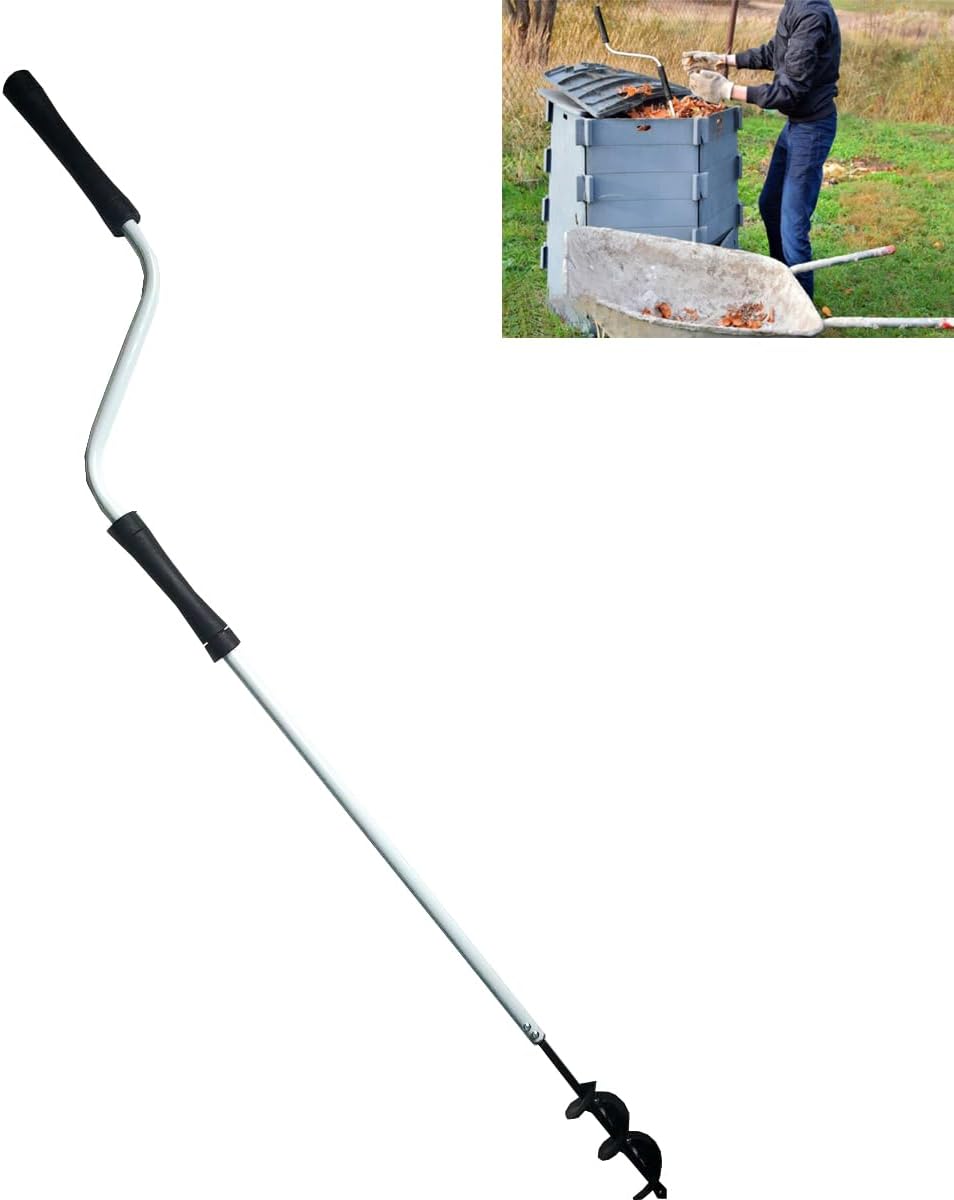
Pros
- Simple manual operation with no installation steps or power source required.
- Long 43-inch shaft is useful for reaching down into many outdoor compost bins.
- Dual anti-slip handles can make twisting more controlled than using a plain rod.
- Reviewers commonly mention that it is easy to screw into compost, though lifting and stirring can still take effort.
Cons
- May be less effective in a very shallow or only partially filled bin, based on mixed reviewer feedback.
- Dense, compacted compost can still require steady twisting and lifting effort.
- Gardeners who want to fully flip large piles may still prefer a fork, shovel, tumbler, or powered equipment.
The Focefec 0888 compost aerator is a manual turning tool made for loosening and aerating compost in outdoor bins and piles. Based on the listed specifications, it uses a long iron bar with spiral plates at the working end and dual handles at the top, giving home gardeners a straightforward way to mix leaves, grass clippings, kitchen scraps, and other compostable material.
The main benefit is routine aeration. Turning compost helps reduce compaction and introduces air into the pile, which supports the natural decomposition process. The product information indicates that the spiral plates are designed to stir and lift material as the tool is twisted into the compost and drawn back upward.
At about 43 inches long, this tool offers useful reach for many backyard compost bins while keeping the user’s hands away from the pile. The iron construction, listed rustproof finish, 2-inch spiral plates, and 5.1-inch anti-slip handles all point to a simple, durable design. It also arrives as a no-assembly tool, which is helpful for gardeners who want a low-fuss compost accessory.
In practical use, this style of aerator fits gardeners who maintain stationary compost bins rather than rotating tumblers. It can be especially useful in small yards, vegetable garden areas, and backyard compost stations where a pitchfork may feel awkward or where there is limited space around the bin. Reviewers commonly describe the tool as easy to screw into compost, though several note that breaking up dense material still takes effort.
There are a few limitations to keep in mind. A partially filled bin may not give the spiral end enough material to grab and mix effectively, and heavily compacted lower layers can take repeated twists and lifts. Use steady body positioning, avoid overstraining your back or wrists, and clean soil or compost residue from the tool before storing it.
This is a sensible choice for gardeners who want a dedicated compost turning tool that is simpler than a fork and does not require power. If you need to move large volumes of material, completely rebuild a pile, or manage heavy farm-scale compost, a larger turning method may be more efficient.
Best For / Avoid If
Best for buyers prioritizing
- Simple manual operation with no installation steps or power source required.
- Long 43-inch shaft is useful for reaching down into many outdoor compost bins.
- Dual anti-slip handles can make twisting more controlled than using a plain rod.
Consider another option if
- May be less effective in a very shallow or only partially filled bin, based on mixed reviewer feedback.
- Dense, compacted compost can still require steady twisting and lifting effort.
- Gardeners who want to fully flip large piles may still prefer a fork, shovel, tumbler, or powered equipment.
Guía de compra de la mejor herramienta aireadora de compost
Elige una herramienta diseñada para compost, no solo para suelo
Una herramienta aireadora de compost está diseñada para introducirse en el material orgánico y crear canales de aire o levantar el material enterrado hacia la superficie. Las herramientas en espiral y de manivela, como Lotech Products Compost Crank Compost Aerator, EJWOX Stainless Steel Compost Aerator Tool, Sewiden Compost Turning Tool, Focefec Compost Aerator Tools y BIOGRN 46.5" Compost Aerator Tool, son más adecuadas para cubos y pilas de compost exteriores que los cultivadores manuales cortos.
Los cultivadores manuales generales pueden aflojar la tierra del jardín, y un aireador sacabocados para césped puede extraer pequeños cilindros de tierra del césped, pero esas herramientas no se ajustan tan bien a la tarea prevista de trabajar dentro de un cubo de compost. Por este motivo, no se consideraron recomendaciones finales para la mejor herramienta aireadora de compost.
Adapta la longitud a la profundidad del cubo y a la comodidad de tu espalda
La longitud importa porque los cubos de compost suelen ser más profundos de lo que parecen una vez que las hojas y los restos de comida se asientan. Lotech Products Compost Crank figura con una altura de 46 pulgadas y una profundidad efectiva de 30 pulgadas, mientras que el modelo BIOGRN aparece con una longitud de 46.5 pulgadas. Focefec indica una longitud de 110 cm, o 43.3 pulgadas, y Sewiden indica una altura de 33.4 pulgadas.
Si utilizas un cubo alto y de paredes rectas, una herramienta más larga puede reducir la necesidad de agacharte y ayudarte a alcanzar las capas más profundas. Si usas una bolsa de compostaje más pequeña, la puerta de acceso de un compostador giratorio o un cubo bajo, una herramienta más corta puede resultar más fácil de maniobrar sin golpear los laterales.
Compara los diseños en espiral, sacacorchos y con dientes perfilados
Los aireadores con diseño en espiral y sacacorchos están pensados para introducirse en la pila, girarse y levantarse, de modo que el material se mueva y entre aire en el compost. El modelo de LotechProducts utiliza un diseño de sacacorchos y se describe como capaz de trabajar en las esquinas y atravesar enredaderas y otros ingredientes problemáticos. EJWOX, Sewiden, Focefec y BIOGRN también describen funciones de giro o mezcla en espiral.
Leborgne Naturovert Aerompost utiliza dientes perfilados para mezclar en horizontal y vertical, según los datos proporcionados del producto. Esto puede resultar atractivo para los jardineros que prefieren una acción de mezcla más parecida a la de un rastrillo en lugar de una espiral accionada por manivela.
Presta atención al tipo de mango y a la comodidad del agarre
Airear el compost es una tarea repetitiva, por lo que la comodidad del mango no es un detalle menor. Lotech Products Compost Crank tiene mangos de nailon reforzado con fibra de vidrio que giran libremente, EJWOX indica un mango de madera dura de giro libre y BIOGRN incluye dos mangos acanalados antideslizantes. Focefec indica mangos de esponja antideslizantes, mientras que Leborgne describe un manillar con forma de S para facilitar el uso.
Los jardineros con molestias en las muñecas, los hombros o la espalda deberían dar prioridad a un tipo de mango que permita girar la herramienta sin apretar demasiado. Considera también si puedes utilizarla manteniéndote erguido, especialmente si el cubo de compost es alto o está colocado sobre un terreno irregular.
Comprueba el material y las afirmaciones sobre resistencia al óxido
Las herramientas de compost trabajan con material húmedo y arenoso, por lo que el material indicado es importante. LotechProducts indica acero inoxidable macizo de 3/8 de pulgada, BIOGRN indica un eje grueso de acero inoxidable prémium de 0.48 pulgadas y EJWOX describe una estructura de acero resistente. Focefec indica placas espirales de hierro y describe la herramienta como resistente al óxido y duradera, mientras que Sewiden describe resistencia al óxido y a la corrosión.
El acero inoxidable puede ser una buena opción para un uso frecuente en exteriores cuando así lo indica el fabricante. Aun así, cualquier aireador de compost debe enjuagarse y secarse después de usarlo cuando sea posible, ya que los residuos húmedos de compost que quedan en la herramienta pueden dificultar la limpieza con el tiempo.
Ten en cuenta la preparación, el almacenamiento y el mantenimiento habitual
Varias de las herramientas de compost válidas se describen como fáciles de empezar a utilizar. LotechProducts afirma que Compost Crank está lista para usarse sin necesidad de montaje, BIOGRN indica que su herramienta de mezcla de compost de una sola pieza no requiere montaje, Sewiden afirma que no necesita una preparación complicada y Focefec indica que no hay pasos de instalación.
El almacenamiento resulta más sencillo cuando una herramienta larga tiene un lugar claro donde colgarse. BIOGRN incluye un soporte de pared personalizado con dos púas, mientras que otras herramientas solo necesitan un cobertizo seco, un gancho en el garaje o un espacio de almacenamiento junto al cubo. Enjuaga el compost, deja que la herramienta se seque y mantén los mangos alejados del agua estancada.
Evita errores habituales al airear el compost
Un error habitual es esperar hasta que la pila esté extremadamente seca, densa o apelmazada antes de airearla. BIOGRN señala específicamente que su cabezal en espiral es ideal para compost fresco o ligeramente compactado y sugiere airear antes de que la pila se seque o compacte demasiado. Remover con regularidad y de forma moderada suele ser más fácil tanto para el jardinero como para la herramienta que forzarla a través de una pila descuidada.
Otro error es tratar cualquier aireador como si fuera una palanca. Introduce, gira y levanta la herramienta según el diseño indicado por el producto, y evita aplicar una fuerza lateral repentina si se atasca. Sigue las instrucciones de uso y seguridad del fabricante, utiliza guantes de jardinería si los necesitas y mantén una posición estable alrededor del cubo.
Piensa en los espacios pequeños y los compostadores giratorios
Los jardineros con poco espacio suelen hacer compost en cubos compactos, bolsas o compostadores giratorios, donde un horcón de jardín grande puede resultar incómodo. EJWOX describe su uso en compostadores giratorios y cubos, y Sewiden describe su uso con cubos y bolsas de compostaje giratorios para exteriores. Estos diseños pueden ser adecuados para jardineros que necesitan una herramienta específica para mezclar, en lugar de una herramienta grande para cavar.
Antes de comprar, compara la longitud de la herramienta y la anchura del cabezal con la abertura de tu cubo. Una herramienta larga puede resultar cómoda en un cubo alto, pero una abertura pequeña puede requerir un diseño más estrecho o fácil de inclinar.
Metodología de investigación y confianza
Nuestro análisis se basa en las especificaciones, precios, valoraciones, número de reseñas, descripciones y características indicadas de los productos disponibles en julio de 2026. Esta es una comparativa de productos basada en la investigación, no una afirmación de pruebas físicas ni de instalación en un sistema de compostaje de Dove Creek Gardens.
Analizamos cada artículo según su relevancia para la palabra clave mejor herramienta aireadora de compost y la categoría Compost, suelo y acolchado. Se consideraron válidos los productos diseñados claramente para cubos, pilas, bolsas o compostadores giratorios. Los cultivadores generales de suelo, los escardadores manuales y los aireadores sacabocados para césped se excluyeron de las recomendaciones finales porque su tarea indicada no es principalmente remover compost.
Los factores de clasificación incluyeron el diseño específico para compost, la longitud indicada de la herramienta, la comodidad del mango, los requisitos de montaje, las afirmaciones sobre el material y la resistencia al óxido, las funciones de almacenamiento, la solidez de la valoración cuando había datos de reseñas y la adecuación para sistemas habituales de compostaje doméstico. También tuvimos en cuenta la facilidad de uso para principiantes y la accesibilidad, porque muchos propietarios buscan una herramienta que reduzca la necesidad de agacharse y levantar peso.
Recomendaciones finales
Mejor opción general: Lotech Products Compost Crank Compost Aerator. Según las especificaciones indicadas, ofrece una altura total de 46 pulgadas, una profundidad efectiva de 30 pulgadas, una estructura de acero inoxidable macizo de 3/8 de pulgada, mangos de giro libre, ausencia de montaje necesario, una garantía limitada de por vida y el perfil de valoración más sólido de los datos proporcionados, con 4.8 de 5 a partir de 511 reseñas.
Opción accesible: 46.5" Compost Aerator Tool, Manual Compost Turner, No Assembly Stainless Steel Compost Stirring Tool for Compost Bins, Outdoor Compost Piles & Backyard Composting, Wall Mount Hook. La herramienta de BIOGRN destaca por su longitud de 46.5 pulgadas, su diseño de una sola pieza sin montaje, sus mangos acanalados antideslizantes, su eje de acero inoxidable y el soporte de pared incluido, que puede ayudar a los jardineros a mantener la herramienta al alcance y alejada del suelo.
Mejor para principiantes: Compost Turning Tool,Compost Stirring Tool,Compost Aerator Tool Turner and Mixing Tool for Outdoor Compost Tumbler Bins Bags. La herramienta de Sewiden se describe como un modelo que no requiere una preparación complicada, con una altura de 33.4 pulgadas, una espiral de 5.9 pulgadas y un sencillo método de introducción y giro para cubos de compost exteriores. Los jardineros que quieran comparar un precio indicado más bajo entre las herramientas de compost válidas también pueden consultar Focefec Compost Aerator Tools por $35.99.
Preguntas frecuentes
¿Cuál es la mejor herramienta aireadora de compost para principiantes?
Los principiantes deberían buscar una herramienta específica para compost, con un funcionamiento sencillo, mangos cómodos y poco o ningún montaje. Sewiden Compost Turning Tool y BIOGRN 46.5" Compost Aerator Tool indican una preparación sencilla, mientras que Lotech Products Compost Crank está lista para usarse sin necesidad de montaje.
¿Qué longitud debe tener una herramienta aireadora de compost?
Elige la longitud según la profundidad del cubo y la cantidad de agachamientos que quieras evitar. Las herramientas más largas, como el modelo de 46 pulgadas de LotechProducts y el modelo de 46.5 pulgadas de BIOGRN, son más adecuadas para cubos profundos y pilas exteriores, mientras que las herramientas más cortas pueden resultar más fáciles de usar en cubos o bolsas compactos.
¿Puedo utilizar un cultivador de suelo como mejor herramienta aireadora de compost?
Un cultivador de suelo puede aflojar la tierra del jardín, pero normalmente no es la herramienta más práctica para llegar al interior de una pila de compost. Para el compost, un diseño en espiral, sacacorchos, de manivela o específico para mezclar compost suele ajustarse mejor a la tarea.
¿Cómo se mantiene un aireador manual de compost?
Después de usarlo, retira los restos de compost adheridos, enjuaga la herramienta si es necesario y deja que se seque antes de guardarla. Mantenla en un cobertizo, garaje o colgada de un gancho de pared cuando sea posible, como el soporte incluido con el modelo BIOGRN.
¿Vale la pena considerar un aireador de compost de acero inoxidable?
Vale la pena considerar el acero inoxidable si tienes previsto airear con regularidad o guardar la herramienta cerca de zonas de compostaje húmedas. LotechProducts indica una estructura de acero inoxidable macizo y BIOGRN indica un eje de acero inoxidable prémium; ambas son características relevantes para el uso del compost en exteriores.
¿Qué consejos de seguridad son importantes al utilizar una herramienta aireadora de compost?
Trabaja sobre una superficie estable, mantén las manos alejadas de la espiral o los dientes y evita forzar la herramienta lateralmente si se engancha. Sigue las instrucciones del fabricante para introducir, girar, levantar, limpiar y guardar la herramienta.
Continúa investigando sobre jardinería
Consulta más guías prácticas en Compost, suelo y acolchado.
Descubre cómo Dove Creek Gardens investiga y compara productos.