


Avviare un contenitore per vermicompostaggio può sembrare intimidatorio la prima volta: servono un contenitore, una routine per gli scarti alimentari, un piano per il materiale di lettiera e un modo per raccogliere il vermicompost maturo senza creare odori o disordine. Questa guida su come usare un contenitore per compostaggio con vermi è pensata per proprietari di casa, giardinieri principianti, coltivatori in appartamento, giardinieri anziani che desiderano una gestione più semplice e chiunque voglia trasformare i rifiuti di cucina in compost utile in uno spazio gestibile.
Abbiamo confrontato l’elenco confrontato di 17 prodotti, quindi abbiamo valutato ogni articolo in base alla sua compatibilità con il compostaggio con vermi, il vermicompostaggio e la categoria Compost, Soil & Mulch. Le opzioni più pertinenti includono contenitori impilabili per vermi, vermicompostiere da interrare, un contenitore in tessuto per il compostaggio con vermi e libri per principianti che spiegano come allestire e mantenere un contenitore per vermi. Un normale composter rotante da esterno non è stato considerato una raccomandazione per il compostaggio con vermi, perché i dati del produttore descrivono un compostaggio a caldo mediante rotazione, non il vermicompostaggio.
Prezzo, accessibilità, indicazioni sulla capacità, design con vaschette o da interrare, facilità di raccolta, posizione e istruzioni per principianti contano più dell’entusiasmo pubblicitario.
Worm Factory 360 Vermicomposting System for Compact Food-Waste Recycling Urban Worm Bag Version 2 Worm Composting Bin for Continuous, Easy Casting Harvest VermiHut Plus 5-Tray Worm Compost Bin for Compact Indoor and Outdoor Food Scrap Recycling JupiterForce 80-Gallon Compost Bin, Ventilated Outdoor Composter for Kitchen Scraps and Yard Waste Prices and availability can change. We may earn a commission from qualifying purchases.


Alcune schede qui sotto sono ancora in inglese; la traduzione è in revisione.
Pros
- Compact four-tray format suits homes, patios, and other areas where floor space is limited.
- Nested trays are intended to make ongoing composting and finished-compost removal more organized.
- Clear setup process can be approachable for gardeners new to vermicomposting.
Cons
- It requires worms, bedding, and regular food-scrap management, so it is not a passive storage container.
- Gardeners needing a larger-capacity system may find the four-tray, compact format less suitable for higher food-waste volumes.
The Worm Factory 360 is a four-tray vermicomposting system for recycling household food scraps with the help of composting worms. It is suited to homeowners, beginner gardeners, and small-space growers who want an organized way to handle food waste without dedicating much floor space to a composting setup.
Its main practical benefit is the nested-tray arrangement. As worms process material, the feature design encourages them to move upward, leaving more finished compost in the lower trays for removal. This can make the composting cycle easier to organize than a single open container that must be emptied and mixed.
The system is listed at 17.95 by 17.95 by 14.95 inches and weighs 11 pounds. The setup instructions call for assembling the stand, placing the first tray, adding bedding, food scraps, and worms, then continuing to add materials to the top tray. Its black plastic construction and compact shape may fit conveniently in a designated home or garden area.
For backyard and patio use, the four-tray layout provides a structured way to process kitchen food scraps while keeping active and finished material in separate levels. The customizable tray approach may also help households adjust the setup to their available space and food-waste routine, rather than requiring a larger composting unit from the start.
This system requires ongoing attention to bedding, worms, and food scraps, so it may be less suitable for anyone seeking a maintenance-free waste container. Based on the listed features, it is a practical choice for gardeners who want compact, organized vermicomposting at home, while those with unusually high food-waste volumes may prefer a larger-capacity option.
Specifications
| Color | Black |
|---|---|
| Size | 4 Trays |
| Dimensions | 17.95 x 17.95 x 14.95 Inches |
| Weight | 11 pounds |
| Product Group | Lawn & Patio |
| Binding | Lawn & Patio |
Verify the current product variation before purchase; specifications may change.
Best For / Avoid If
Best for buyers prioritizing
- Compact four-tray format suits homes, patios, and other areas where floor space is limited.
- Nested trays are intended to make ongoing composting and finished-compost removal more organized.
- Clear setup process can be approachable for gardeners new to vermicomposting.
Consider another option if
- It requires worms, bedding, and regular food-scrap management, so it is not a passive storage container.
- Gardeners needing a larger-capacity system may find the four-tray, compact format less suitable for higher food-waste volumes.
Pros
- Harvesting from the bottom is simpler than managing multiple worm-composting trays.
- The continuous-flow format allows feeding and harvesting as separate routine tasks.
- Tool-free assembly and adjustable opening make the bin straightforward to set up and manage.
Cons
- Its approximately 27-inch square footprint and nearly 32-inch height may be too large for very limited indoor or balcony spaces.
- Gardeners who prefer a rigid bin or need specific capacity measurements may want a different composting setup.
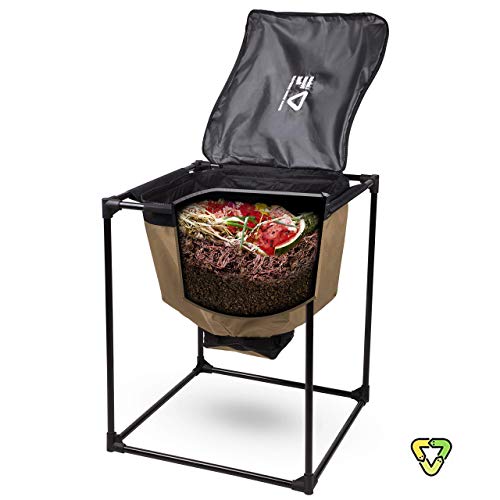
The Urban Worm Bag Version 2 is a fabric worm composting bin for gardeners who want to process organic material and collect worm castings in a continuous-flow system. It is best suited to homeowners and small-space gardeners with a dedicated patio, utility area, or backyard location that can accommodate its listed dimensions.
Its main practical benefit is the bottom-harvest design. Gardeners feed material through the top and remove finished castings from the bottom, without sorting worms from a series of trays. The design is intended to let the worm population remain in place while harvesting takes place.
The bin uses 900D Oxford fabric and includes a detachable opening that can be kept open or closed to help control moisture. Based on the listed specifications, the brown and black bin measures 26.75 by 26.75 by 31.75 inches and weighs about 10.6 pounds, so placement should allow enough room for access to both the top and bottom.
Assembly is described as taking less than five minutes and requiring no tools, glue, or complicated instructions. The top-feed and bottom-collection arrangement could be useful for a gardener who wants a repeatable composting routine without lifting or managing separate trays.
The product information does not provide a numeric capacity, moisture range, weather-suitability statement, or maintenance schedule. Gardeners will need to monitor conditions themselves and choose a suitable location, while those needing a compact rigid container or clearly measured capacity may prefer another option.
This bin is a reasonable fit for users who value easy casting access, flexible moisture management, and minimal assembly. It may be less suitable for very tight spaces or for gardeners who prefer a conventional stackable worm-bin format.
Best For / Avoid If
Best for buyers prioritizing
- Harvesting from the bottom is simpler than managing multiple worm-composting trays.
- The continuous-flow format allows feeding and harvesting as separate routine tasks.
- Tool-free assembly and adjustable opening make the bin straightforward to set up and manage.
Consider another option if
- Its approximately 27-inch square footprint and nearly 32-inch height may be too large for very limited indoor or balcony spaces.
- Gardeners who prefer a rigid bin or need specific capacity measurements may want a different composting setup.
Pros
- Compact vertical layout can make vermicomposting more practical where floor space is limited.
- Moisture and airflow features address two important routine needs for worm composting.
- Integrated liquid collection base simplifies the lower section of the bin and avoids extra base assembly.
Cons
- Its 33-inch height may be less convenient for gardeners who prefer a low-profile composting container or have limited vertical clearance.
- Worm composting still requires suitable food scraps, moisture management, and routine care, so it may not suit gardeners seeking a maintenance-free waste solution.
- The listed specifications do not provide tray capacity or detailed placement guidance, so gardeners should confirm that the dimensions fit their intended location.
The VermiHut Plus is a five-tray worm composting bin for recycling food scraps into organic compost for gardening. Its vertical format and 17 by 17 inch footprint make it particularly relevant for homeowners, patio gardeners, and small-space growers who want a dedicated vermicomposting system without using a broad floor area.
The feature set focuses on maintaining a suitable worm habitat. The built-in V-Board and coconut mat are designed to support airflow and moisture balance, while the product information indicates that composting worms help consume food scraps and reduce odors. These features may make routine vermicomposting more manageable when the bin is supplied with appropriate organic material and kept under suitable conditions.
The system stands 33 inches tall and includes a worm saver tray, an integrated liquid collection base, and protective base feet. The worm saver tray helps prevent worms and compost from dropping into the liquid collection area. Because the collection tray and base are molded as one piece, the lower section is designed to avoid extra assembly and provide a dedicated place to collect excess liquid.
For backyard or patio use, the dark green bin can serve as a compact food-scrap recycling station near a gardening area, utility space, or other suitable indoor or outdoor location. The vertical five-tray arrangement may be useful for gardeners who want to work with stacked composting layers rather than a traditional ground-level pile.
Worm composting is not completely hands-off. Gardeners should monitor moisture, provide appropriate food scraps, and keep the system in a location that accommodates its 33-inch height. The base feet can be used with water to help discourage ants, but placement and routine observation remain important. Overall, this bin is a sensible option for small-space gardeners who want a structured vermicomposting system, while those needing a larger-capacity or lower-profile container may prefer a different design.
Best For / Avoid If
Best for buyers prioritizing
- Compact vertical layout can make vermicomposting more practical where floor space is limited.
- Moisture and airflow features address two important routine needs for worm composting.
- Integrated liquid collection base simplifies the lower section of the bin and avoids extra base assembly.
Consider another option if
- Its 33-inch height may be less convenient for gardeners who prefer a low-profile composting container or have limited vertical clearance.
- Worm composting still requires suitable food scraps, moisture management, and routine care, so it may not suit gardeners seeking a maintenance-free waste solution.
- The listed specifications do not provide tray capacity or detailed placement guidance, so gardeners should confirm that the dimensions fit their intended location.
Pros
- Generous 80-gallon capacity for regular household and yard waste.
- Bottom access door can make harvesting compost more convenient.
- Lightweight, tool-free assembly is suitable for many home gardeners.
Cons
- It does not include a base and is intended to sit directly on the ground.
- Its roughly 23.2 by 22.4 inch footprint and 31.9 inch height require a dedicated outdoor location.
- Gardeners who want adjustable aeration, tumbling, or a raised working height may prefer a different composting design.
The JupiterForce 80-gallon compost bin is designed for turning household and yard organic waste into compost outdoors. Its capacity and straightforward layout make it a practical fit for homeowners, beginner composters, and gardeners with enough ground space for a dedicated bin.
The product information highlights four ventilation openings on each side to support air circulation during decomposition. The large chamber can hold kitchen scraps, leaves, grass clippings, and similar organic material, although successful composting still depends on using suitable inputs and maintaining an appropriate mix.
New material is added through the top lid, while a sliding door at the bottom provides a separate route for collecting compost. The closed lid may help discourage small animals from entering. At 23.2 by 22.4 by 31.9 inches and 11.9 pounds, the bin is relatively lightweight before filling and does not require tools for its four-step assembly.
This composter could work well beside a backyard garden, near a raised-bed area, or in another outdoor spot where kitchen and yard waste can be added regularly. Its listed frost and rain resistance supports outdoor use throughout the year, and the black finish provides a simple, unobtrusive appearance.
The main setup consideration is that no base is included, so the bin must be placed directly on the ground. Choose a stable location with enough clearance to open the lid and use the bottom door, and follow the assembly instructions before adding material. It is a sensible choice for gardeners wanting a spacious, simple stationary composter, while those seeking a raised, tumbling, or more adjustable system should compare other designs.
Specifications
| Color | black |
|---|---|
| Size | 80 Gallon |
| Dimensions | 23.2 x 22.4 x 31.9 inches |
| Weight | 11.9 Pounds |
| Product Group | Lawn & Patio |
Verify the current product variation before purchase; specifications may change.
Best For / Avoid If
Best for buyers prioritizing
- Generous 80-gallon capacity for regular household and yard waste.
- Bottom access door can make harvesting compost more convenient.
- Lightweight, tool-free assembly is suitable for many home gardeners.
Consider another option if
- It does not include a base and is intended to sit directly on the ground.
- Its roughly 23.2 by 22.4 inch footprint and 31.9 inch height require a dedicated outdoor location.
- Gardeners who want adjustable aeration, tumbling, or a raised working height may prefer a different composting design.

Pros
- Compact footprint at 23 inches long, 23.5 inches wide, and 29.5 inches high makes it easier to place than many larger compost bins.
- Tumbler format reduces the need for digging into a compost pile with a shovel or garden fork.
- Single sliding door keeps loading and unloading straightforward for new composters.
- Product information lists UV-protected plastic, tight seals, and a galvanized steel base for an outdoor composting setup.
Cons
- Single-chamber design means you may need to stop adding fresh scraps while a batch finishes, so heavy compost users may prefer a dual-chamber model.
- Several reviewers mention assembly can be tricky, especially snapping the side pieces and connectors together.
- Aeration openings and compost moisture may make it less suitable for clean patio surfaces unless placed where drips or small particles are acceptable.
The Miracle-Gro 18.5-gallon single chamber compost tumbler is built for homeowners who want a contained way to compost kitchen scraps and garden waste outdoors. It is especially relevant for beginners, small-yard gardeners, and raised-bed growers who do not want to manage an open compost pile.
The main gardening benefit is easier mixing. Instead of turning a pile with a fork, the product information indicates that you spin the tumbler every few days, while internal mixing bars and aeration support the breakdown process. Miracle-Gro lists a 4 to 6 week composting timeline, though real results will depend on the balance of greens and browns, moisture, temperature, and how consistently the bin is turned.
This model has a 70-liter capacity and measures 23 inches long, 23.5 inches wide, and 29.5 inches high, so it is more compact than many full-size compost bins. The listed design includes one sliding door, a hexagonal shape, side-locking mechanisms, tight seals, UV-protected BPA-free food-grade plastic, and a galvanized steel base. Garden gloves are also included.
In a typical backyard, this tumbler can sit near vegetable beds, flower borders, or a utility area where scraps are easy to add and finished compost is close to where it will be used. For small spaces, it offers a more orderly option than an open pile, but it is still best placed on flat ground or another surface where occasional moisture or small particles will not be a problem.
There are a few practical cautions. Reviewers commonly mention that assembly can require patience, especially aligning and snapping plastic parts together, so it may not be ideal for gardeners who struggle with hand strength or dexterity unless help is available. Like any compost system, it also needs the right mix of materials and regular turning to avoid slow decomposition or odors.
Overall, this is a sensible choice for gardeners who want a compact starter tumbler from a familiar garden brand and who produce a moderate amount of compostable waste. Gardeners with larger households, frequent yard cleanup, or a desire to start a new batch while another finishes may want to consider a larger or dual-chamber composter.
Specifications
| Brand Name | Miracle-Gro |
|---|---|
| UPC | 899069000720 |
| Manufacturer | DF Omer |
| Unit Count | 1 Count |
| Model Number | LEPPUSASHME3397 |
| Manufacturer Part Number | LEPUSASSFH3397 |
| Best Sellers Rank | #11,752 in Patio, Lawn & Garden (See Top 100 in Patio, Lawn & Garden) #5 in Outdoor Composting Bins |
| ASIN | B0785GSKJ1 |
| Customer Reviews | 4.2 4.2 out of 5 stars (14,600) 4.2 out of 5 stars |
| Capacity | 70 liters |
Verify the current product variation before purchase; specifications may change.
Best For / Avoid If
Best for buyers prioritizing
- Compact footprint at 23 inches long, 23.5 inches wide, and 29.5 inches high makes it easier to place than many larger compost bins.
- Tumbler format reduces the need for digging into a compost pile with a shovel or garden fork.
- Single sliding door keeps loading and unloading straightforward for new composters.
Consider another option if
- Single-chamber design means you may need to stop adding fresh scraps while a batch finishes, so heavy compost users may prefer a dual-chamber model.
- Several reviewers mention assembly can be tricky, especially snapping the side pieces and connectors together.
- Aeration openings and compost moisture may make it less suitable for clean patio surfaces unless placed where drips or small particles are acceptable.

Pros
- Compact underground format is useful where a full-size compost bin would not fit.
- Ventilation features are intended to support airflow and help manage heat inside the bin.
- Locking lid design helps protect the opening from rain while allowing gas to escape.
Cons
- The listed dimensions indicate limited capacity, so households producing substantial food waste may need a larger composting system.
- Installation requires digging a suitable hole and choosing a location that can remain accessible for adding organic waste.
- The product information does not specify included worm quantities, composting capacity, or detailed guidance for preparing the bin.
The Bumaeu Underground Worm Farm is a small vermicomposting bin for outdoor garden use. It is intended to receive kitchen food waste underground, where organic material can contribute to a localized composting setup. Its compact format is best suited to homeowners, beginner gardeners, and small-space growers who want an alternative to a larger above-ground compost bin.
The feature set focuses on ventilation and outdoor usability. A breathable valve and multiple 360-degree inlets are designed to improve airflow and heat dissipation, which may help maintain a more suitable environment for the composting process. The product information also describes the system as a way to turn organic waste into nutrient-rich garden material, although the actual results will depend on setup and ongoing care.
Based on the listed specifications, the bin measures 4.33 x 4.33 x 10.24 inches and weighs about 0.76 pounds. Installation involves digging a hole, placing the bin underground, adding organic waste, and fitting the lid. The safety-lock cover is designed to allow gas to discharge while helping prevent rainwater from entering. No material, internal capacity, or additional accessories are specified.
This design may work well beside garden plants, in a small backyard growing area, or near a raised bed where an underground composting point is convenient. The listed product information suggests a soil-improvement radius of about 3 feet, but gardeners should treat that as a stated design claim rather than a guaranteed result. The small footprint also makes it more practical than a bulky compost container for space-limited areas.
Because the bin is compact, it may be less suitable for households generating large amounts of food waste or gardeners seeking substantial quantities of finished compost. Choose an accessible installation site, follow appropriate composting practices, and avoid assuming that all kitchen waste is suitable without checking the product guidance. Overall, it is a simple, space-conscious option for localized outdoor vermicomposting, while gardeners needing higher capacity or more detailed control may prefer a larger system.
Best For / Avoid If
Best for buyers prioritizing
- Compact underground format is useful where a full-size compost bin would not fit.
- Ventilation features are intended to support airflow and help manage heat inside the bin.
- Locking lid design helps protect the opening from rain while allowing gas to escape.
Consider another option if
- The listed dimensions indicate limited capacity, so households producing substantial food waste may need a larger composting system.
- Installation requires digging a suitable hole and choosing a location that can remain accessible for adding organic waste.
- The product information does not specify included worm quantities, composting capacity, or detailed guidance for preparing the bin.

Pros
- Compact dimensions are a practical fit for garden beds and smaller outdoor spaces.
- Includes two composters for a more flexible rotation between active use and maintenance.
- Accepts common organic inputs such as kitchen scraps, paper, and leaves.
- Removable lids and ventilation holes simplify access and airflow management.
Cons
- The 8L capacity may be less suitable for households producing large amounts of compostable waste.
- Installation requires digging a hole and choosing a suitable in-ground location.
- Earthworms are not included, so they must be sourced separately before vermicomposting can begin.
The TOP XIAN 2-Pack Inground Worm Composter is designed for vermicomposting in garden beds or other outdoor soil locations. It is aimed at beginners, eco-conscious households, and gardeners who want to recycle kitchen scraps, paper, and leaves without setting up a large freestanding compost bin.
Based on the listed specifications, each composter has an 8L capacity and measures 9.5 by 9.5 by 10.8 inches. The compact format can work well where space is limited, while the in-ground placement keeps the composting activity located close to the area where the finished material may be used.
The feature set is straightforward. Gardeners dig a hole, place the bin, add suitable organic material, and use the removable lid for access. The 360-degree ventilation holes are intended to provide airflow, and the PP construction is described as sturdy for outdoor use. No complex assembly is listed.
For a small backyard or raised-bed setup, one bin could receive fresh material while the second is maintained or used in another suitable location. The two-bin arrangement may also help gardeners organize ongoing composting, although the listed 8L size is better suited to modest household or garden waste volumes than to large-scale composting.
Gardeners should plan the installation location carefully because the bins are intended to be buried and may require digging for placement. Earthworms are not included, so they must be obtained separately. This set is a sensible option for beginners who want compact in-ground vermicomposting, while gardeners with higher waste volumes or no suitable digging area may prefer a larger above-ground system.
Best For / Avoid If
Best for buyers prioritizing
- Compact dimensions are a practical fit for garden beds and smaller outdoor spaces.
- Includes two composters for a more flexible rotation between active use and maintenance.
- Accepts common organic inputs such as kitchen scraps, paper, and leaves.
Consider another option if
- The 8L capacity may be less suitable for households producing large amounts of compostable waste.
- Installation requires digging a hole and choosing a suitable in-ground location.
- Earthworms are not included, so they must be sourced separately before vermicomposting can begin.

Pros
- Stackable tray system supports continuous vermicomposting and staged harvesting.
- Included bedding material and maintenance tools reduce the need to gather setup accessories separately.
- Moisture, light, and pH measurements can help gardeners monitor basic conditions during routine care.
Cons
- Composting worms are not included, so buyers must source suitable worms separately.
- The bin needs protection from direct sunlight, heavy rain, and freezing temperatures, which limits fully exposed outdoor placement.
- Gardeners needing a large horizontal composting area or a system requiring little routine moisture management may prefer a different design.
The JupiterForce 5-Tray Worm Compost Bin is designed for vermicomposting, using stacked working trays to process organic material and produce worm castings. It suits beginners, homeowners, and small-space gardeners who want an indoor or outdoor setup in a protected location rather than a traditional open compost pile.
Its five removable trays provide a listed total capacity of 72.5 liters, or 19.2 gallons. Gardeners can begin with one tray and add levels as material builds, while the stacked arrangement is intended to let worms move between layers and make lower-level harvesting more manageable.
Each working tray has a perforated base to support airflow and drainage. A bottom reservoir collects excess moisture, and the built-in spigot provides a way to drain it without tipping the composter. The raised four-leg base also leaves clearance for the included collection tray. The listed tray dimensions are approximately 15.4 by 15.4 by 5 inches, while the overall dimensions vary across the published product information, so buyers should confirm the current measurements before assigning a tight location.
The vertical format can work well in a garage, basement, utility room, covered balcony, porch, or garden shed where floor space is limited. The included coco coir helps with bedding preparation, while the soil meter checks moisture, light, and pH. A measuring cup, hand cultivator, scraper, and gardening gloves with digging claws support basic feeding and maintenance tasks.
This system still requires regular attention to bedding moisture, drainage, and suitable placement. It should be protected from direct sunlight, heavy rain, and freezing temperatures, and worms must be purchased separately. Based on the listed features, it is a practical fit for gardeners seeking a compact, expandable worm farm, while those wanting a fully exposed outdoor bin or a composting system with minimal ongoing monitoring may want another option.
Specifications
| Color | Black |
|---|---|
| Size | 5-Tray |
| Dimensions | 15.4 x 14 x 18.6 Inches |
| Weight | 8.6 pounds |
| Product Group | Lawn & Patio |
Verify the current product variation before purchase; specifications may change.
Best For / Avoid If
Best for buyers prioritizing
- Stackable tray system supports continuous vermicomposting and staged harvesting.
- Included bedding material and maintenance tools reduce the need to gather setup accessories separately.
- Moisture, light, and pH measurements can help gardeners monitor basic conditions during routine care.
Consider another option if
- Composting worms are not included, so buyers must source suitable worms separately.
- The bin needs protection from direct sunlight, heavy rain, and freezing temperatures, which limits fully exposed outdoor placement.
- Gardeners needing a large horizontal composting area or a system requiring little routine moisture management may prefer a different design.
Guida pratica all’acquisto di un contenitore per compostaggio con vermi
Scegli prima lo stile giusto del contenitore per vermi
La selezione comprende diversi approcci. I sistemi con vaschette impilabili, come The Original VermiHut® Plus 5-Tray Worm Compost Bin, Worm Factory® 360 Black US Made Composting System e VIVOSUN 3-Layer Worm Compost Bin, sono pensati per chi desidera un allevamento di vermi organizzato per riciclare i rifiuti alimentari a casa. Questi sistemi sono generalmente più facili da collocare in garage, ripostigli, angoli del patio o spazi riparati dell’orto rispetto a un cumulo di compost aperto.
Le opzioni da interrare, tra cui 2-Pack Inground Worm Composter e Underground Worm Farm, Garden Mini vermicomposting bin, sono pensate per il giardinaggio all’aperto utilizzando gli scarti alimentari della cucina. Sono più adatte quando coltivi già in aiuole o vuoi mantenere l’attività dei vermi vicino alla zona di piantagione. Se stai anche progettando la disposizione delle aiuole, la sezione Raised Beds & Planters può aiutarti a valutare spazio e altezza di accesso.
Adatta capacità e ingombro alle esigenze della tua famiglia
Solo alcuni dei prodotti confrontati riportano dettagli sulle dimensioni o sulla capacità. VIVOSUN 3-Layer Worm Compost Bin è indicato come una vermicompostiera da 30L. 2-Pack Inground Worm Composter è indicato con dimensioni di 24x24x27 cm, mentre Underground Worm Farm è indicato con dimensioni di 26x11x11 cm. Questi dettagli aiutano a capire se l’unità è adatta a una piccola aiuola, a un’area del patio o a una gestione dentro e fuori casa.
Per un principiante, spesso è più facile gestire un sistema piccolo, perché consente di imparare quanti scarti alimentari i vermi riescono a trattare senza sovraccaricare il contenitore. I sistemi più grandi, come quelli a più vaschette o a flusso continuo, possono essere più utili quando hai una routine costante per gli scarti di cucina e un luogo in cui mantenere il contenitore facilmente accessibile.
Valuta l’accesso al compost maturo prima dell’acquisto
La raccolta del compost prodotto dai vermi è il momento in cui il design del contenitore diventa importante. Urban Worm Bag Worm Composting Bin Version 2 è descritto con un design che facilita la raccolta e con una base completamente rimovibile senza cerniera. Questa configurazione può essere interessante per i giardinieri che vogliono rimuovere il materiale maturo dalla parte inferiore invece di selezionarlo dalle vaschette.
Le vaschette impilabili, come quelle indicate per The Original VermiHut® Plus 5-Tray Worm Compost Bin, Worm Factory® 360 e VIVOSUN 3-Layer Worm Compost Bin, offrono ai principianti una struttura modulare intuitiva. Le vermicompostiere da interrare sono diverse: vengono collocate direttamente nel terreno o nelle aiuole, quindi l’accesso consiste soprattutto nel sollevare il coperchio e alimentare il sistema, anziché rimuovere un lotto separato di vermicompost.
Scegli i libri quando ti serve una guida pratica, non solo il contenitore
Se la ricerca “come usare un contenitore per compostaggio con vermi” descrive la tua reale esigenza, una guida può essere preziosa quanto il contenitore. Worms Eat My Garbage, 35th Anniversary Edition è descritto come un libro che spiega come allestire e mantenere un sistema di compostaggio con vermi, compostare gli scarti alimentari, produrre fertilizzante per piante da appartamento e da giardino e coinvolgere bambini e famiglia. Anche How To Start A Worm Bin è direttamente pertinente per i principianti che desiderano un punto di partenza mirato.
Composting and Worm Farming: All You Need to Know About Creating an Organic Compost, Vermiculture, Vermicomposting, and Making Worm Bins è un’altra risorsa didattica pertinente. I libri sono particolarmente utili se prevedi di costruire il tuo contenitore o vuoi comprendere la gestione ordinaria prima di acquistare un sistema completo per il compostaggio con vermi.
Pianifica la posizione per comfort, accessibilità e alimentazione regolare
Un contenitore per vermi funziona meglio quando è abbastanza facile da usare con costanza. I giardinieri anziani e chiunque abbia una mobilità limitata dovrebbe considerare il fatto di chinarsi, sollevare coperchi, spostare vaschette e trasportare gli scarti alimentari prima di scegliere uno stile. Un sistema rialzato, impilabile o a sacco può essere più comodo di un’unità da interrare se inginocchiarsi o raggiungere le aiuole risulta difficile.
Chi coltiva in spazi ridotti dovrebbe valutare dove collocare il contenitore durante l’alimentazione, il controllo o la raccolta. Un sistema compatto a vaschette può essere più facile da inserire in un ripostiglio, mentre le vermicompostiere da interrare sono più sensate quando disponi di aiuole facilmente raggiungibili dalla cucina o dal vialetto dell’orto.
Evita gli errori più comuni dei principianti
L’errore principale nell’acquisto è scegliere il contenitore prima di decidere dove verrà collocato e come lo utilizzerai ogni settimana. Un sistema grande non è automaticamente migliore se produci solo piccole quantità di scarti alimentari, mentre una piccola unità da interrare può risultare limitante se cucini spesso e vuoi trattare regolarmente gli scarti.
Un altro errore consiste nel confondere i normali composter rotanti con i contenitori per vermicompostaggio. Miracle-Gro Compost Tumbler Single Chamber è un composter rotante con capacità di 18.5-gallon / 70-liter, sportello scorrevole, sistema di aerazione, barre interne di miscelazione, base in acciaio zincato e design rotante per la manutenzione, ma i dati del produttore non lo descrivono come un sistema per il compostaggio con vermi. Può essere pertinente per il compostaggio in generale, ma non è la risposta più diretta alla ricerca su come usare un contenitore per compostaggio con vermi.
Considerazioni su manutenzione e stoccaggio
Nel vermicompostaggio, la manutenzione consiste soprattutto nell’alimentazione regolare, nel controllo dell’umidità, nel mantenere il contenitore accessibile e nella raccolta del materiale maturo quando il sistema è pronto. Segui le istruzioni del produttore per il contenitore specifico, soprattutto per montaggio, ordine delle vaschette, uso del coperchio, drenaggio e indicazioni relative alla collocazione interna o esterna.
Conserva in ordine il materiale di lettiera extra, i piccoli attrezzi e i contenitori per gli scarti alimentari, così la routine rimarrà semplice. Se il disordine in giardino è un problema, Dove Creek Gardens offre anche consigli su come organizzare un piccolo capanno da giardino, utili per pianificare lo stoccaggio dei materiali per il compost e degli attrezzi stagionali.
Confronta le opzioni disponibili in base all’utilizzo
| Utilizzo | Opzioni pertinenti confrontate | Perché è adatto |
|---|---|---|
| Apprendimento per principianti | Worms Eat My Garbage, 35th Anniversary Edition; How To Start A Worm Bin; Composting and Worm Farming | Si tratta di libri incentrati su compostaggio con vermi, vermicoltura, vermicompostaggio e costruzione o manutenzione dei contenitori per vermi. |
| Sistema domestico impilabile | The Original VermiHut® Plus 5-Tray Worm Compost Bin; Worm Factory® 360; VIVOSUN 3-Layer Worm Compost Bin | I nomi dei prodotti descrivono sistemi di compostaggio con vermi a vaschette per riciclare gli scarti alimentari. |
| Alimentazione delle aiuole | 2-Pack Inground Worm Composter; Underground Worm Farm, Garden Mini vermicomposting bin | Entrambi sono descritti per l’uso in aiuole o all’aperto, utilizzando gli scarti alimentari della cucina. |
| Facilità di raccolta | Urban Worm Bag Worm Composting Bin Version 2 | Il nome indicato evidenzia la facilità di raccolta e una base completamente rimovibile senza cerniera. |
Come usare un contenitore per compostaggio con vermi: come è nata questa guida
Questa guida si basa sulla ricerca e sul confronto dei dati del produttore sui prodotti. I prodotti che corrispondevano chiaramente all’obiettivo richiesto sono stati presentati come opzioni valide.
I fattori di valutazione includevano lo stile del contenitore, la capacità o le dimensioni indicate quando disponibili, gli indizi sull’accesso e sulla raccolta presenti nel nome del prodotto, l’idoneità per principianti, il prezzo, la valutazione, il numero di recensioni e il contributo dell’articolo al reale processo di apprendimento.
Miracle-Gro Compost Tumbler Single Chamber è stato considerato un composter rotante generico, non un contenitore per vermicompostaggio, perché l’elenco delle caratteristiche indicato si concentra su rotazione, aerazione, barre interne di miscelazione e compostaggio rapido, non sui vermi o sul vermicompostaggio.
Raccomandazioni finali
Scelta generale: Worm Factory® 360 Black US Made Composting System for Recycling Food Waste at Home è una soluzione adatta ai giardinieri che desiderano un sistema domestico completo per il compostaggio con vermi. Il nome indicato evidenzia 4 vaschette, vermicompostaggio efficiente, design resistente e salvaspazio, montaggio semplice e assenza di odori, rendendolo una delle opzioni più direttamente pertinenti tra i contenitori presenti nell’elenco.
Scelta per principianti: Worms Eat My Garbage, 35th Anniversary Edition è la soluzione più adatta se la tua esigenza principale è imparare come usare un contenitore per compostaggio con vermi prima di investire in un sistema. Il titolo indicato tratta specificamente come allestire e mantenere un sistema di compostaggio con vermi, compostare gli scarti alimentari, produrre fertilizzante per piante da appartamento e da giardino e insegnare a bambini e famiglia.
Scelta per piccoli spazi o aiuole: 2-Pack Inground Worm Composter è un’opzione pratica per chi desidera un contenitore per vermicompostaggio da esterno da usare nelle aiuole e a casa. Per chi presta particolare attenzione alla facilità di raccolta, vale la pena considerare anche Urban Worm Bag Worm Composting Bin Version 2, perché il nome indicato sottolinea la raccolta semplice e una base completamente rimovibile senza cerniera.
Domande frequenti
Qual è l’opzione più semplice per principianti per imparare a usare un contenitore per compostaggio con vermi?
Se prima desideri istruzioni, scegli un libro per principianti come Worms Eat My Garbage, 35th Anniversary Edition o How To Start A Worm Bin. Se vuoi un contenitore già pronto, un sistema a vaschette come Worm Factory® 360, The Original VermiHut® Plus 5-Tray Worm Compost Bin o VIVOSUN 3-Layer Worm Compost Bin è predisposto più direttamente per il vermicompostaggio rispetto a un normale composter rotante.
Posso usare un normale composter rotante come contenitore per il compostaggio con vermi?
Non dare per scontato che un composter rotante sia adatto ai vermi, a meno che il produttore non dichiari che è destinato al vermicompostaggio. I dati del produttore su Miracle-Gro Compost Tumbler descrivono un composter rotante con aerazione e barre di miscelazione, non un sistema di compostaggio con vermi.
Quale contenitore per vermicompostaggio è adatto a un’aiuola rialzata o a un piccolo orto?
2-Pack Inground Worm Composter e Underground Worm Farm, Garden Mini vermicomposting bin sono le opzioni descritte più direttamente per l’uso all’aperto o nel terreno. Le dimensioni indicate possono aiutarti a decidere se si adattano alla disposizione dell’aiuola e alle tue esigenze di accesso.
Quanto dovrei spendere per imparare a usare un contenitore per compostaggio con vermi?
Spendi meno se ti servono soprattutto istruzioni, oppure di più se desideri un sistema dedicato con vaschette o una raccolta più semplice.
I contenitori per vermicompostaggio sono adatti ai giardinieri anziani?
Possono esserlo, ma la scelta migliore dipende dalla facilità di sollevamento, dal fatto di doversi chinare e dall’accesso al compost maturo. Un sistema mantenuto a un’altezza comoda può essere più facile da usare rispetto a una vermicompostiera da interrare se inginocchiarsi o raggiungere le aiuole è difficile.
Come posso mantenere in sicurezza un contenitore per compostaggio con vermi?
Segui le istruzioni del produttore per montaggio, posizione, alimentazione, drenaggio e raccolta. Non sovraccaricare il contenitore con gli scarti, colloca il sistema in un punto che permetta controlli regolari e consulta una guida dedicata al vermicompostaggio se hai dubbi sulla gestione ordinaria.