

Gemüse in Gefäßen anzubauen ist praktisch, aber es kann schwierig sein, die Erde bei sommerlicher Hitze, auf windigen Balkonen oder während einer mehrtägigen Abwesenheit gleichmäßig feucht zu halten. Die besten selbstbewässernden Pflanzgefäße für Gemüse können den täglichen Bewässerungsaufwand durch einen Wasserbehälter, Docht, Wasserstandsanzeiger oder Einfüllstutzen reduzieren, indem sie die Feuchtigkeit gleichmäßiger zuführen als ein herkömmlicher Topf.
Für diesen Ratgeber vom Juli 2026 verglich Dove Creek Gardens 15 aufgeführte Produkte aus der Kategorie Hochbeete & Pflanzgefäße und prüfte sie auf eine klare Eignung für Gemüse-, Kräuter-, Tomaten-, Balkon-, Terrassen- oder Kleinstflächen-Anbau. Die nützlichsten Optionen wurden anhand belegter Angaben wie Abmessungen, Anbauvolumen, Zugriffshöhe, Drainage, Wasserbehälter-Design, Wasserstandsanzeige, Mobilität, Rankgitter-Unterstützung, Hinweisen zur Montage und Bewertung Daten von Besitzern beurteilt.
Keter Urban Bloomer Raised Garden Bed for Compact Herb and Patio Growing Permasteel PGB-50003-SG Self-Watering Rolling Garden Bed for Patio Herbs and Vegetables Keter Splendor 31.7 Gallon Raised Garden Bed for Patio Herbs, Vegetables, and Flowers OurWarm 10.5-Inch Self-Watering Herb Planter Box Set for Windowsill Growing Prices and availability can change. We may earn a commission from qualifying purchases.


Einige Produktangaben unten sind noch auf Englisch; ihre Übersetzung wird überprüft.
Pros
- Raised design offers easier access for planting, watering, and harvesting herbs or compact crops.
- Integrated water gauge and reservoir provide helpful watering guidance for container gardening.
- Drainage plug can be opened or closed for better moisture control.
- Compact rectangular shape is well suited to patios and other limited outdoor spaces.
- Resin material avoids the routine sealing or staining often associated with wood planters.
Cons
- The 12.7-gallon capacity may be less suitable for deep-rooted plants or gardeners wanting a large vegetable bed.
- Gardeners who prefer natural wood or metal construction may not want a resin planter.
- The built-in water gauge is a helpful guide, but soil moisture should still be checked directly for plant-specific needs.
The Keter Urban Bloomer is a raised resin planter intended for outdoor herbs, small edible plants, and compact ornamental planting. Based on the listed dimensions of 32.3 inches long, 14.7 inches wide, and 30.7 inches high, it is sized for gardeners who want a manageable growing station rather than a full backyard raised bed. It is especially relevant for patios, balconies, decks, and small yards where ground-level gardening is limited.
The most useful feature set centers on watering control. The product information indicates that the planter includes a built-in water gauge to show when plants may need additional moisture, along with a water reservoir designed to help prevent overwatering and root decay. For beginners, that combination can make container watering less guesswork-heavy, though plant type, weather, and soil mix will still matter.
The open-or-close drainage system is another practical detail for outdoor growing. Being able to manage drainage can help during wet weather or when growing plants with different moisture preferences. The planter also includes a drainage plug, so gardeners should pay attention to whether it is open or closed and avoid letting water sit too long when plants need a freer-draining setup.
At just over 30 inches high, the Urban Bloomer brings the planting surface closer to waist level than a ground bed. That can make light planting, pruning, and harvesting more comfortable for many homeowners and older gardeners, although the exact working height will depend on the user's height and setup location. The compact rectangular shape also makes it easier to place along a railing, wall, fence, or sunny patio edge.
The listed resin material and fade-resistant feature suggest a planter intended for low-maintenance outdoor use. Unlike wood, resin does not require staining or sealing, but it should still be cleaned as needed and handled carefully during assembly or seasonal repositioning. The product information notes simple assembly with easy-to-follow instructions, which is helpful for gardeners who do not want to build a raised bed from lumber.
This planter is a good fit for someone who wants an accessible herb garden or small-space raised planter with built-in watering guidance. Gardeners planning to grow larger crops, deep-rooted vegetables, or a high-volume kitchen garden may prefer a larger raised bed with more soil depth and planting area. For compact outdoor growing, the Keter Urban Bloomer offers a practical blend of height, drainage control, and container-friendly watering features.
Best For / Avoid If
Best for buyers prioritizing
- Raised design offers easier access for planting, watering, and harvesting herbs or compact crops.
- Integrated water gauge and reservoir provide helpful watering guidance for container gardening.
- Drainage plug can be opened or closed for better moisture control.
Consider another option if
- The 12.7-gallon capacity may be less suitable for deep-rooted plants or gardeners wanting a large vegetable bed.
- Gardeners who prefer natural wood or metal construction may not want a resin planter.
- The built-in water gauge is a helpful guide, but soil moisture should still be checked directly for plant-specific needs.
Pros
- Elevated raised-bed format can be easier to access than ground-level planting.
- Self-watering design separates soil from standing water to help avoid overly soggy conditions when used correctly.
- Caster wheels, handles, and a floor-standing design make placement more flexible before the planter is fully loaded.
- Reviewers commonly mention sturdy construction, attractive appearance, and straightforward assembly.
- Compact 33 inch width fits many patios, porches, balconies, and small garden areas.
Cons
- At 2 cubic feet, it may be limiting for gardeners who want a large vegetable bed or several deep-rooted crops.
- Assembly is required, and some reviewers note that aligning parts can take patience.
- Once filled with soil, plants, and water, moving any rolling planter of this type may be less convenient than moving it empty.
The Permasteel PGB-50003-SG is a self-watering rolling garden bed designed for growing vegetables, flowers, herbs, and fruiting plants in a raised container. Based on the listed specifications, it is especially practical for homeowners, patio gardeners, porch growers, and beginners who want a neater alternative to ground-level planting.
Its key feature is the self-watering reservoir system. The product information indicates that the reservoir top supports the soil above the reservoir bottom, so the soil does not sit directly in standing water. Plant roots can reach water through pockets while soil is kept from passing through, which can help gardeners manage moisture more consistently when the planter is used as directed.
The planter is made from powder-coated steel and includes a zinc alloy non-toxic coating intended to help reduce rust buildup. It measures 16.1 inches deep by 33 inches wide by 22.6 inches high, with a 2 cubic foot soil capacity. The design also includes a fill tube, water level gauge, drain valve, handles, and locking wheels, giving gardeners several useful controls for watering, placement, and drainage.
For small spaces, this raised bed offers a tidy footprint for an herb garden, a flower display, or a compact vegetable planting near the kitchen, on a patio, or in a three-season porch where appropriate. Reviewers commonly mention using it for herbs and tomatoes, and several note that the planter feels sturdy and looks attractive, though those comments should be viewed as user feedback rather than hands-on testing by Dove Creek Gardens.
There are a few practical limits to consider. The 2 cubic foot capacity is useful but not large, so gardeners planning a high-volume vegetable garden may prefer a larger raised bed. Assembly is required, and user feedback suggests it can be straightforward but may take some patience. As with any raised planter, it is also wise to position it carefully before filling it with soil, water, and mature plants.
Overall, this Permasteel self-watering garden bed is a strong fit for gardeners who want an elevated, movable, low-maintenance planter with built-in watering and drainage features. Gardeners who need maximum growing volume, built-in trellis or netting support, or a permanent in-ground-style bed may want to compare it with larger raised bed options.
Best For / Avoid If
Best for buyers prioritizing
- Elevated raised-bed format can be easier to access than ground-level planting.
- Self-watering design separates soil from standing water to help avoid overly soggy conditions when used correctly.
- Caster wheels, handles, and a floor-standing design make placement more flexible before the planter is fully loaded.
Consider another option if
- At 2 cubic feet, it may be limiting for gardeners who want a large vegetable bed or several deep-rooted crops.
- Assembly is required, and some reviewers note that aligning parts can take patience.
- Once filled with soil, plants, and water, moving any rolling planter of this type may be less convenient than moving it empty.
Pros
- Includes both a water reservoir and an easy-to-read water gauge for more convenient moisture monitoring.
- Drainage plug can be opened or closed, which is useful for adjusting watering control by location and season.
- Raised design may be easier to tend than ground-level containers for many homeowners and older gardeners.
- Usable indoors or outdoors according to the product information, giving flexibility for year-round planting plans.
Cons
- Plastic material may not appeal to gardeners who prefer the look and feel of wood, metal, or natural stone planters.
- The 44.9 by 19.4 inch footprint may be too large for very tight balconies or narrow walkways.
- Gardeners planning deep-rooted or large crop plantings may prefer a larger or deeper raised bed.
The Keter Splendor 31.7 Gallon Raised Garden Bed is an elevated plastic planter intended for growing fresh vegetables, flowers, and herbs in a contained space. Based on the listed specifications, it is a practical option for homeowners, balcony gardeners, and beginners who want a raised planting area without building a traditional wooden bed.
Its most useful feature set centers on water management. The product information lists a self-watering reservoir, an easy-to-read water gauge, and a drainage system that can be opened or closed. For everyday gardeners, those details can make it easier to monitor moisture and adjust drainage instead of relying only on guesswork.
The planter measures 44.9 inches wide, 19.4 inches deep, and 29.8 inches high, giving it a long, narrow shape that can fit along a patio edge, deck, balcony wall, or indoor growing area where floor space matters. The raised form also brings plants higher than a ground-level pot, which may make routine watering, harvesting, and checking plants more comfortable.
Because it is listed for indoor and outdoor use, this planter can serve several small-space gardening roles. It can hold a kitchen herb garden near a sunny doorway, a seasonal flower display on a patio, or a compact vegetable planting area where digging into the ground is not an option. The brown modern style is neutral enough for many outdoor seating areas.
There are still a few practical considerations. Plastic planters should be placed where they are stable and where excess water can drain safely when the drainage system is opened. Gardeners should also choose plants that suit the planter size, since larger or deep-rooted crops may need more growing volume than a compact raised planter provides.
Overall, the Keter Splendor is a sensible choice for gardeners who want an accessible raised planter with built-in moisture management features. Those seeking a larger backyard production bed, a natural wood look, or maximum soil depth may want to compare it with full-size raised bed kits before deciding.
Best For / Avoid If
Best for buyers prioritizing
- Includes both a water reservoir and an easy-to-read water gauge for more convenient moisture monitoring.
- Drainage plug can be opened or closed, which is useful for adjusting watering control by location and season.
- Raised design may be easier to tend than ground-level containers for many homeowners and older gardeners.
Consider another option if
- Plastic material may not appeal to gardeners who prefer the look and feel of wood, metal, or natural stone planters.
- The 44.9 by 19.4 inch footprint may be too large for very tight balconies or narrow walkways.
- Gardeners planning deep-rooted or large crop plantings may prefer a larger or deeper raised bed.
Pros
- Self-watering design can reduce the need for daily watering when matched with the plant and growing conditions.
- Clear reservoir window provides a simple visual cue for beginners learning how quickly different herbs use water.
- Rectangular tabletop form fits neatly in narrow indoor growing areas.
- Double-layer design separates the growing area from the water reservoir.
- Reviewers commonly mention that the size works well for small herbs and windowsill growing.
Cons
- The listed specifications state there is no drainage, so careful water level management is important to avoid overly wet conditions.
- Self-watering performance may vary with sunlight, heat, humidity, plant size, and soil mix.
- Gardeners growing larger vegetables or deep-rooted plants may prefer a bigger planter.
The OurWarm 10.5-inch self-watering herb planter box set is a compact three-pack designed for small indoor growing spaces. Based on the listed specifications, each rectangular plastic planter measures 10.5 x 4.5 x 5.5 inches and is intended for tabletop placement, making it a practical option for windowsills, kitchen counters, balconies, offices, and other areas where a full-size planter would be too bulky.
The main feature is the self-watering system. The product information indicates that each planter uses two absorbent cotton ropes to move moisture from a lower reservoir into the soil. This can be helpful for herbs and small plants that need more consistent moisture, especially for gardeners who do not want to water every day. The visible water level window is also useful because it gives a quick way to check the reservoir before the soil looks dry on the surface.
The top-fill water injection port is a convenience feature for routine care. Instead of lifting the insert or disturbing young plants, gardeners can add water from above. The brand notes that the water level should not exceed the visible window, which is an important detail because the specifications also list the planter as having no drainage. That means this is not a pot to fill casually and forget. It works best when the reservoir is monitored and matched to the needs of the plant.
For small-space gardening, the shape is one of its strongest advantages. A rectangular box gives more usable row-like space than a small round pot, while still staying narrow enough for many windowsill setups. Reviewers commonly mention using these for herbs, seedlings, and mini windowsill gardens. The set of three also gives beginners room to grow different herbs separately, which is useful because plants such as mint, oregano, basil, and succulents can have different watering preferences.
There are some limitations to keep in mind. Self-watering planters are not a perfect fit for every location, and one reviewer noted that heat, humidity, sunlight, and soil conditions can affect whether the wick system keeps up or keeps the soil too wet. Because the listed planter has no traditional drainage, it is wise to use an appropriate potting mix, watch the water level, and avoid keeping moisture-loving and dry-loving plants on the same watering routine. Succulents, in particular, may need extra caution because many prefer drier soil between waterings.
This set is a good match for beginners, apartment gardeners, and homeowners who want an easy-to-check herb planter for small plants. It is less ideal for gardeners who need outdoor durability details, large vegetable capacity, or conventional drainage holes. For a compact indoor herb setup with visible water monitoring and simple top filling, the feature set is practical and beginner-friendly.
Best For / Avoid If
Best for buyers prioritizing
- Self-watering design can reduce the need for daily watering when matched with the plant and growing conditions.
- Clear reservoir window provides a simple visual cue for beginners learning how quickly different herbs use water.
- Rectangular tabletop form fits neatly in narrow indoor growing areas.
Consider another option if
- The listed specifications state there is no drainage, so careful water level management is important to avoid overly wet conditions.
- Self-watering performance may vary with sunlight, heat, humidity, plant size, and soil mix.
- Gardeners growing larger vegetables or deep-rooted plants may prefer a bigger planter.

Pros
- Self-watering design with water gauge supports easier day-to-day herb care.
- Drainage hole and moisture control drain plug give gardeners a way to release excess water.
- Compact size works well for small-space growing, indoor herb gardens, patios, and apartment balconies.
- Removable insert can make cleaning and seasonal replanting more convenient.
- Reviewers commonly mention that it is lightweight, easy to move, and useful for herbs.
Cons
- The 0.2 cubic foot capacity is limited, so gardeners wanting a larger vegetable garden may prefer a bigger raised planter.
- Some buyers may find it smaller than expected, so checking the listed dimensions before ordering is important.
- As a tabletop plastic planter, it may be less suitable for gardeners who specifically want a metal bed or deeper root space.
The Permasteel PGB-50014-TP is a compact rectangular herb planter designed for small-scale growing rather than full garden production. Based on the listed specifications, it measures 7.5 inches deep by 17.38 inches wide by 11.38 inches high, with a 0.2 cubic foot capacity, making it a practical size for tabletop use, kitchen windows, decks, patios, or apartment growing areas.
Its main gardening value is the self-watering system, which includes a built-in reservoir, adjustable drain pipes, and a clear water level indicator. For beginners or busy home cooks, that combination can make it easier to keep herbs evenly tended without relying only on surface-level soil checks. The planter also includes drainage, which is important because excess water can be a problem in small containers.
The product information lists a removable planting insert, a water fill access plug, and a moisture control drain plug. These features should make routine tasks such as refilling, draining, cleaning the base, and refreshing soil more manageable. The planter body is listed as plastic, while the trellis support is described as durable steel in the product description, giving upright herbs a structure to grow against.
This planter is a good fit for basil, parsley, chives, thyme, dill, small flowers, succulents, or seed-starting projects where the goal is convenience and access. It can suit older gardeners or renters who do not want to manage heavy outdoor containers, and reviewers commonly mention that it is lightweight and easy to move. Its taupe color and simple rectangular shape also make it easy to place in mixed indoor or outdoor settings.
The main limitation is growing volume. A 0.2 cubic foot container can hold multiple small herb plants, but it is not intended to replace a deep raised bed or large outdoor planter. Gardeners should match plant choices to the available root space and avoid overcrowding. One reviewer noted that it was smaller than expected, so checking the measurements against your intended location is worth doing before purchase.
Overall, this is a sensible choice for gardeners who want a tidy, portable herb planter with self-watering help, visible water monitoring, drainage control, and trellis support. Gardeners planning tomatoes, large vegetables, or a more permanent outdoor growing bed should consider a larger-capacity planter instead.
Best For / Avoid If
Best for buyers prioritizing
- Self-watering design with water gauge supports easier day-to-day herb care.
- Drainage hole and moisture control drain plug give gardeners a way to release excess water.
- Compact size works well for small-space growing, indoor herb gardens, patios, and apartment balconies.
Consider another option if
- The 0.2 cubic foot capacity is limited, so gardeners wanting a larger vegetable garden may prefer a bigger raised planter.
- Some buyers may find it smaller than expected, so checking the listed dimensions before ordering is important.
- As a tabletop plastic planter, it may be less suitable for gardeners who specifically want a metal bed or deeper root space.
Pros
- Combines planter, trellis, reservoir, water indicator, and wheels in one compact setup.
- Movable design is helpful for gardeners who need to adjust light exposure or bring plants under cover.
- Tall 56.5-inch form provides vertical support without taking up much floor space.
- Reviewers commonly mention easy assembly, sturdy feel, and convenient mobility.
Cons
- The 12.8-inch square planting area may be limiting for gardeners who grow very large indeterminate tomato varieties.
- Some reviewers reported that the water gauge can stick or overfill, so careful filling and outdoor placement or a drip tray may be wise.
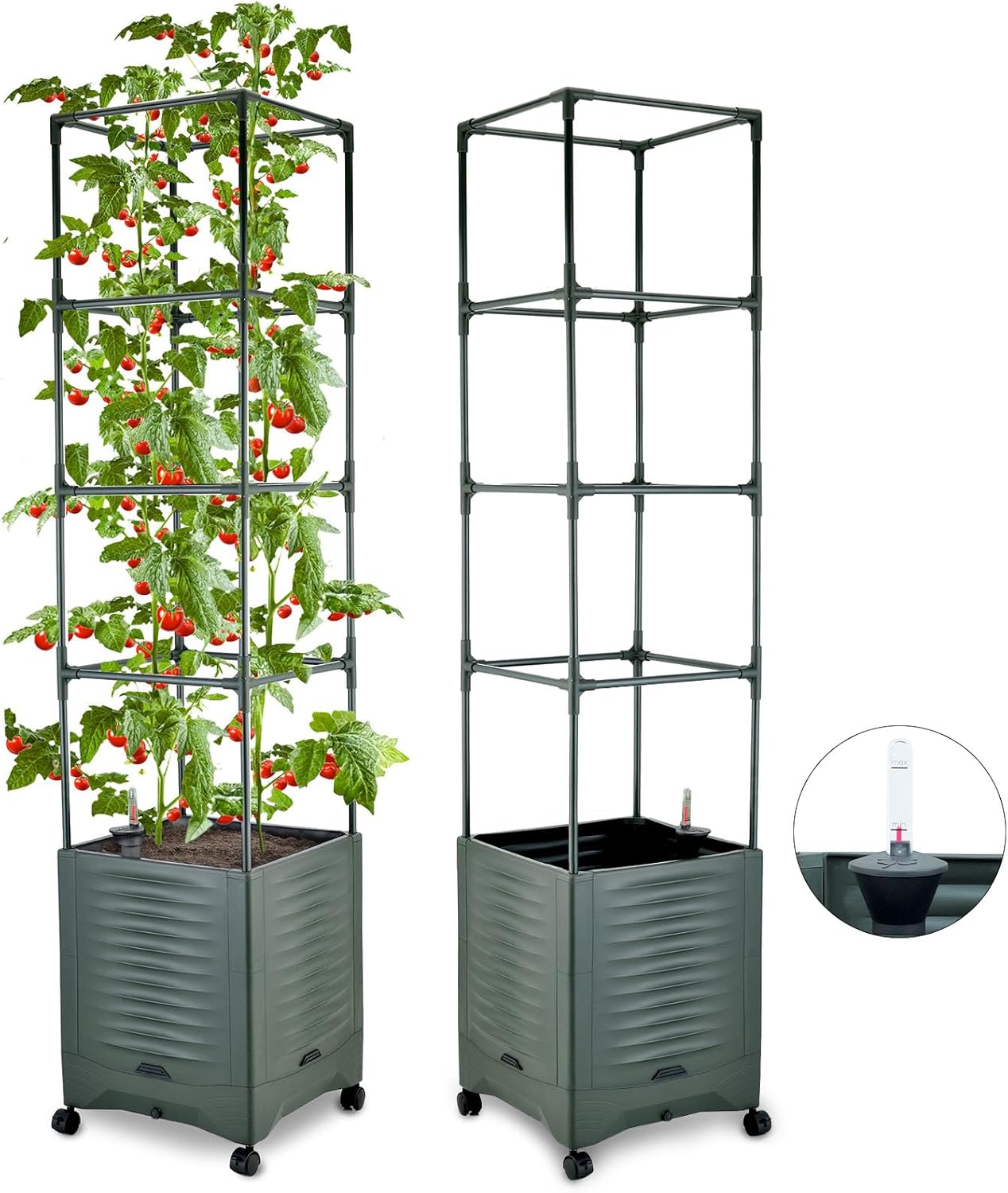
- The planter ships as one unit only, despite images that may show more than one planter.
The TeCreatio 56.5-inch tomato planter is a vertical container gardening system built for tomatoes and other climbing plants. Based on the listed specifications, it includes a square planter box, a self-watering reservoir, a water level indicator, a metal trellis, and a wheeled floor-standing base. It is aimed at gardeners who want to grow upward in a small footprint rather than dedicating a full raised bed or in-ground row.
The main growing benefit is the combination of plant support and water management. The 2-gallon reservoir is designed to reduce frequent watering, while the top water inlet lets you refill the reservoir without washing soil away from the plant stem. The water indicator is intended to show when refilling is needed, which can be especially useful for newer gardeners who are still learning container moisture management.
At 12.8 inches deep by 12.8 inches wide and 56.5 inches high, this planter is compact at the base but tall enough to provide vertical structure. The included metal trellis supports climbing growth, and the planter also has two drainage outlets plus four ventilation holes. Five wheels, with four locking brakes, make it easier to move the planter across suitable surfaces without lifting a soil-filled container.
In everyday use, this design makes sense for patios, decks, balconies with adequate load capacity, greenhouses, sunrooms, and small yards. Gardeners can roll the planter toward stronger sun, move it away from harsh afternoon exposure, or bring it under cover during cooler weather. Reviewers commonly mention that they appreciate the mobility and that assembly is generally manageable, although one reviewer noted that the planter has several parts and requires attention during setup.
There are a few practical cautions. Because the base is only 12.8 inches square, gardeners growing especially vigorous indeterminate tomato varieties may prefer a larger container. A few user comments also mention water gauge sticking or accidental overfilling, so it is smart to fill slowly, check drainage, and consider a drip tray if using it indoors or on a surface that should stay dry. As with any wheeled planter, lock the brakes when the plant is in position, especially once the trellis is supporting heavier growth.
This is a good fit for gardeners who want an all-in-one tomato or vine planter with support, wheels, and self-watering convenience. Gardeners who want multiple plants in one container, a wider root zone, or a simpler one-piece planter may want to compare larger raised planters before choosing this model.
Best For / Avoid If
Best for buyers prioritizing
- Combines planter, trellis, reservoir, water indicator, and wheels in one compact setup.
- Movable design is helpful for gardeners who need to adjust light exposure or bring plants under cover.
- Tall 56.5-inch form provides vertical support without taking up much floor space.
Consider another option if
- The 12.8-inch square planting area may be limiting for gardeners who grow very large indeterminate tomato varieties.
- Some reviewers reported that the water gauge can stick or overfill, so careful filling and outdoor placement or a drip tray may be wise.
- The planter ships as one unit only, despite images that may show more than one planter.

Pros
- Self-watering reservoir and side port simplify routine watering for gardeners who cannot check plants daily
- Adjustable trellis height accommodates different climbing plants as they grow, from young seedlings to fuller vines
- Tool-free assembly and disassembly make setup quick and allow for compact off-season storage
- Reviewers commonly mention the frame feels sturdy, including reports of holding up in windy conditions
- Lightweight construction makes the planter easier to move around a patio or deck once assembled
Cons
- Reviewers commonly mention the base size fits smaller or dwarf varieties well but may be less suitable for large tomatoes like beefsteak or heirloom types
- Some buyers reported receiving only one planter instead of two, so confirming quantity on arrival is worth doing
- Standing water in the bottom reservoir could attract mosquitoes in some climates if not monitored, according to reviewer feedback
The BOTINDO Tomato Planter with Trellis is a self-watering raised planter box built around a 4 corner tower frame that doubles as built-in plant support. It is designed for gardeners working with limited ground space, such as patios, decks, and balconies, who want a compact way to grow climbing vegetables and flowering vines without installing a separate trellis or stake system.
The most notable functional benefit is the combination of the water reservoir and the adjustable trellis. The bottom reservoir, paired with a siphon structure and side refill port, is intended to keep soil consistently moist between waterings, while bottom drainage holes are meant to let excess water escape so roots are not sitting in standing water. The trellis extends to a total of 57 inches across four adjustable heights, which the product information indicates is meant to give climbing plants room to stretch upward and receive more even sun exposure as they mature.
Design-wise, the planter uses a rectangular black frame with metal cage poles reviewers describe as steady, and assembly is done by aligning buckles and pressing them into place rather than using tools. This same buckle system allows the unit to be taken apart when not in use, which is useful for gardeners with limited storage space over the winter months. At 4 pounds per unit, the planter is light enough to reposition even after it has been filled with soil.
In practical use, this planter fits well on a patio, deck, balcony, or small backyard corner where an in-ground raised bed is not an option. Based on reviewer feedback, it has been used successfully for currant and spoon tomatoes, bush beans, and climbing peas, and the feature set suggests it could also suit potatoes, morning glories, or roses as described in the product listing. It functions for both indoor and outdoor placement, giving some flexibility for gardeners working with limited outdoor square footage.
The main limitation to consider is plant size. Reviewers commonly mention that the base is sized for smaller or dwarf varieties and is not spacious enough for large tomato types like beefsteak or heirloom. Buyers should also confirm they receive both units in the two-pack, as a small number of reviewers reported receiving only one, and be aware that standing reservoir water could attract mosquitoes if left unchecked in humid climates. Overall, this planter is a reasonable option for gardeners who want an easy-assembly, space-saving trellis and self-watering system for compact or climbing plants, while those specifically growing large tomato varieties may want to look for a planter with a larger base footprint.
Best For / Avoid If
Best for buyers prioritizing
- Self-watering reservoir and side port simplify routine watering for gardeners who cannot check plants daily
- Adjustable trellis height accommodates different climbing plants as they grow, from young seedlings to fuller vines
- Tool-free assembly and disassembly make setup quick and allow for compact off-season storage
Consider another option if
- Reviewers commonly mention the base size fits smaller or dwarf varieties well but may be less suitable for large tomatoes like beefsteak or heirloom types
- Some buyers reported receiving only one planter instead of two, so confirming quantity on arrival is worth doing
- Standing water in the bottom reservoir could attract mosquitoes in some climates if not monitored, according to reviewer feedback

Pros
- Compact rectangular shape is well suited to small indoor growing areas.
- Self-watering design with a visible gauge simplifies routine watering.
- Drain plug and water level control add flexibility for indoor or outdoor placement.
- Breathable inner planter design may help reduce overly stagnant soil conditions.
- Suitable for several small plant types, including herbs, flowers, succulents, and vegetables, based on the listed specifications.
Cons
- The shallow, narrow footprint may be less suitable for large-rooted vegetables or plants that need substantial soil volume.
- Gardeners using it outdoors need to manage the drain plug as recommended to avoid rainwater soaking the soil.
- The small trellis is best viewed as light plant support, not a heavy-duty cage for large fruiting plants.
The Vego Garden Herb Indoor Plant Box is a one-pack rectangular self-watering planter intended for small-space growing indoors or outdoors. Based on the listed specifications, it is designed for herbs, flowers, succulents, fruiting plants, and vegetables, though its compact size makes it especially sensible for kitchen herbs, green onions, small starts, and countertop greenery.
The key feature is its self-watering system. The product information lists a water storage volume of about 2.5 liters and notes that one fill can water the planter for up to 20 days, depending on plant needs and conditions. For new gardeners, a reservoir and visible water gauge can make watering feel less like guesswork, especially compared with small pots that dry out quickly on sunny windowsills.
Its design includes a water level gauge, an adjustable water storage lever, and a drain plug. The instructions in the product data note that the plug should be used indoors to help prevent leakage, while outdoor use may call for removing the plug so rainwater does not keep the soil overly wet. Breathable windows and internal vents are also listed, which are intended to allow more oxygen movement around the soil and root area.
The planter measures 17.3 inches deep by 7.2 inches wide by 7.4 inches high, so it is long and narrow enough for many counters, desks, and window-sill-style spaces. A curved trellis is included for light vertical support, which can be useful for small trailing or upright plants. The sage green finish gives it a softer indoor look than many utility planters, while the material is listed as marine recycled material.
In practical use, this planter makes the most sense for gardeners who want a neat herb box near the kitchen, a small indoor plant station, or a manageable starter planter for a patio table. The removable onion grow guides described in the product information may be useful for spacing and regrowing green onions after cutting, and the cover can help shield the soil surface in a mulch-like way.
The main limitation is size. This is not the planter to choose for large tomato plants, deep-rooted crops, or gardeners who want a substantial raised-bed volume. It will still require appropriate light, suitable potting mix, periodic reservoir checks, and attention to the drain plug. For beginners, apartment gardeners, and anyone wanting a compact self-watering herb planter, the listed features make it a practical small-growing option.
Best For / Avoid If
Best for buyers prioritizing
- Compact rectangular shape is well suited to small indoor growing areas.
- Self-watering design with a visible gauge simplifies routine watering.
- Drain plug and water level control add flexibility for indoor or outdoor placement.
Consider another option if
- The shallow, narrow footprint may be less suitable for large-rooted vegetables or plants that need substantial soil volume.
- Gardeners using it outdoors need to manage the drain plug as recommended to avoid rainwater soaking the soil.
- The small trellis is best viewed as light plant support, not a heavy-duty cage for large fruiting plants.

Pros
- Self-watering reservoir and indicator are helpful for reducing routine watering guesswork.
- Removable liner makes planting and repositioning easier than handling a fully filled outer planter.
- Rectangular box form is well suited to narrow balcony, railing, window, and porch spaces.
- Includes LECHUZA-PON substrate as part of the planter system.
- Reviewers commonly mention sturdy construction and a well-thought-out design.
Cons
- Balconera brackets are sold separately, so railing or wall mounting may require an additional purchase.
- At about 31 inches long, gardeners with very small ledges or tight shelves should check available space carefully.
- The self-watering system still requires setup, reservoir monitoring, and correct drainage plug use for indoor versus outdoor placement.
The LECHUZA Balconera Color 80 is a self-watering rectangular planter designed for indoor and outdoor growing in narrow spaces. Based on the listed specifications, it measures 31.1 inches wide by 7.48 inches deep by 7.48 inches high and has a 12-liter capacity, making it a practical size for balcony flowers, herbs, annuals, and compact foliage plantings.
Its main gardening benefit is the built-in water reservoir. The product information indicates that the reservoir supplies water as plants need it, while the water-level indicator shows when it is time to refill. For beginners, older gardeners, or anyone who forgets occasional waterings, this design can make container care more predictable than a basic window box.
The removable liner is one of the more useful design features. Instead of filling and lifting the entire planter, you can remove the liner, plant it, and place it back into the outer box. The included LECHUZA-PON substrate is intended to sit between the potting soil and the reservoir, helping with root aeration and water regulation within the planter system.
For outdoor use, the drainage plug is important because it allows excess rainwater to escape when removed. For indoor placement, gardeners should follow the product directions carefully so water does not leak onto floors or furniture. The planter is made of plastic with a matte white finish, which suits clean, modern patio, balcony, deck, or interior plant displays.
This model can sit as a floor or deck planter, and it can also be used as a window box or railing planter with optional Balconera brackets. Those brackets are not included, so anyone planning to mount it should factor that into setup. Reviewers commonly mention the water gauge, lift-out insert, and sturdy feel, while also noting that the mounting hardware is a separate purchase.
Overall, the Balconera Color 80 is best for gardeners who want a tidy, narrow planter with a more managed watering system for small-space growing. Gardeners who prefer a very low-cost container, need included mounting hardware, or want a deeper planter for larger-rooted crops may want to compare other options before choosing this one.

Pros
- Self-watering reservoir and gauge simplify routine moisture checks.
- Compact 19 by 21 by 24 inch size works well for patios and other tight spaces.
- Drainage and venting features are designed with root health in mind.
- Fog gray finish gives it a clean, neutral look for modern outdoor areas.
Cons
- The compact size may be less suitable for gardeners who want to grow larger crops or multiple plants in one bed.
- The listed size has no wheels, so moving it after filling may be inconvenient.
- Plastic construction may not appeal to gardeners who prefer wood, metal, or fabric planters.
The Vego Garden EZCube is a floor-standing, self-watering raised planter designed for container gardening in compact spaces. Based on the listed specifications, it measures 19 inches deep by 21 inches wide by 24 inches high and is intended for indoor or outdoor use. It is a practical option for beginners, balcony gardeners, patio growers, and homeowners who want a contained planter rather than a full in-ground bed.
Its main gardening advantage is the built-in reservoir system, which the product information says can let plants draw water over an extended period after the tank is filled. The visual water gauge uses a floating marker, with guidance to stop at MAX and refill when the level drops below REFILL. For gardeners who forget to water consistently or travel occasionally, that kind of simple indicator can make routine care less confusing.
The planter also includes AirEase venting and drainage holes, features intended to improve airflow and reduce waterlogging around roots. Good drainage is especially important in raised planters because excess moisture can build up quickly in containers. The listed breathable, UV-resistant plastic material and wide stated temperature tolerance make it suitable for a range of seasonal conditions, though normal cleaning and periodic checks of the reservoir and drain openings are still sensible.
At this size, the EZCube is best viewed as a compact planter for flowers, herbs, or small-space ornamental planting rather than a substitute for a large vegetable bed. Its rectangular shape can sit against a wall or railing area to save room, making it a good fit for balconies, rooftops, terraces, patios, and small backyards. The fog gray color is neutral enough to blend with many outdoor furniture and planter styles.
There are a few practical limitations to consider. This version is listed as the no-wheels size, and at 26 pounds before soil and water are added, it may be difficult to move once planted. Gardeners planning large plantings, deep-rooted crops, or frequent layout changes may prefer a larger bed or a wheeled planter. For a compact, low-maintenance raised planter with a clear water gauge and built-in drainage features, the EZCube is a sensible choice for small-space growing.
Best For / Avoid If
Best for buyers prioritizing
- Self-watering reservoir and gauge simplify routine moisture checks.
- Compact 19 by 21 by 24 inch size works well for patios and other tight spaces.
- Drainage and venting features are designed with root health in mind.
Consider another option if
- The compact size may be less suitable for gardeners who want to grow larger crops or multiple plants in one bed.
- The listed size has no wheels, so moving it after filling may be inconvenient.
- Plastic construction may not appeal to gardeners who prefer wood, metal, or fabric planters.

Pros
- Combines planter, reservoir, water gauge, trellis, and mobility features in one container system.
- Suitable for outdoor or indoor use when the drain plug is managed according to the product instructions.
- Fog gray color and raised planter form can fit patios, balconies, entryways, and small garden spaces.
- Built-in trellis is useful for tomatoes, flowering vines, or other supported container plants where appropriate.
Cons
- The listed 15-inch height may not provide the same root volume or access height as a larger raised bed.
- Indoor use requires attention to the water plug to help prevent leakage, according to the product description.
- Gardeners growing multiple large vegetables may prefer a wider bed or separate container system.
The Vego Garden Fog Gray self-watering planter is a container growing system designed for indoor and outdoor plants, with a raised planter form and an included curved trellis. Based on the product information, it is aimed at gardeners who want a more organized way to grow flowers, tomatoes, or other supported plants without setting up a full garden bed.
Its main advantage is the integrated watering system. The listed reservoir volume is about 9L, and the product information says a fill can water the planter for up to 1.5 months, depending on conditions and plant needs. For beginners or busy homeowners, the water level gauge is especially useful because it gives a visible cue instead of requiring guesswork at the soil surface.
The design also includes a drain plug and adjustable water storage setup. The description notes that the plug should be in place for indoor use to help prevent leakage, while outdoor use may call for removing it during rain so the soil does not become overly soaked. That makes setup and monitoring important, but it also gives the planter more flexibility than a basic decorative pot.
For plant support, the planter includes a curved trellis designed for this container. That can simplify growing upright or climbing plants in small yards, patios, balconies, or near sunny indoor windows where a separate cage might be awkward. The listed wheels add another practical feature, making it easier to move the planter when adjusting for sunlight, shelter, or seasonal placement.
The inner planter has breathable windows and internal vents, which the product information describes as supporting airflow through the soil area. Good container growing still depends on choosing an appropriate potting mix, matching the plant to the available space, and checking moisture regularly, especially during hot weather or when using the planter indoors.
This is a good choice for gardeners who want a tidy, self-watering planter with built-in support and mobility in one package. Gardeners who need a large-capacity vegetable bed, a very tall accessible planter, or several plant spaces in one unit may want to compare it with larger raised beds or modular planters before deciding.
Best For / Avoid If
Best for buyers prioritizing
- Combines planter, reservoir, water gauge, trellis, and mobility features in one container system.
- Suitable for outdoor or indoor use when the drain plug is managed according to the product instructions.
- Fog gray color and raised planter form can fit patios, balconies, entryways, and small garden spaces.
Consider another option if
- The listed 15-inch height may not provide the same root volume or access height as a larger raised bed.
- Indoor use requires attention to the water plug to help prevent leakage, according to the product description.
- Gardeners growing multiple large vegetables may prefer a wider bed or separate container system.
Pros
- Good size for small spaces such as balconies, porches, patios, and compact yards.
- Elevated design improves access compared with low planters or in-ground beds.
- Self-watering reservoir, drainage, and water level indicator support easier moisture management.
- Ventilated clear dome adds useful protection for seedlings and young plants.
- Lightweight listed weight may make placement easier before it is fully loaded with soil and plants.
Cons
- The 15 by 29.5 inch footprint may be too small for gardeners wanting to grow larger crops or many plants at once.
- Polypropylene is practical and low-maintenance, but gardeners wanting a wood or metal garden-bed look may prefer another style.
- Because it is lightweight, it may need a sheltered location during severe weather or high winds.
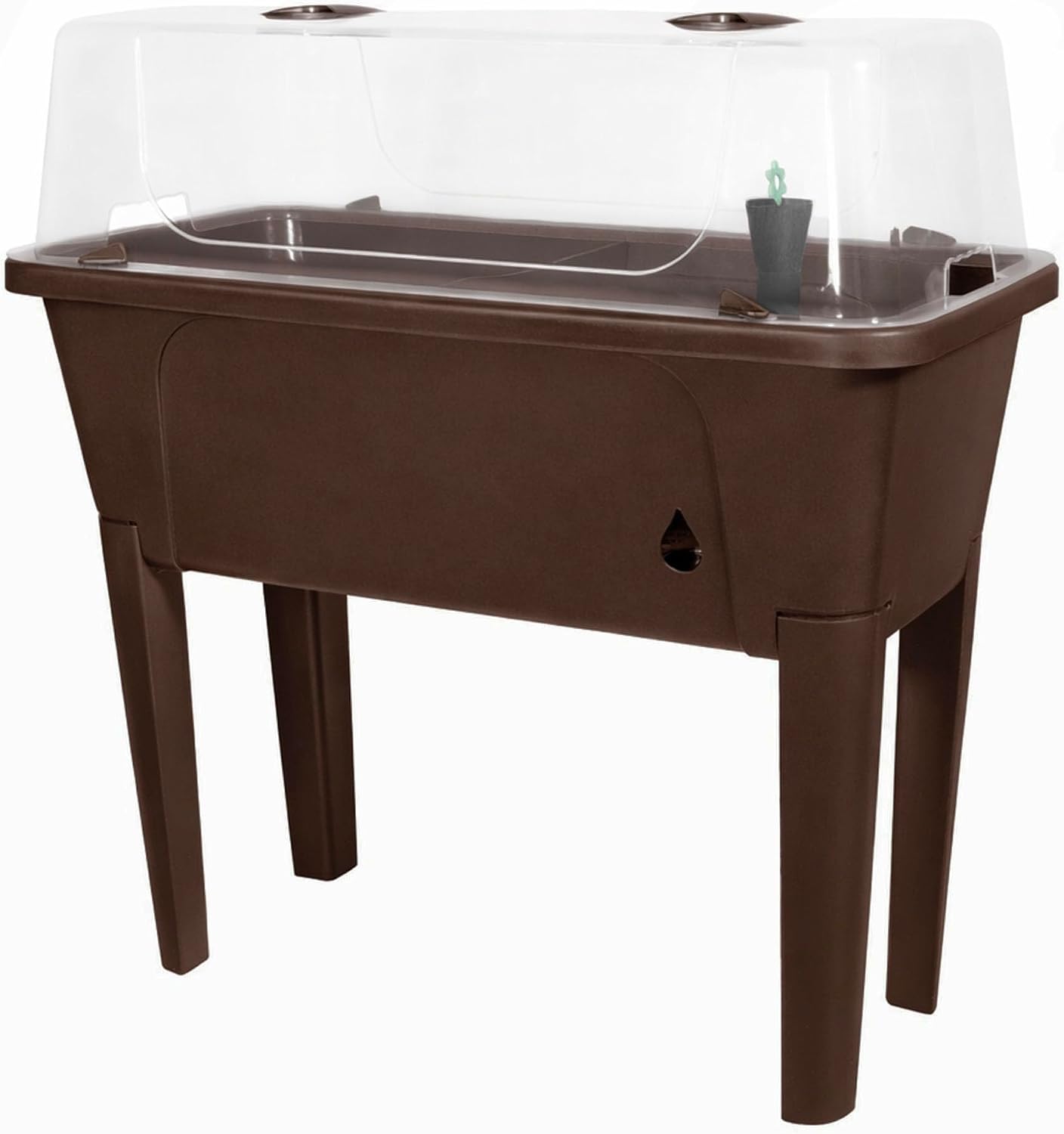
The GardenElements Brown Elevated Raised Garden Bed is a compact raised planter designed for vegetables, herbs, flowers, and seed starting in small home garden spaces. Based on the listed specifications, it is especially well suited to patio, balcony, porch, and indoor-outdoor growing where a full-size raised bed would be too large.
Its main advantage is the combination of elevation, water management, and plant protection. The 31-inch height can reduce the need to bend over, while the built-in reservoir, aerated base, drainage, and water level indicator are intended to make routine watering easier to monitor. The clear grow dome includes adjustable vents, giving gardeners a way to cover young plants while still managing airflow.
The planter measures 15 inches deep by 29.5 inches wide by 31 inches high, with a 45-liter growing capacity. The planting area is 10 inches high, which is useful for herbs, greens, flowers, and starter plants, though it is not intended to replace a deep garden bed for large-rooted crops. The floor-standing design uses polypropylene, a weather-resistant material listed as resistant to fading, cracking, and warping.
For everyday use, this planter makes sense near a kitchen door for herbs, on a balcony for salad greens, or on a porch for seed starting before plants move to a larger garden. Reviewers commonly mention the small-space convenience, simple assembly, covered protection, and usefulness of the dome, although those comments should be understood as user feedback rather than verified testing.
There are a few practical limits to consider. The growing area is compact, so spacing will matter, and gardeners planning tomatoes, sprawling vines, or a large vegetable harvest may want a bigger planter. The product information describes it as weather-resistant, but as with any lightweight elevated planter, a protected location is sensible during strong wind or severe weather.
Overall, this GardenElements planter is a sensible choice for beginners, older gardeners, apartment growers, and homeowners who want a cleaner, more accessible way to grow a small selection of plants. Gardeners who need deep soil volume, a large crop area, or a more permanent raised-bed structure should consider a larger bed instead.
Best For / Avoid If
Best for buyers prioritizing
- Good size for small spaces such as balconies, porches, patios, and compact yards.
- Elevated design improves access compared with low planters or in-ground beds.
- Self-watering reservoir, drainage, and water level indicator support easier moisture management.
Consider another option if
- The 15 by 29.5 inch footprint may be too small for gardeners wanting to grow larger crops or many plants at once.
- Polypropylene is practical and low-maintenance, but gardeners wanting a wood or metal garden-bed look may prefer another style.
- Because it is lightweight, it may need a sheltered location during severe weather or high winds.

Pros
- Combines a planter, reservoir, drainage, and trellis support in one small-space growing system.
- Adjustable trellis height makes it more versatile than a fixed-height tomato cage.
- Tool-free assembly is beginner friendly and convenient for seasonal setup.
- Suitable for indoor, outdoor, patio, balcony, and greenhouse use according to the product information.
Cons
- The 9.8 inch square planter may be limiting for gardeners who want deeper or wider root space for large tomato varieties.
- Lightweight plastic may need careful placement or added stability in windy outdoor locations, especially as plants become top-heavy.
- Once filled with soil and plants, moving the planter could be awkward and may disturb the setup.
The MQFORU 57-inch self-watering tomato planter is a compact planter and trellis combination intended for climbing vegetables, flowers, and small-space growing. Based on the listed product information, it is designed for gardeners who want to grow tomatoes, peas, morning glories, roses, or similar climbing plants without installing a larger raised bed or permanent support structure.
The main practical feature is the self-watering base. The planter includes a built-in reservoir, a bottom grid design described as using a siphon effect, and a side water injection port. For beginners or busy homeowners, this can make watering more manageable, though gardeners should still monitor soil moisture because plant size, weather, and location can change watering needs.
The planter measures 9.8 inches deep by 9.8 inches wide by 57 inches high when fully assembled. The trellis can be adjusted in 1, 2, 3, or 4 layers, which lets you start shorter and add support as the plant grows. The product information also notes tool-free buckle assembly and disassembly, which is useful for seasonal storage or for gardeners who do not want a hardware-heavy setup.
This style is a good fit for patios, balconies, small yards, greenhouses, and indoor growing spaces with adequate light. The compact square footprint helps keep plants organized where ground space is limited, and the integrated support can guide upright growth better than letting vines sprawl across a deck or greenhouse floor.
There are a few realistic limitations to consider. The planter footprint is relatively small, so gardeners growing large, vigorous tomato varieties may prefer a deeper or wider container. Because the material is listed as lightweight plastic, outdoor users should think about wind exposure and avoid moving the planter once it is filled with soil and a growing plant.
Overall, this MQFORU set is most appealing for beginners and small-space gardeners who want a simple container-and-trellis system with built-in watering support. Gardeners growing heavy, full-size tomato plants in exposed locations may want a larger container and a more robust support system.
Best For / Avoid If
Best for buyers prioritizing
- Combines a planter, reservoir, drainage, and trellis support in one small-space growing system.
- Adjustable trellis height makes it more versatile than a fixed-height tomato cage.
- Tool-free assembly is beginner friendly and convenient for seasonal setup.
Consider another option if
- The 9.8 inch square planter may be limiting for gardeners who want deeper or wider root space for large tomato varieties.
- Lightweight plastic may need careful placement or added stability in windy outdoor locations, especially as plants become top-heavy.
- Once filled with soil and plants, moving the planter could be awkward and may disturb the setup.

Pros
- Good fit for small-space vertical gardening with tomatoes, peas, herbs, flowers, and similar plants.
- Reservoir and drainage design provides more forgiving watering than a basic pot.
- Wheels and a relatively light empty weight make the planter easier to move before it is filled.
- Expandable, detachable trellis sections add flexibility for different plant heights and layouts.
Cons
- The 4-gallon capacity may be limiting for large tomato varieties or heavy-feeding plants that need more root space.
- At 9.84 inches wide, it is better for one main plant or compact plantings rather than dense vegetable production.
- Several reviewers appreciate the wheels, but gardeners using it on uneven outdoor surfaces may still want to move a filled planter carefully.
The LINEX LXGB16C is a raised garden planter box with an integrated trellis, intended for tomatoes, climbing vegetables, herbs, and flowers in compact spaces. Its narrow footprint makes it especially relevant for patio gardeners, balcony growers, renters, and homeowners who want a tidy vertical planter instead of a full garden bed.
The main gardening benefit is the combination of plant support and moisture management. The trellis gives vines and upright crops a structure to climb, while the self-watering reservoir is designed to make water available for several days. The listed drainage holes help excess water escape, which is important because container plants can suffer when roots sit in overly wet soil.
Based on the listed specifications, this model measures 9.84 inches deep by 9.84 inches wide by 41.3 inches high and has a 4-gallon soil capacity. Included components are the tomato planter box, trellis, connectors, plugs, and wheels. The product information describes a reinforced PP planter body and an alloy steel trellis frame, and assembly is described as tool-free with detachable and expandable trellis sections.
In everyday use, this planter makes sense for a sunny patio corner, apartment balcony, porch edge, greenhouse aisle, or small backyard where ground planting is not practical. The wheels can help with repositioning for light, shade, or cleaning, although a filled planter should still be moved with care. Reviewers commonly mention easy assembly and the usefulness of the reservoir and wheels, but those comments should be understood as user feedback rather than controlled testing.
The main limitation is size. A 4-gallon, 9.84-inch-wide planter is compact, so gardeners growing large indeterminate tomatoes or multiple vigorous vines may prefer a larger LINEX size or a deeper raised bed. For best results, match the plant choice to the container volume, check moisture regularly during hot weather, and use the drainage plugs and holes as directed to avoid waterlogged soil.
Overall, this is a practical choice for gardeners who want a self-watering trellis planter for a small space and do not want to assemble separate cages, pots, and supports. Gardeners focused on maximum tomato yield, large root systems, or broad mixed plantings should consider a larger planter with more soil capacity.
Best For / Avoid If
Best for buyers prioritizing
- Good fit for small-space vertical gardening with tomatoes, peas, herbs, flowers, and similar plants.
- Reservoir and drainage design provides more forgiving watering than a basic pot.
- Wheels and a relatively light empty weight make the planter easier to move before it is filled.
Consider another option if
- The 4-gallon capacity may be limiting for large tomato varieties or heavy-feeding plants that need more root space.
- At 9.84 inches wide, it is better for one main plant or compact plantings rather than dense vegetable production.
- Several reviewers appreciate the wheels, but gardeners using it on uneven outdoor surfaces may still want to move a filled planter carefully.

Pros
- Self-watering reservoir and wick design can simplify routine plant care.
- Visible water window reduces guesswork compared with fully opaque planters.
- Compact rectangular footprint fits many small-space growing setups.
- Six included planters provide flexibility for multiple herbs or small plants.
- Reviewers commonly mention that the planters are easy to use and fit well on windowsills.
Cons
- The compact size may be less suitable for larger herbs, deep-rooted vegetables, or plants that need more soil volume.
- The reservoir still needs to be refilled, and the wick system will not help if it runs dry.
- One reviewer noted that some soil may fall through side slits into the lower section, so setup may require a little care.
The OurWarm Windowsill Herb Planter Set is a six-pack of compact rectangular self-watering planter boxes designed for indoor and outdoor small-space growing. Based on the listed specifications, each planter measures 10.24 x 4.92 x 4.33 inches and is intended for herbs, small vegetables, succulents, and flowers. It is a sensible option for kitchen windowsills, apartments, balconies, offices, and gardeners who want a lower-maintenance way to keep small plants watered.
The main feature is the built-in reservoir with cotton wicks. The product information indicates that the wicks draw water upward through capillary action, helping keep the soil moist for days rather than requiring daily watering. This does not remove the need to monitor plants, but it can make care more forgiving for beginners or busy homeowners who sometimes miss a watering.
A clear water level window is built into the bottom of each planter, giving you a quick visual check before adding more water. The detachable double-layer design separates the soil area from excess water below, which can help with moisture management when used properly. Because these are plastic and lightweight, they should be easy to reposition for better light or to move to a sink or work surface during planting.
The size and shape make these planters most useful for narrow ledges and small growing zones rather than large patio crops. They are a good fit for grouping common kitchen herbs, starting a few small plants, or keeping compact flowers or succulents in a bright indoor spot. Reviewers commonly mention the windowsill fit, simple setup, and usefulness of the water gauge, though those comments should be understood as user feedback rather than independent testing.
There are a few practical limits to keep in mind. Larger herbs and vegetables may outgrow these boxes and need repotting, and the reservoir must still be kept filled for the wick system to work. If you are starting seeds, you may not need to fill the full depth with potting mix right away. Use an appropriate indoor potting mix, check moisture regularly until you understand your plants’ needs, and avoid placing plastic planters where heat or unstable surfaces could be a concern.
Overall, this set is best for gardeners who want several small, tidy planters with simple water monitoring for herbs and compact houseplants. Gardeners growing large edible crops, long-rooted plants, or outdoor containers exposed to demanding conditions may prefer larger planters with more soil volume and task-specific drainage features.
Kaufratgeber: Beste selbstbewässernde Pflanzgefäße für Gemüse
Passen Sie die Größe des Pflanzgefäßes an Ihre Pflanzenwahl an
Bei Gemüse ist die Größe wichtiger als der Stil. Kompakte Fensterbank-Pflanzgefäße wie die 10,5-Zoll-Sets von OurWarm eignen sich besser für Kräuter, kleine Blattgemüse, Sukkulenten oder Jungpflanzen, da die angegebene Größe für das 3er-Set 10.5 x 4.5 x 5.5 inches und für das 6er-Set 10.2 x 4.3 x 4.9 inches beträgt. Größere Hochbeet-Pflanzgefäße wie das 29.5-inch x 15-inch Pflanzgefäß von Garden Elements mit 45L Fassungsvermögen oder der Keter Urban Bloomer mit einer Kapazität von 12.7 gallons bieten mehr Platz für den Gemüseanbau im Gefäß.
Wenn Tomaten oder Klettergemüse Ihr Ziel sind, achten Sie auf Pflanzgefäße mit Rankgitter. Die LINEX Raised Garden Bed Planter Box verfügt über einen 41.3-inch hohen Rankgitterrahmen, während der TeCreatio Tomato Planter Pot mit einer Höhe von 56.5 inches sowie einem Metall-Rankgitter und einer idealen Topftiefe für bestimmte und unbestimmte Tomatensorten angegeben wird.
Verstehen Sie das Selbstbewässerungssystem
Die meisten selbstbewässernden Pflanzgefäße trennen den Wasserbehälter von der Erde und lassen die Feuchtigkeit durch Kapillarwirkung nach oben steigen, wenn die Pflanze sie benötigt. Die Pflanzgefäße von OurWarm verwenden saugfähige Baumwollschnüre oder Dochte. Das Tomaten-Pflanzgefäß von TeCreatio nutzt die Kapillarwirkung eines 2.0-gallon-Wasserbehälters, und das Pflanzgefäß von Garden Elements verwendet einen integrierten Wasserbehälter mit belüftetem Boden.
Achten Sie auf einen Einfüllstutzen, einen oberen Wassereinlass oder eine sichtbare Anzeige, wenn Sie eine einfachere Pflege wünschen. Das Permasteel Self-Watering Garden Bed verfügt über einen Einfüllstutzen, der Vego garden EZCube über eine visuelle Wasserstandsanzeige mit schwimmendem Marker und der Keter Urban Bloomer über eine integrierte Wasserstandsanzeige sowie einen Drainagestopfen.
Drainage und Wurzelschutz sind genauso wichtig wie der Wasserbehälter
Ein Wasserbehälter verhindert nicht automatisch eine Überwässerung. Die besseren Designs in den bereitgestellten Daten enthalten Möglichkeiten, stehendes Wasser von der Erde zu trennen, den Wasserstand zu überwachen oder überschüssige Feuchtigkeit abzuleiten. Das Permasteel Self-Watering Garden Bed hebt die Erde an und stützt sie über dem Boden des Wasserbehälters, sodass sie nicht direkt im stehenden Wasser liegt.
Das LINEX-Tomaten-Pflanzgefäß verfügt laut Angaben über vier Drainageöffnungen, die beim Ableiten von überschüssigem Wasser helfen, während der Vego garden EZCube Drainageöffnungen und ein AirEase Vent-Design enthält. Achten Sie bei Pflanzgefäßen für die Fensterbank im Innenbereich auf den Hinweis von OurWarm, dass der Wasserstand das sichtbare Wasserstandsfenster nicht überschreiten sollte.
Berücksichtigen Sie Zugriffshöhe und Komfort
Ältere Gärtner und alle, die sich weniger bücken möchten, sollten erhöhten Designs besondere Aufmerksamkeit schenken. Das erhöhte Pflanzgefäß von Garden Elements wird mit einer komfortablen Höhe von 31 inches angegeben, und der Keter Urban Bloomer ist 30.7 inches hoch. Beide Designs bringen die Anbaufläche höher als ein ebenerdiger Topf.
Auch Mobilität kann den Komfort verbessern. Das Permasteel Self-Watering Garden Bed verfügt über Lenkrollen, und das TeCreatio-Tomaten-Pflanzgefäß hat fünf Rollen, davon vier mit Bremsen. Rollen sind auf Terrassen nützlich, wenn Sie Pflanzen für mehr Sonnenlicht umstellen oder ein gefülltes Pflanzgefäß bewegen müssen, ohne es anzuheben.
Wählen Sie die Materialien passend zum Standort des Pflanzgefäßes
Nutzen Sie die angegebenen Materialdetails, um zu entscheiden, ob ein Pflanzgefäß zu Ihrem Standort passt. Garden Elements verwendet witterungsbeständiges Polypropylen, das laut Beschreibung gegen Verblassen, Rissbildung und Verformung beständig ist. Das LINEX-Pflanzgefäß besteht aus lichtbeständigem, lebensmittelechtem verstärktem PP-Material mit einem Rankgitterrahmen aus legiertem Stahl. Das Permasteel Self-Watering Garden Bed verwendet pulverbeschichteten Stahl mit einer ungiftigen Zinklegierungsbeschichtung zum Schutz vor Rostbildung.
Wenn das Pflanzgefäß saisonalen Temperaturschwankungen ausgesetzt ist, wird der Vego garden EZCube als witterungsbeständiges, umweltfreundliches Material mit einem angegebenen Temperaturbereich von -22°F bis 176°F geführt. Für den Anbau in Innenräumen oder geschützten Bereichen lassen sich leichte Fensterbank-Modelle aus Kunststoff möglicherweise einfacher bewegen und reinigen.
Gärtner auf kleinen Flächen sollten Stellfläche und Platzierung planen
Gärtner auf Balkonen, Dachterrassen, Terrassen und Fensterbänken benötigen häufig ein schmales oder kompaktes Pflanzgefäß. Die LECHUZA Balconera Color 80 misst 31 x 7 x 7 inches und kann als Standpflanzgefäß verwendet oder mit optionalen Halterungen an der Wand oder am Geländer befestigt werden. Der Vego garden EZCube misst 21 x 24 inches und wird als kompakte Lösung für Balkone, Dachterrassen, Terrassen, Innenhöfe oder Innenräume beschrieben.
Für Küchenkräuter oder sehr kleines Gemüse bieten die OurWarm-Sets mehrere kleine rechteckige Pflanzgefäße mit sichtbaren Wasserstandsfenstern. Sie sind kein Ersatz für ein tiefes Tomaten-Pflanzgefäß, eignen sich aber gut für die pflegeleichte Nutzung im Indoor-Garten.
Montage, Reinigung und regelmäßige Pflege
Anfänger sollten Pflanzgefäße mit einfacher Montage und leichtem Zugang zum Wasserbehälter bevorzugen. Der Keter Urban Bloomer wird mit einfacher Montage und Anleitung angegeben, das LINEX-Pflanzgefäß als werkzeuglos in wenigen Minuten montierbar beschrieben, und der Vego garden EZCube als anfängerfreundlich mit minimalem Aufbau.
Prüfen Sie zur Pflege regelmäßig die Wasserstandsanzeigen, füllen Sie über den angegebenen Einfüllstutzen oder Einlass nach und befolgen Sie die Herstelleranweisungen für die Drainageeinstellungen. Das Permasteel Herb Garden Planter verfügt über einen herausnehmbaren Pflanzeinsatz zur Reinigung und Pflege, während die OurWarm-Pflanzgefäße ein zweischichtiges geteiltes Design und eine obere Wassereinfüllöffnung verwenden.
Häufige Fehler vermeiden
Der häufigste Fehler ist die Wahl eines Pflanzgefäßes, das für das gewünschte Gemüse zu flach ist. Kleine Fensterbank-Pflanzgefäße eignen sich für Kräuter und kleine Pflanzen, während Tomaten und Klettergemüse mehr Unterstützung durch ein Pflanzgefäß mit Rankgitter benötigen.
Ein weiterer Fehler besteht darin, den Wasserbehälter als vollständig wartungsfreies System zu betrachten. Wasserstandsanzeigen, Einfüllstutzen, Drainagestopfen und sichtbare Fenster müssen weiterhin kontrolliert werden, insbesondere im Freien. Befolgen Sie stets die Anweisungen des Herstellers zu Aufbau, Befüllung, Drainage und Platzierung und überschreiten Sie keine angegebenen Hinweise zum Wasserstand.
| Anwendungsfall | Darauf sollten Sie bei den angegebenen Pflanzgefäß-Merkmalen achten |
|---|---|
| Tomaten und Klettergemüse | Rankgitter, tiefere Anbaufläche, Wasserstandsanzeige, Drainage, Mobilität sofern angegeben |
| Anbau auf Balkon oder Dachterrasse | Kompakte Stellfläche, Wasserstandsanzeige, witterungsgeeignetes Material sofern angegeben, einfacher Zugang zum Nachfüllen |
| Rückenschonendes Gärtnern auf der Terrasse | Erhöhte Höhe, Lenkrollen, Einfüllstutzen, klare Wasserstandsanzeige |
| Küchenkräuter und kleine Blattgemüse | Kleine rechteckige Pflanzgefäße, sichtbares Wasserstandsfenster, Dochtsystem, obere Einfüllöffnung |
Methodik und Vertrauen
Dieser Ratgeber basiert auf der Recherche und dem Vergleich der bereitgestellten Produktdaten, nicht auf physischen Tests. Wir prüften die aufgeführten Artikel auf eine klare Eignung für selbstbewässernden Gemüse-, Kräuter-, Tomaten-, Hochbeet-, Balkon-, Terrassen- oder Fensterbank-Anbau. Artikel, die nicht eindeutig zur Aufgabe passten, wurden nicht als namentliche Empfehlungen verwendet, obwohl der bereitgestellte Shortcode die vollständige Produktliste anzeigt.
Für jedes relevante Pflanzgefäß verglichen wir belegte Angaben wie Abmessungen, Kapazität, Behältertyp, Sichtbarkeit des Wasserstands, Drainagekontrollen, Rankgitter, Mobilität, Materialdetails, Montagehinweise, Preis, Bewertung und Anzahl der Rezensionen. Außerdem berücksichtigten wir, für wen jedes Design am besten geeignet ist: Anfänger, ältere Gärtner, Terrassengärtner, Balkongärtner, Tomatenzüchter sowie Menschen, die drinnen Kräuter oder kleines Gemüse anbauen.
Signale aus dem Besitzerfeedback wurden ausschließlich anhand der bereitgestellten Bewertungen und Rezensionen berücksichtigt. Beispielsweise haben LECHUZA Balconera Color 80 und Keter Urban Bloomer in den bereitgestellten Daten viele Rezensionen, während Garden Elements und Vego garden EZCube Bewertungen von 5.0, aber eine kleinere Anzahl an Rezensionen aufweisen. Der Ratgeber wurde für Juli anhand der bereitgestellten Daten von Juli 2026 aktualisiert.
Abschließende Empfehlungen
Beste Gesamtwahl: Keter Urban Bloomer 12.7 Gallon Raised Garden Bed and Outdoor Herb Garden Planter with Self Watering Gauge and Drainage Plug, Dark Grey. Es bietet das für Gemüse geeignete Format eines erhöhten Gartenbeets, eine Kapazität von 12.7 gallons, eine integrierte Wasserstandsanzeige, ein Drainagesystem, das geöffnet oder geschlossen werden kann, sowie eine Höhe von 30.7 inches, wodurch es leichter zu pflegen ist als ein ebenerdiges Gefäß.
Rückenschonende Wahl: Garden Elements Brown Elevated Raised Garden Bed, 29.5" x 15" – Self-Watering Planter Box with Ventilated Grow Dome for Indoor/Outdoor Vegetables, Herbs & Seed Starting. Die Höhe von 31 inches, das Fassungsvermögen von 45L, die Wasserstandsanzeige, der belüftete Boden und die belüftete Anzuchthaube machen es zu einer geeigneten Wahl für Gärtner, die ein kompaktes Hochbeet-Pflanzgefäß mit weniger Bücken wünschen.
Wahl für Tomaten: Tomato Planter Pot Tomato Box Raised Garden Bed 56.5" Tall Self-Watering and Water Indicator Planter for Tomato Outdoor Indoor Metal Trellis for Climbing Plants Large Reservoir-1 planter-not 2. Wählen Sie es, wenn Unterstützung für Tomaten, ein 2.0-gallon-Wasserbehälter, ein Wassereinlass mit Anzeige, Rollen und ein Metall-Rankgitter wichtiger sind als die breite Form eines Hochbeets. Für Küchenkräuter oder Jungpflanzen auf kleinem Raum eignen sich die OurWarm Windowsill Herb Planter Box-Sets besser.
FAQ
Welche Größe ist für ein selbstbewässerndes Pflanzgefäß für Gemüse am besten?
Wählen Sie das größtmögliche praktische Pflanzgefäß für das Gemüse, das Sie anbauen möchten. Kleine Fensterbank-Pflanzgefäße eignen sich für Kräuter und kleine Pflanzen, während Tomaten und Klettergemüse besser zu den angegebenen Pflanzgefäßen mit Rankgitter oder größeren Hochbeet-Pflanzgefäßen wie den Modellen mit 12.7 gallons oder 45L passen.
Ist ein selbstbewässerndes Pflanzgefäß für Tomaten geeignet?
Das kann es sein, wenn das Pflanzgefäß ausreichend tief ist und genügend Halt bietet. In den bereitgestellten Daten verfügen das LINEX-Pflanzgefäß und das TeCreatio-Tomaten-Pflanzgefäß über Rankgitter, während das TeCreatio-Modell einen 2.0-gallon-Wasserbehälter, eine Wasserstandsanzeige, Rollen und ein Metall-Rankgitter aufweist.
Benötigen selbstbewässernde Gemüse-Pflanzgefäße weiterhin eine Drainage?
Ja. Ein Wasserbehälter sollte mit einer geeigneten Trennung, Luftzirkulation, Drainageöffnungen, einem Drainagestopfen oder Hinweisen zum Wasserstand kombiniert werden. Mehrere aufgeführte Optionen verfügen über Drainagefunktionen, darunter Keter, LINEX, Vego garden EZCube und Permasteel.
Wie oft sollte ich ein selbstbewässerndes Pflanzgefäß nachfüllen?
Der Zeitpunkt zum Nachfüllen hängt von der Größe des Pflanzgefäßes, der Pflanzenart, dem Wetter und dem Standort ab. Verwenden Sie, sofern vorhanden, die angegebene Anzeige, den schwimmenden Marker, das sichtbare Fenster oder die Wasserstandsanzeige und befolgen Sie die Befüllungsanweisungen des Herstellers, statt davon auszugehen, dass der Wasserbehälter immer voll ist.
Sind selbstbewässernde Pflanzgefäße für die Fensterbank für Gemüse nützlich?
Sie eignen sich für Kräuter, kleines Blattgemüse, Jungpflanzen und den kompakten Anbau in Innenräumen. Die OurWarm-Sets werden für Kräuter, Gemüse, Sukkulenten und Blumen angegeben, aber aufgrund ihrer geringen Abmessungen sind sie weniger für große Gemüsepflanzen geeignet.
Welches selbstbewässernde Pflanzgefäß ist für einen älteren Gärtner am einfachsten?
Achten Sie auf eine erhöhte Höhe, klare Wasserstandsanzeigen und einen einfachen Zugang zum Nachfüllen. Das Pflanzgefäß von Garden Elements ist 31 inches hoch und verfügt über eine Wasserstandsanzeige, während der Keter Urban Bloomer 30.7 inches hoch ist und eine integrierte Wasserstandsanzeige besitzt.
Setzen Sie Ihre Gartenrecherche fort
Weitere praktische Ratgeber finden Sie unter Hochbeete und Pflanzgefäße.
Erfahren Sie, wie Dove Creek Gardens Produkte recherchiert und vergleicht.