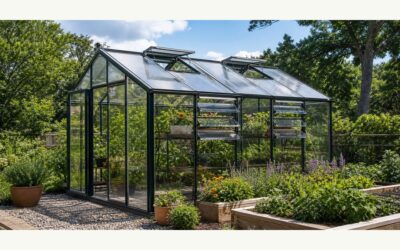



Braucht ein Gewächshaus Belüftung? Ja, die meisten Gewächshäuser für den Hausgebrauch benötigen eine Möglichkeit, heiße, feuchte Luft nach außen zu führen und Frischluft hereinzulassen – besonders bei sonnigem Wetter. Ohne Luftzirkulation kann ein Gewächshaus unangenehm zum Arbeiten werden und die Pflege von Setzlingen, Topfpflanzen und saisonalen Kulturen erschweren.
Dieser Ratgeber für Juli 2026 vergleicht 25 bereitgestellte Produkte im Preisbereich von $22.34 – $198.89. Dabei liegt der Schwerpunkt auf Artikeln, die ausdrücklich die Luftzirkulation, Belüftung, Kühlung oder das Öffnen wärmeempfindlicher Fenster im Gewächshaus unterstützen. Wir haben den angegebenen Luftstrom, die Energiequelle, Thermostat- oder Akkufunktionen, die Installationsanforderungen, bereitgestellte Angaben zur Wetterbeständigkeit sowie die Eignung für Anfänger, kleine Gewächshäuser oder anspruchsvollere Gerätehaus-ähnliche Konstruktionen betrachtet. Weitere Gewächshausausrüstung finden Sie in unserem Bereich Gewächshäuser & Gartenaufbewahrung.
Pros
- Runs from solar power, so it is useful for sheds, coops, and small greenhouses that do not have convenient outlet access.
- Fan and solar panel can be mounted separately, which helps when the best sun exposure is not directly beside the vent opening.
- Designed for both exhaust and intake use, giving gardeners flexibility when planning airflow through a small structure.
- Product information lists quiet operation at 45 decibels, which may be helpful around pets, poultry, or backyard work areas.
- No built-in battery to maintain or replace, which keeps the system simpler for daytime-only ventilation.
Cons
- Because there is no built-in battery, the fan only operates when the solar panel receives enough daylight, with reduced airflow in cloudy conditions or near dusk.
- One power level limits fine control, so gardeners needing adjustable speeds may prefer a fan with multiple settings.
- Installation may require cutting or preparing a vent opening, and some reviewers mention that the included instructions could be clearer.
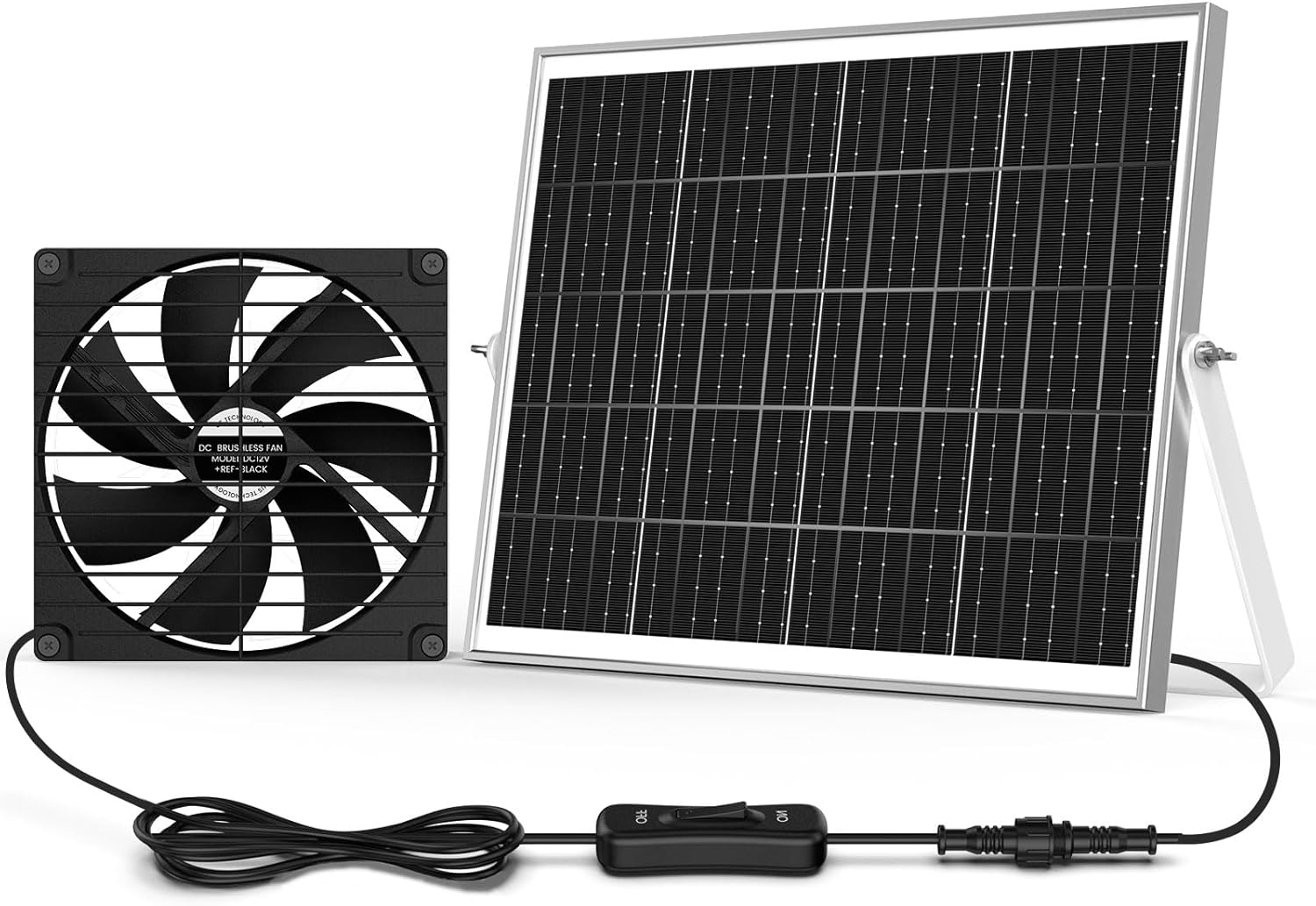
The PQINS 18-1P-B is a 7.1-inch solar-powered ventilation fan kit made for moving air through small outdoor and semi-outdoor spaces. Based on the listed uses, it fits small greenhouses, chicken coops, sheds, pet houses, garages, attics, and similar structures where stagnant heat or trapped air can build up during the day. It is best suited to homeowners and backyard growers who want a simple daytime airflow solution without running household power to the structure.
The product information lists a 25-watt solar power source, 3800 RPM maximum speed, and 720 CFM airflow capacity, with a recommended space range of 80 to 120 sq. ft. In plain terms, this is intended to help exchange air in smaller enclosures rather than cool a large building like an air conditioner. Reviewers commonly mention stronger airflow in direct sun and reduced or no operation when sunlight is weak, which matches the manufacturer note that the fan is powered directly by the solar panel and has no built-in battery.
The separate fan and solar panel are useful design choices for garden structures. You can place the panel where it gets better exposure while mounting the fan at the vent opening for exhaust or intake. The 16.5 ft cord helps with routing, and the push-button on/off switch gives basic manual control. The kit is listed as wall mounted and includes a bracket, DC fan, solar panel, and installation accessories such as mounting plates, screws, and nylon ties.
For a hobby greenhouse, this fan can help move hot, stale air out during sunny parts of the day, especially when paired with an opposite vent or opening for make-up air. In a chicken coop or doghouse, it may help improve air circulation during daylight hours, provided the installation keeps cords, blades, and hardware safely away from animals. For a shed, cabin, or small garage space, it can serve as a low-maintenance exhaust fan when heat builds up under direct sun.
The main limitation is also the reason it is simple: it has no battery backup. Gardeners who need overnight ventilation, cloudy-day performance, thermostat control, or continuous 24-hour airflow should consider a powered fan with battery storage or a wired option. Installation should be planned carefully, including weather exposure, secure mounting, protected cord routing, and a clear intake or exhaust path. Based on the specifications, this PQINS kit is a practical pick for sunny daytime ventilation in small backyard structures, but it is not the right choice for gardeners who need guaranteed airflow after dark or during extended cloudy weather.

Pros
- Does not require mains electricity or extra wiring work.
- Solar-powered operation automatically starts when sunlight is available.
- Suitable for several small-space applications, including greenhouses, coops, sheds, pet houses, and windows.
- The included waterproof connector and pre-drilled panel holes can make installation more straightforward.
Cons
- It has no battery, so it will not continue operating when sunlight is unavailable.
- There is no on/off switch, and fan speed varies with the intensity of available sunlight.
- Gardeners needing consistent ventilation in shaded locations or after sunset may prefer a powered fan with battery storage or mains operation.
The DC HOUSE 20W solar exhaust fan is designed to ventilate small enclosed spaces such as greenhouses, chicken coops, sheds, pet houses, and windows. It is a practical fit for homeowners and gardeners who need basic air exchange in an outbuilding without running mains wiring.
The listed dual-fan design is intended to exhaust warm air and encourage fresher air movement, which can help reduce stagnant conditions and indoor humidity in suitable small spaces. The product information lists a maximum applicable space of 880 cubic feet, or 25 cubic meters, so it should be considered for compact structures rather than large rooms or buildings.
The panel and fan connect through a plug-and-play waterproof connector, and the solar panel has pre-drilled mounting holes. Installation requires self-tapping screws and tools. The fan measures 12 x 6 x 2 inches and weighs about 2.82 pounds, while the metal protective case helps shield the blades during normal operation.
For backyard use, the kit may suit a small greenhouse roof, a shed wall, a chicken-coop ventilation opening, or a pet-house project where direct sunlight is available. The panel should be positioned where it receives full, direct sun, and the fan's operation will naturally change as sunlight becomes stronger or weaker.
The main limitation is that this is real-time solar ventilation. It has no battery and no on/off switch, so it will not provide stored-energy operation after dark or in low sunlight. The accessories are treated with a waterproof layer for outdoor use, but installation should still be planned carefully to protect connections and ensure the fan is securely mounted.
This product makes the most sense for small, sunny structures where simple, cord-free daytime ventilation is the priority. Choose a different option if you need scheduled control, nighttime operation, or steady airflow in a shaded location.

Pros
- Automates basic greenhouse ventilation as temperatures rise and fall.
- Dual springs may provide useful extra force in exposed or windy locations.
- The solar, thermal-sensitive design does not require manual temperature monitoring.
Cons
- The listed 60°F to 77°F operating range may not suit gardeners who need a different ventilation trigger temperature.
- Compatibility should be confirmed before installation because window dimensions and vent designs vary.
- The supplied specifications do not state the maximum vent opening distance or adjustment options.
The PATIOHZ 2 Pack Solar Automatic Window Opener is designed for greenhouse roof vents and compatible windows. It uses temperature-sensitive operation to help manage heat, making it a practical option for homeowners and beginner gardeners who want more consistent ventilation without opening and closing vents by hand.
According to the product information, a gas-filled cylinder expands as the temperature rises and gently pushes the window open. As temperatures cool, the spring mechanism closes the vent. The listed operating range is 60°F to 77°F, so this opener is most appropriate for gardeners whose ventilation needs fall within that range.
The dual-spring design is intended to provide more thrust than a single-spring vent and may be useful in windy or exposed locations. The frame is made from aluminum alloy with a black powder coating, and the product information describes the materials as corrosion resistant for outdoor use. The listed dimensions are 14 by 3 by 3 inches.
For a backyard greenhouse, this type of opener can help release accumulated heat through a roof vent while the gardener is away or busy with other tasks. The included clamps and screws are intended to support straightforward installation, but the vent frame and window design should be checked for fit before purchase, especially on compact or nonstandard greenhouse structures.
The temperature range, maximum opening distance, and adjustment options are not provided, so gardeners needing highly precise climate control may prefer a system with adjustable settings or electronic monitoring. Regularly inspect the mounting hardware and vent movement, and keep the opener clear of obstructions. Overall, it is a reasonable fit for passive, temperature-based greenhouse ventilation where the existing window or roof vent is compatible.

Pros
- Automates fan operation when configured temperature or humidity thresholds are exceeded.
- Provides real-time environmental readings through an easy-to-read LCD screen.
- Offers both manual control and sensor-based automatic operation.
- Mounting hardware supports more than one installation approach.
- Suitable for several enclosed-space applications, including small greenhouses and grow tents.
Cons
- The product information does not list airflow capacity, so suitability for larger enclosures is difficult to determine.
- A 4-inch fan may be less suitable for growers needing ventilation equipment for larger spaces or higher-volume ducting systems.
- The sensor must be inserted and the control thresholds configured before automatic operation can provide useful environmental control.
The DAOTAILI 4-inch inline duct fan is a ventilation device for enclosed growing environments. Its intended task is to help manage temperature and humidity in grow tents, small greenhouses, mushroom rooms, laboratories, and other contained spaces, making it most relevant to gardeners who want more automated climate monitoring than a basic manually switched fan provides.
Its main growing-use benefit is sensor-based operation. After temperature and humidity thresholds are set, the fan is designed to turn on when those values are exceeded and stop when conditions fall below the selected settings. The adjustable ranges of 50-140°F and 1-99% RH provide broad control options, although the most useful settings will depend on the specific plants or growing process.
The LCD screen displays real-time temperature and humidity readings along with the selected parameters, helping users check conditions without relying on a separate display. A brief press of the SET button starts the fan manually, while holding the button enters automatic mode. This gives growers a direct-control option without changing the saved automatic settings.
For installation, the fan measures 6.34 x 4.8 x 5.43 inches and is supplied with stainless steel mounting brackets and various screws. It can be fixed to a wall or hung, which may help when working around the limited interior space of a grow tent or arranging equipment in a small greenhouse.
The product information lists low-voltage DC power, low-noise operation, and energy-efficient use, but it does not provide an airflow capacity or specify the size of enclosure it can ventilate effectively. Gardeners should therefore confirm that the 4-inch format fits their planned setup and should place the sensor where it can represent the growing area's conditions accurately.
This fan is a sensible option for beginners and small-space growers who want automatic temperature and humidity response with visible readings and flexible mounting. Gardeners managing larger enclosures, complex ducting, or demanding airflow requirements should consider an option with clearly stated airflow specifications before choosing it.
Pros
- Solar panel and household power adapter are both included for more flexible operation.
- Listed 36 dB noise level suggests relatively quiet ventilation for coops, sheds, or small greenhouses.
- Comes with bracket, solar panel, power adapter, and long cord needed for a basic installation.
- Wall-mount exhaust design is useful for removing warm, stale, humid, or dusty air from enclosed outdoor structures.
Cons
- Installation requires drilling a 7-inch hole, which may not suit renters or gardeners uncomfortable modifying a wall or shed panel.
- Solar performance will depend on sun exposure, panel placement, and weather, so shaded locations may need the power adapter more often.
- No battery runtime is listed, so gardeners wanting stored solar power overnight may need a different ventilation setup.
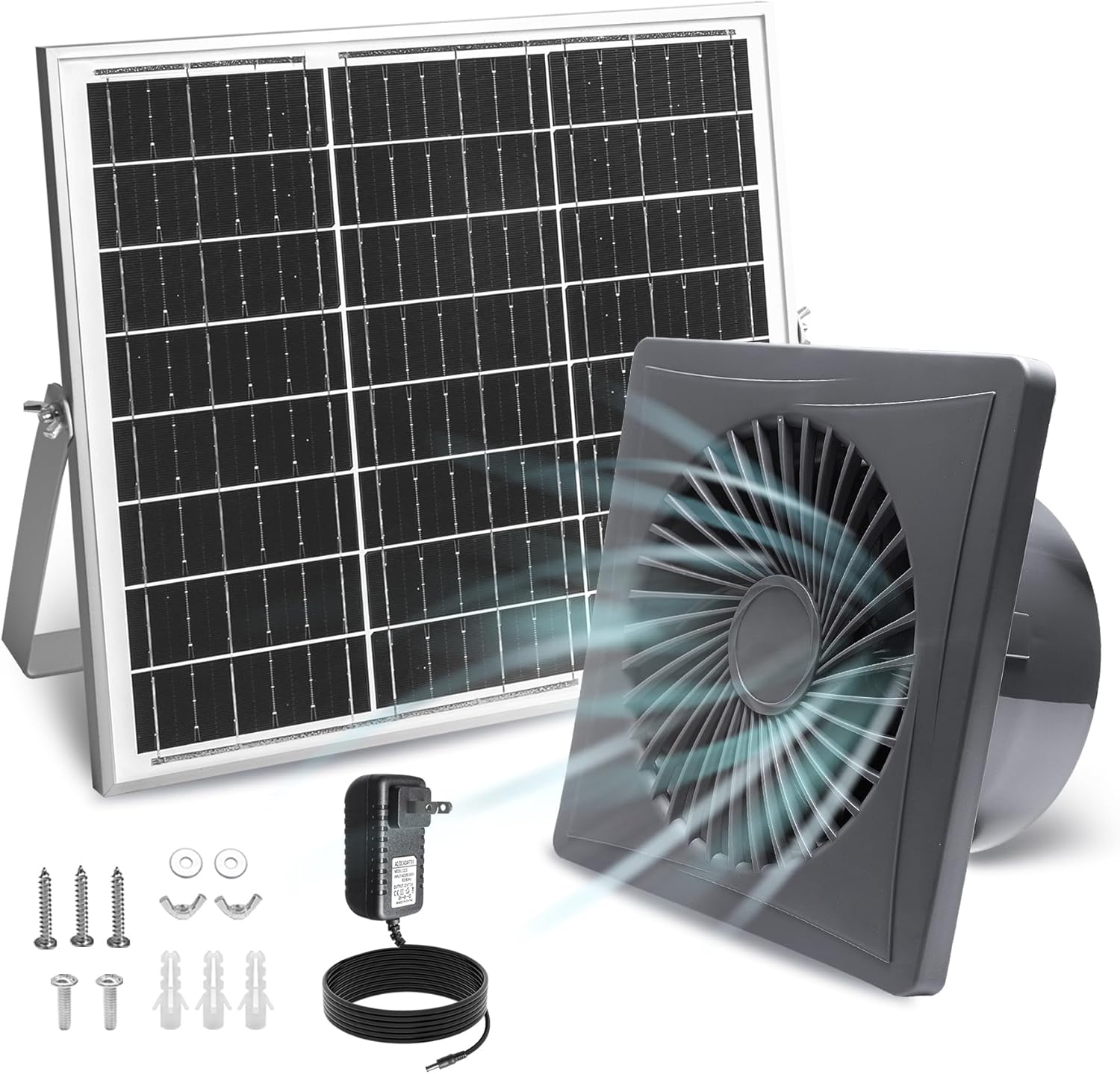
The SHENVITASO XJS-G8 is a solar exhaust fan kit made for ventilating small outdoor and utility spaces such as greenhouses, chicken coops, sheds, pet houses, garages, barns, RVs, and similar enclosed areas. For gardeners, its main job is to help move stale air out of a structure where heat, moisture, dust, or odors can build up.
According to the listed specifications, the kit pairs an 8-inch exhaust fan with a 25W monocrystalline solar panel. The fan is rated at 430 CFM, 2300 RPM, and 36 dB, giving it a useful mix of airflow and relatively low listed noise for small-space ventilation. The product information also notes a photovoltaic conversion efficiency of up to 21.5 percent for the panel.
The design includes a wall-mount fan, adjustable solar panel bracket, MC4 connector, push-button control, and a separate ON/OFF switch. A 16.4-foot solar panel cord helps with roof or sunny-wall placement, while the included power adapter with a 4.66-foot cable allows connection to household power when sunlight is not enough. Installation requires drilling a 7-inch hole and making the connection to the panel, so careful measuring and safe tool use are important.
In a backyard greenhouse, this fan may help exhaust hot, humid air during sunny periods. In a chicken coop or garden shed, it can support air exchange where odors, dust, or trapped heat are concerns. The anti-backflow valve is a helpful detail for outdoor structures because it is designed to stay closed when the fan is not running, helping limit outside insects, small animals, and reverse airflow through the opening.
The solar panel is listed with an IP67 waterproof rating, toughened glass surface, and aluminum frame, which supports outdoor use according to the product data. Still, placement matters. The panel should be aimed for the best available sun, wiring should be routed safely, and the fan opening should be positioned where exhaust air can leave freely. Periodic checks for dust, debris, and blocked vents will help keep airflow from being restricted.
This is a sensible option for homeowners and beginner-to-intermediate gardeners who want a ready solar ventilation kit with an AC power backup option. Gardeners who cannot cut a wall opening, need battery-backed overnight solar operation, or are ventilating a larger structure may want to compare other systems before choosing this one.

Pros
- Reduces the need to remember manual vent adjustments during changing temperatures.
- Supports vents up to 15 pounds with a dual-spring mechanism.
- Avoids batteries, wiring, and electrical connections.
- Rust-resistant aluminum and stainless steel parts are suited to humid greenhouse environments.
Cons
- The temperature-triggered design may be less suitable for gardeners who need precise scheduled or remote vent control.
- Compatibility still depends on the greenhouse vent's mounting arrangement, dimensions, and weight, which are not specified in the supplied data.
- The listed 15-pound lifting limit may not suit heavier roof vents.
The GDHSWJ automatic greenhouse vent opener is a temperature-sensitive window opener for greenhouse roof vents. It is intended to help home gardeners ventilate a greenhouse automatically, making it a practical option for beginners, busy homeowners, and anyone who cannot check a greenhouse throughout the day.
Based on the listed specifications, the opener begins opening between 60°F and 77°F and reaches full opening above 86°F, then closes as temperatures cool. This passive operation can help reduce manual vent adjustments and may help limit heat buildup around heat-sensitive plants, flowers, and vegetables.
The dual-spring mechanism is rated to lift vents weighing up to 15 pounds. The unit measures 13.2 by 3.4 by 1.5 inches and uses aluminum construction with stainless steel accessories. It requires no batteries, wiring, or external electricity, while the included screws and manual are intended to support installation.
This opener could be useful in a backyard greenhouse where a roof vent is exposed to changing daytime temperatures. Its compact size may also suit smaller greenhouse ventilation setups, but gardeners should confirm that the vent's mounting points, movement, dimensions, and weight are appropriate before installation.
The temperature-based mechanism does not provide the scheduling or remote controls found in powered ventilation systems. Gardeners should also stay within the listed 15-pound lifting capacity and inspect the mounting hardware and moving parts periodically, especially in humid or windy conditions. Overall, it is a sensible fit for simple passive greenhouse ventilation, while larger or more configurable systems may be better for heavier vents or precise climate management.

Pros
- Automatic gravity operation requires no separate switch or manual closing step at the vent cover.
- Aluminum construction is described as smooth, burr-free, and resistant to rust or corrosion.
- The listed 10 x 10-inch interface provides a clear sizing reference for compatible openings.
Cons
- Compatibility depends on accurately matching the 10 x 10-inch interface and approximately 9 x 9-inch inner opening to the existing fan or duct.
- Mounting screws are not included, so an installer must supply suitable hardware for the installation surface.
- Gardeners needing adjustable airflow control or powered ventilation may prefer a complete fan system rather than a passive louver cover.
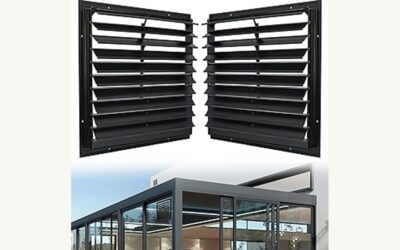
The PATIKIL 10x10-inch aluminum louvered vent cover is a passive exhaust accessory for greenhouse, garage, bathroom, kitchen, and other ventilation openings. It is intended to fit a 10 x 10-inch vent hole or duct interface and is best suited to homeowners replacing or adding a self-closing cover to an existing flow fan or exhaust setup.
Its main benefit is automatic gravity operation. The louvers are designed to open when exhaust airflow pushes through and close when the airflow stops, helping limit backdraft, unwanted air movement, moisture, and dust according to the listed product information. The feature set can be useful in a greenhouse or utility space where air needs to leave without leaving the opening continuously exposed.
The listed interface measures 250 x 250 mm, or 10 x 10 inches, while the inner opening measures about 230 x 230 mm, or 9 x 9 inches. The cover is made from aluminum and is described as smooth, burr-free, and resistant to rust and corrosion. Installation involves removing the flow fan's protective grille, inserting the cover into the fan outlet, and securing it with screws, which are not included.
For backyard use, this cover may suit a greenhouse exhaust outlet, a garage ventilation point, or a small workshop or utility-room fan. It can also be considered for patio-adjacent growing spaces where a fixed exhaust opening needs a simple exterior shutter. Before installation, measure the existing opening and confirm that the fan outlet, duct, and mounting surface can accept the listed dimensions.
The louvers are described as closing to help block water intrusion, but proper fit and installation remain important for weather performance. Inspect the moving louvers periodically for dust, debris, or anything that could prevent them from closing, and use suitable mounting hardware for the wall or fan outlet. This is a vent cover rather than a complete exhaust fan, so it does not provide airflow on its own.
It is a reasonable choice for gardeners and homeowners who already have compatible powered ventilation and want a compact, self-closing aluminum cover. Those needing a powered fan, adjustable louvers, included hardware, or a different opening size should compare other options before purchasing.

Pros
- High listed airflow for ventilating small enclosed work and growing spaces
- Durable all-metal frame, fan, and shutter construction
- Enclosed motor with thermal protection and permanent lubrication
Cons
- The unit does not include a speed control switch or plug, so electrical installation requires additional parts and appropriate wiring.
- Its approximately 12.8-inch square face and 5.9-inch listed depth may not fit every existing wall or window opening.
- Gardeners who need adjustable airflow will need a different model or a compatible control solution, since speed control is not included.
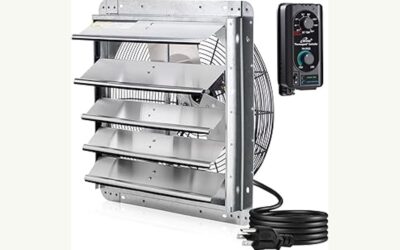
The VEVOR 10-inch shutter exhaust fan is designed to move air through enclosed utility and growing spaces, including greenhouses, sheds, garages, workshops, chicken coops, and attics. It is most suitable for homeowners who need fixed wall or window ventilation rather than a portable fan and who can arrange the required electrical installation.
Based on the listed specifications, the fan provides up to 820 CFM of airflow at 1,650 rpm. That level of stated air movement may help exchange warm, humid, dusty, or stale air in an appropriately sized enclosed area, although actual ventilation results will depend on the room, opening, and installation layout.
The fan has a listed 12.8 by 12.8-inch face and a 5.9-inch depth. Its galvanized steel frame, aluminum alloy fan, and aluminum shutter form an all-metal assembly described as resistant to weather, liquid, and dust. The enclosed AC motor operates at 120V and 45 watts, with thermal protection and permanent lubrication intended to reduce routine maintenance.
In a backyard greenhouse, shed, or workshop, this fan could provide a dedicated exhaust point when mounted in a suitable wall or window opening. The shutter format is useful for a fixed installation, while the compact square face may work well where wall space is limited, provided the opening and surrounding structure can accommodate the listed dimensions.
The basic model does not include a plug or speed control switch. A separate plug must be purchased and wired for operation, so installation should be completed safely by someone qualified to handle the electrical work. Overall, this is a practical choice for fixed ventilation in small enclosed garden-related spaces, while users wanting plug-and-play setup or adjustable fan speed should consider another option.
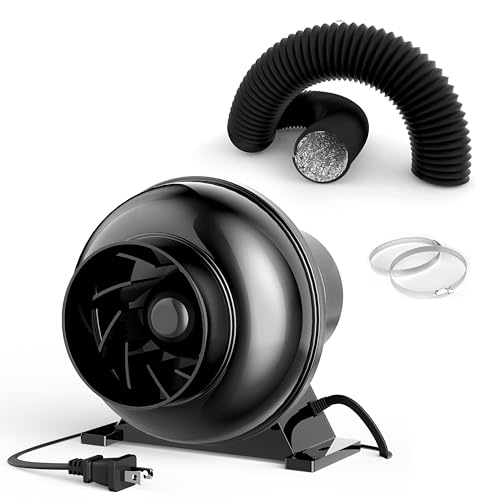
Pros
- Three-speed control offers more flexibility than a single-speed booster fan.
- The kit includes both the inline fan and 8 feet of ducting for a simpler starting setup.
- Listed operating temperature endurance for the ducting ranges from 0 to 185 degrees Fahrenheit.
Cons
- A 4-inch duct system may be less suitable for larger greenhouses or spaces requiring substantially higher airflow.
- Installation still requires planning for duct routing and access to a grounded electrical outlet.
- The supplied information does not specify mounting hardware, weather resistance, or a detailed installation guide.
The InfiniPower kit is a compact ventilation setup built around a 4-inch inline fan and 8 feet of black flexible ducting. It is intended to move air through grow tents, greenhouses, hydroponic areas, bathrooms, basements, and similar enclosed spaces, making it most suitable for gardeners who need basic exhaust or air-circulation support.
Based on the listed specifications, the fan can produce 195 CFM of airflow at a stated 2500 RPM. In a small growing area, that airflow may help refresh stagnant air and support better control of humidity, temperature, and general air quality, although actual results will depend on the space, duct layout, and operating setting.
The three-position control switch provides high, medium, and low settings, allowing users to adjust ventilation rather than running the fan at one fixed speed. The kit includes 8 feet of 4-inch ducting when fully extended and a pair of stainless steel metal clamps, which can simplify connection and routing. The product information lists a grounded plug and built-in grounded control outlet, so installation should be planned near an appropriate grounded electrical source.
For backyard use, this kit could fit a small greenhouse, grow tent, basement workshop, or indoor propagation area where flexible ducting can be directed toward an exhaust point. Its 4-inch format is relatively focused for compact installations, while the ducting length may help users position the fan and outlet without placing them directly beside one another.
The listed ducting temperature range is 0 to 185 degrees Fahrenheit, but the supplied information does not identify weather resistance or mounting hardware, so outdoor placement and support details should be checked before installation. Gardeners should keep electrical connections protected from moisture, avoid blocking the duct path, and inspect clamps and ducting periodically. Overall, it is a practical option for small-space ventilation, while larger greenhouses or users needing detailed mounting and outdoor-use specifications may prefer a more fully documented system.

Pros
- Separate fan and solar-panel setups allow more flexible intake and exhaust placement.
- No AC connection is required, which can be useful for detached structures or locations without convenient electrical access.
- The two-fan configuration can help create through-flow ventilation instead of relying on a single circulation point.
- The 16.5-foot cables provide useful reach between the panels and fan locations.
Cons
- Because no battery is included, airflow may drop substantially during cloudy weather or when the solar panels are shaded.
- Solar-dependent operation may be less suitable for nighttime ventilation or structures that do not receive consistent sunlight.
- Gardeners will need to plan the fan and panel locations carefully, especially when using one unit for intake and the other for exhaust.
The pqins 7.1-inch solar greenhouse fan 2-pack is designed to improve air circulation and ventilation in outdoor structures. It is a practical fit for homeowners managing a greenhouse, chicken coop, shed, pet house, or similar space without a convenient AC power connection.
Based on the listed specifications, each fan uses a brushless motor and thin blades, with operation up to 3,800 RPM and an air volume of up to 900 CFM. When both fans are used together, the product information indicates coverage for ventilation needs in spaces of approximately 150 to 230 square feet, although actual results will depend on sunlight, structure layout, and airflow openings.
The two fans are separate rather than connected as a single fixed unit. Each has its own solar panel and 16.5-foot extension cable, so you can position one for intake and one for exhaust, or configure both for the same airflow direction. The listed product dimensions are 7.5 by 7.5 by 4 inches, and the outdoor-oriented design is described as waterproof and lightweight.
For backyard use, this setup could help move warm air through a sun-heated greenhouse, improve circulation in a chicken coop, or ventilate a shed where running an electrical cable is inconvenient. The separate panels and long cables may also help when the best fan location and the sunniest panel location are not the same.
The main limitation is the lack of a battery. The product information states that performance is reduced on cloudy days or when a panel is shaded, so it is not intended to provide dependable stored-power ventilation after sunset. Keep the panels as unshaded as practical, and periodically check the outdoor fan and panel areas for dirt or obstructions. This is a sensible option for sunny locations needing daytime ventilation, while gardeners needing overnight or consistently powered airflow may prefer a battery-backed or AC-powered system.
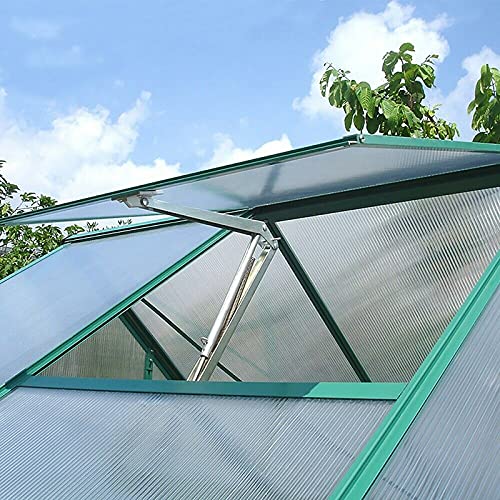
Pros
- Non-electric operation simplifies installation where wiring is inconvenient.
- Temperature-based opening and closing can reduce the need for manual vent adjustments.
- The listed weight and opening limits accommodate many common greenhouse roof windows.
Cons
- Compatibility still depends on the greenhouse frame, vent design, and window weight, so measurements should be checked before installation.
- The cylinder requires chilling and manual extension and retraction before initial use, according to the product instructions.
- Gardeners needing ventilation below the listed temperature range or for heavier windows may prefer a different opener.
The Yziixi Single-Spring Greenhouse Roof Vent Opener is designed to automate a common greenhouse task: opening a roof window when heat builds up and closing it as temperatures fall. Its solar heat-sensitive cylinder makes it a practical option for homeowners and beginner gardeners who want temperature-responsive ventilation without adding electrical wiring.
Based on the listed specifications, the opener is intended for windows weighing up to 15 pounds and opening up to 18 inches. It is described as opening when temperatures exceed 77°F and closing as temperatures fall to about 59°F, which can help reduce the need for frequent manual vent adjustments during changing weather.
The unit uses aluminum and stainless steel components, with the product information describing the materials as rust-resistant for humid conditions. Installation is intended for compatible panels, metal frames, or wooden frames using the supplied clamps and screws. The cylinder can be turned to adjust the opening angle, providing some control over how far the vent opens.
This opener may be useful in backyard greenhouses where a roof vent is difficult to reach, as well as in small greenhouse spaces where simple passive ventilation is preferred. Before installation, check the window dimensions, frame structure, opening direction, and total window weight to make sure they fit the listed limits.
The instructions call for placing the cylinder in a chilled environment for approximately 30 minutes, then manually extending and retracting it before reinstalling it. The temperature range and 15-pound support limit also mean it may be less suitable for unusually heavy vents or gardeners who need adjustable ventilation outside the listed operating temperatures.
Choose this model if you want a compact, non-electric way to automate a compatible greenhouse roof vent. Consider a different option if your window exceeds the stated capacity, your frame does not accept the included mounting approach, or you need electronic temperature control with a broader adjustment range.

Pros
- Strong listed airflow for ventilating enclosed greenhouses, sheds, garages, and other backyard spaces.
- Thermostat automation, multiple speeds, timer, and remote control make operation more convenient.
- Compact 10-inch format with automatic shutters and a grounded power cord suits many fixed wall-ventilation projects.
Cons
- Wall installation requires a suitable opening, secure mounting surface, and access to a standard power source.
- The 10-inch fan size may be less suitable for very large structures or spaces needing multiple ventilation points.
- The supplied information does not specify a warranty, installation hardware details, or a stated weatherproof rating, so placement and protection should be planned carefully.
The Ehiair 10-inch shutter exhaust fan is a fixed wall-ventilation unit designed to remove warm, humid, dusty, smoky, or odorous air from spaces such as greenhouses, sheds, garages, workshops, attics, basements, and chicken coops. Its feature set is most relevant to homeowners who need more consistent air exchange than a portable fan can provide and who have a suitable wall opening for installation.
Based on the listed specifications, the fan delivers 890 CFM of airflow from a 36W motor. That combination suggests a practical option for helping reduce heat and humidity in an enclosed backyard growing or utility area, although the appropriate number of fans will depend on the structure and its ventilation layout. The three-speed control allows adjustment for different conditions, while the thermostat can automate operation within the stated 32°F to 140°F range.
The controls include Low-Temp and High-Temp modes, an 18-hour timer, and a remote with a listed range of 66 feet. The fan measures 5 by 10.8 by 10.8 inches and weighs 6.39 pounds. Installation is described as plug-and-play with no wiring required, and a cutout template is included. The controller-to-plug cable is 4.9 feet, while the fan-to-controller cable is 2.6 feet, so the available cord lengths should be checked against the planned wall location.
In a greenhouse, this unit could help move hot, humid air out during warm periods, while a shed or workshop may benefit from faster removal of dust and odors. In a chicken coop or garage, the automatic shutters provide a convenient closed position when the fan is not running. The compact format may also work well for smaller backyard structures, provided the wall construction and opening can support the installation.
The galvanized steel frame, aluminum blades, dual ball bearings, and sound-absorbing shutter padding are listed to support durability and quieter operation, with a stated noise level of 40 dB or less. The grounded cord and ETL certification are useful safety features, but installation should still follow applicable electrical and building requirements. This is a sensible choice for users wanting automated wall ventilation, while gardeners with large structures, no suitable wall opening, or a need for a specifically weatherproof unit should consider alternatives with those requirements clearly documented.

Pros
- Offers flexible airflow control with ten speeds and three switchable modes.
- Automatic temperature, humidity, and schedule settings support more consistent ventilation routines.
- The listed 1800 CFM output is suitable for circulating air in larger enclosed or semi-enclosed work areas.
Cons
- The ceiling or wall-mount design may require careful installation and a suitable mounting surface.
- A noise level of up to 60 dB may be noticeable in quiet patios, hobby spaces, or nearby living areas.
- Gardeners seeking a simple plug-in fan may find the LCD controls, probe, and programmable settings more involved than necessary.
The VEVOR greenhouse air circulation fan is designed to move air through greenhouses, sheds, stables, patios, garages, events, and workstations. Its main garden task is circulation and ventilation, making it a practical fit for homeowners and growers who want adjustable airflow and automatic controls rather than a basic single-speed fan.
Based on the listed specifications, the fan delivers up to 1800 CFM and provides ten speed levels. Lower settings can support gentler circulation during cooler seasons, while higher settings can help move more air when an enclosed growing area feels hot or stagnant. Air circulation can help reduce stuffy spots, but the product should not be treated as a substitute for a complete greenhouse exhaust or climate-control system unless the installation provides the needed air exchange.
The control system includes an LCD interface, three switchable modes, temperature and humidity thresholds, and an external probe with an 8.2-foot cable. The automatic mode supports temperature settings from 33°F to 176°F and humidity settings from 1% to 90% RH. Scheduled operation can be set for 1 to 600 minutes on and off, with 0 to 100 cycles, or continuous cycling when selected.
For backyard use, the fan could be mounted in a greenhouse to circulate air around plant areas, placed in a shed or garage to reduce stagnant air, or used on a patio or workstation where adjustable airflow is useful. The listed dimensions are 13.78 by 8.27 by 24.02 inches, and the unit weighs 9.41 pounds, so gardeners should plan the mounting location and confirm that the wall or ceiling can securely support the fan and included hardware.
The Q235 metal frame and aluminum alloy blades are listed for use in hot, humid, and dusty areas, with noise rated at no more than 60 dB. Before installation, verify the AC110-230V electrical requirements, secure the mounting hardware, and keep the fan and probe positioned where they will not interfere with people, plants, or routine work. This is a strong choice for growers who value programmable ventilation, while those wanting the simplest possible circulation fan may prefer a less feature-heavy model.

Pros
- Combines airflow control with real-time temperature and humidity monitoring.
- Oscillation helps distribute air beyond one fixed direction.
- Flexible clip installation works with several pole and surface shapes within the listed size range.
- Four speed and circulation modes offer useful control for small indoor growing setups.
Cons
- The clip is limited to poles or surfaces between 0.12 and 0.9 inches, so thicker supports may require a different mounting solution.
- Gardeners needing ventilation for a larger growing area may prefer equipment with specifications for broader coverage.
- The supplied information does not state the sensor control range, power source, or included accessories.
The DAOTAILI 4-inch grow tent clip fan is a compact ventilation tool for indoor gardens, hydroponic setups, grow tents, shelves, and desks. Its combination of adjustable airflow and environmental monitoring makes it most suitable for beginners and home gardeners who want more control than a basic fixed fan provides.
The external sensor monitors temperature and humidity, while the automatic control feature can start or stop the fan when user-selected limits are reached. The built-in LCD display shows current readings, giving growers a convenient way to check conditions without relying on a separate display.
Airflow can be adjusted across Low, Medium, High, and Circulation modes. The automatic 90-degree oscillation helps move air across a wider section of the growing space, and the listed operating level of approximately 36dB is intended for comfortable indoor use.
Installation is handled by an adjustable U-shaped clip designed for round, square, and flat poles from 0.12 to 0.9 inches. Measuring 2.1 x 4.3 x 6.2 inches and weighing about 1.01 pounds, the fan can be practical where shelf, desk, or grow-tent space is limited, provided the mounting surface falls within the stated range.
The supplied information does not specify the sensor control range, power source, weather resistance, or included accessories, so those details should be confirmed before purchase. Secure installation is important, especially around plants and irrigation equipment, and gardeners needing coverage for a larger space may want a fan with clearly stated larger-area performance specifications.
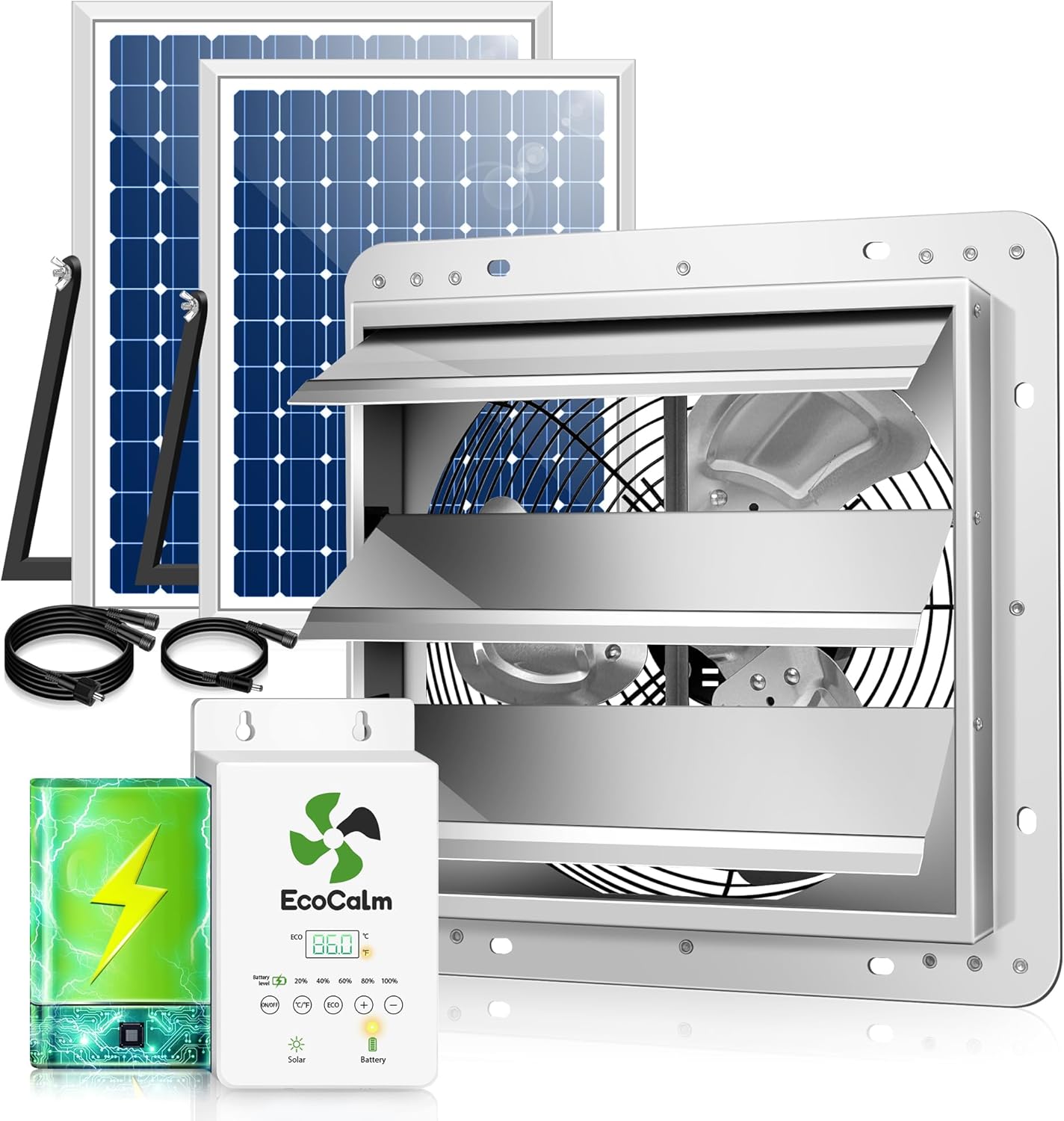
Pros
- Works without a conventional power outlet, useful for remote sheds, greenhouses, barns, and chicken coops.
- Thermostat control reduces the need to manually switch the fan on during hot parts of the day.
- Included battery provides backup ventilation after charging, rather than limiting operation only to direct sun.
- Reviewers commonly mention straightforward installation and effective airflow in greenhouse or coop uses.
- Metal build and screw-together style wiring noted in reviews suggest a more substantial setup than many lightweight plastic fan kits.
Cons
- Fan and battery performance may drop in cloudy weather or poorly positioned solar panel locations.
- Control setup may take patience, as at least one reviewer found the settings less intuitive at first.
- Gardeners needing guaranteed all-night ventilation or code-compliant attic ventilation should confirm the system meets their space and safety requirements before relying on it.
The ecoCalm KP-SEF240812 is a 12-inch solar powered exhaust fan made for moving hot, humid, or stale air out of enclosed spaces such as greenhouses, garden sheds, garages, attics, barns, and chicken coops. For gardeners, its most useful role is greenhouse ventilation, especially in backyard structures that do not have convenient access to a household electrical outlet.
Based on the listed specifications, the fan is rated at 680 CFM and is intended for spaces up to 1600 cubic feet. That puts it in a useful range for many small to midsize hobby greenhouses and outbuildings, provided there is also an intake opening so replacement air can enter. The product information also highlights cooling indoor temperatures, helping reduce mold-friendly conditions, and improving air quality through circulation.
The system includes two 30W bifacial solar panels, a 5000mAh rechargeable battery, and an intelligent power system that switches according to sunlight conditions. The battery is described as providing up to 6 hours of operation after a full charge in sunlight, though the product information clearly notes that fan output and battery charging are affected by cloudy weather. For best results, the panels need to be placed where they receive strong sun for much of the day.
Installation is listed for window or wall mounting, and the 14.8-foot cable gives some flexibility in locating the solar panels away from the fan opening. The fan uses metal construction, a DC motor, touch control, and IP44 waterproof fan blades. Reviewers commonly mention straightforward setup, quiet operation, and good results in small greenhouses and coops, although those comments should be treated as user experiences rather than guaranteed performance.
The adjustable thermostat is one of the more gardener-friendly features because it can cycle the fan on and off according to the temperature setting rather than requiring constant attention. That is helpful for seed starting areas, summer greenhouse use, or animal shelters where heat can build quickly. One practical setup tip is to think through both exhaust and intake placement, since an exhaust fan works best when fresh air can enter from the opposite side or lower part of the structure.
This is a good fit for homeowners who want off-grid ventilation for a greenhouse, shed, or coop and are willing to mount solar panels in a sunny location. It may be less suitable for shaded yards, spaces that need dependable ventilation through long dark periods, or installations where electrical safety and building-code compliance are critical. As with any powered outdoor equipment, keep wiring protected, follow the manufacturer instructions, and inspect the fan and connections periodically for damage, vibration, or moisture issues.

Pros
- Automatic temperature response reduces the need to monitor and adjust a greenhouse vent manually.
- No electrical connection or battery replacement is required.
- The listed 33-pound capacity and dual-spring design suit many compatible greenhouse windows.
- The wide 18-inch opening may improve airflow when the vent and frame support that movement.
Cons
- Compatibility still needs to be checked carefully because the product is intended for suitable greenhouse windows and frames.
- The opening and closing temperatures may not match every plant's preferred growing conditions.
- Gardeners needing active ventilation control during cloudy, cool, or unusually windy conditions may prefer a system with manual or powered override features.
The Buycitky Auto Vent Opener is a solar-powered greenhouse window mechanism designed to automate roof or side-vent ventilation. It is intended for hobby greenhouses, lean-to structures, and other compatible frames where gardeners want to reduce manual vent adjustments, making it particularly useful for homeowners and beginners who cannot check greenhouse temperatures throughout the day.
Based on the listed specifications, the opener begins opening at 77°F to release trapped heat and closes at 59°F to help retain warmth. The automatic response can make temperature management more consistent than relying on a vent that must be opened and closed by hand, although the preset temperatures may not suit every crop or greenhouse setup.
The unit is listed with a dual-spring system, an 18-inch maximum opening, and support for windows up to 33 pounds. Its aluminum alloy and stainless steel construction is described as rust-proof, and the product information states that it is intended to withstand rain, snow, and sun. Brackets, screws, and an illustrated guide are included, with installation requiring only a screwdriver according to the supplied details.
In a backyard or patio greenhouse, this opener could help vent heat during sunny periods while closing the window as temperatures fall. It may also suit panel, wood, or metal greenhouse frames, as well as certain industrial plant facilities or rooftop skylights, provided the window weight, mounting points, and available opening match the product requirements.
Before installation, confirm that the vent does not exceed the listed 33-pound capacity and that the frame can accept the supplied brackets. The mechanism should be kept clear of obstructions and checked periodically for secure mounting and smooth movement. This is a practical choice for passive, solar-powered ventilation, while gardeners who need adjustable temperature settings, remote control, or a manual override should consider a different type of opener.

Pros
- Cordless solar setup is useful for sheds, small greenhouses, chicken coops, and other outbuildings away from household power.
- Thermostat control adds convenience compared with a basic always-on solar fan.
- Battery backup provides a supported option for continued ventilation beyond direct sunlight, depending on charge and conditions.
- Wall or window mounting gives homeowners flexibility for exhaust placement.
- Anti-backflow exhaust fan design is appropriate for moving air out of an enclosed space.
Cons
- Solar charging and fan output can be reduced in cloudy weather, shaded locations, or poor panel placement.
- The listed 220 CFM capacity may be too small for larger greenhouses, sheds, or animal shelters that need stronger air exchange.
- Some users may need to plan controller placement carefully because installation height and cable routing can affect everyday access.
The ecoCalm KP-SEF23124 is an 8-inch solar exhaust fan intended for outdoor ventilation in small greenhouses, sheds, chicken coops, animal houses, garages, barns, and similar enclosed spaces. It is designed to pull air out rather than blow fresh air in, so it works best when paired with an appropriate intake opening or existing vent on the opposite side of the space.
The main practical benefit is cord-free air movement. The product information lists 220 CFM airflow and suitability for spaces up to 380 cubic feet, which makes it most relevant for compact structures rather than large greenhouses. The included 4400mAh rechargeable battery is listed to provide up to 8 hours of operation after a full sunlight charge, although the manufacturer notes that charging and fan performance are affected by sunlight conditions.
The fan uses a bifacial solar panel that can generate power from both sides when light conditions allow. It also includes an adjustable temperature control system in the battery box, allowing the fan to turn on and off automatically according to the selected ambient temperature. For gardeners who do not want to manually manage ventilation throughout the day, that thermostat feature is a meaningful upgrade over a simple direct-solar fan.
Installation is listed as wall or window mount, with a permanent installation type, DC connectors, a waterproof plug, and a 14.8-foot cable. The fan body measures 3.74 inches deep by 9.06 inches wide by 9.06 inches high. The IP44 waterproof fan blades and outdoor-focused design are useful for garden structures, but the solar panel should still be positioned for strong sun exposure and mounted securely against wind or weather.
In a backyard setup, this fan makes the most sense for a small greenhouse that overheats in afternoon sun, a potting shed that holds warm air, or a coop where air exchange is needed without running electrical wiring. Reviewers commonly mention use in chicken coops and sheds, with several noting easy setup and quiet operation, while others report that airflow or battery performance did not meet their needs in larger or less ideal conditions.
Gardeners should size ventilation carefully before buying. A single 8-inch, 220 CFM exhaust fan may not be enough for a larger greenhouse, a very humid shed, or an animal shelter that needs substantial air exchange. This is a practical choice for small-space solar ventilation, but anyone needing dependable all-weather airflow, more capacity, or powered ventilation independent of sunlight may want to consider a larger or hardwired system.

Pros
- Wide airflow positioning through automatic horizontal oscillation and manual vertical aiming
- Secure adjustable clip for compatible 16mm to 25mm poles
- Multiple speed choices with a listed quiet maximum of 33 dB
- Removable front frame supports easier routine cleaning
Cons
- The clip is designed for poles within the listed 16mm to 25mm range, so other mounting surfaces may not be suitable.
- It requires access to a compatible power source, but the supplied information does not specify the cord length or control method.
- Gardeners needing a larger fan for broad open areas may prefer equipment designed for wider coverage.
The Spider Farmer 6-inch EC motor clip fan is designed for air circulation in grow tents and other compact growing spaces. Its pole-mounted format suits home gardeners, indoor growers, and small-space users who want to position airflow without placing a fan on the floor.
The feature set provides 10 adjustable wind speeds, with a listed operating range from 0 to 2300 RPM. The natural-wind setting is intended to vary airflow, while the adjustable range can help gardeners choose gentler circulation for smaller plants or stronger movement as the growing area becomes denser.
Positioning is one of this fan's main strengths. It can automatically oscillate 90 degrees horizontally and can be manually adjusted through 100 degrees vertically. The clip is specified for poles from 16mm to 25mm, and its rubber pad is intended to improve grip and reduce scratching. The fan measures 8.8 x 6 x 10.6 inches and weighs 2 pounds.
In a grow tent, the fan can be aimed across plant foliage or adjusted to circulate air through different sections of the enclosure. Its compact form may also work in a bedroom, study, or other small area where floor space is limited. The listed maximum noise level of 33 dB makes it a consideration for spaces where quieter operation is useful.
IP54 protection is specified for grow environments exposed to high humidity and heat, but the supplied information does not establish that the fan is suitable for outdoor weather or direct water exposure. The front frame can be disassembled for cleaning, and the rebound feature is intended to help prevent damage if the fan contacts an object. Overall, it is a practical choice for compatible grow-tent poles and targeted indoor circulation, while gardeners needing broad open-area coverage or a different mounting method should consider another fan.
Kaufratgeber: Braucht ein Gewächshaus Belüftung?
Warum die Belüftung eines Gewächshauses wichtig ist
Ein Gewächshaus speichert Sonnenlicht und Wärme. Das ist bei kühlem Wetter hilfreich, kann bei starker Sonne jedoch schnell zu hohen Temperaturen oder zu viel Feuchtigkeit führen. Die Belüftung unterstützt den Austausch von Innen- und Außenluft und kann eingeschlossene Wärme, überschüssige Feuchtigkeit, Staub und Gerüche reduzieren, sofern das Produkt für Abluft oder Luftzirkulation ausgelegt ist.
Bei einem kleinen Gewächshaus für den Hausgebrauch kann die Belüftung aus einem automatischen Dachfensteröffner oder einem kompakten Solarlüfter bestehen. Größere geschlossene Bereiche benötigen möglicherweise einen stärkeren Abluftventilator, eine Lamellenöffnung oder ein thermostatgesteuertes System, das sich ohne ständige Kontrolle einschaltet.
Passive Öffnungen oder elektrische Ventilatoren wählen
Passive Lösungen wie der 1PCS Automatic Greenhouse Vent Opener und der 2X Auto Vent Opener Solar Automatic Window Opener sind dafür vorgesehen, Öffnungen durch wärmeempfindliche Mechanismen zu öffnen. Sie eignen sich, wenn Sie Luftzirkulation ohne die Verkabelung eines Ventilators wünschen. Voraussetzung ist jedoch ein kompatibles Gewächshausfenster oder Dachfenster.
Elektrische Ventilatoren bewegen die Luft aktiver. Der Ecocalm Solar Exhaust Fan 12“ for Greenhouse wird mit einem Luftstrom von 720 CFM angegeben und eignet sich für Bereiche bis zu 1600 ft³. Der SHENVITASO Solar Exhaust Fan wird mit 430 CFM bei einem 8-Zoll-Ventilator angegeben. Der VEVOR 10” Shutter Exhaust Fan erreicht laut Angaben 820 CFM und verwendet einen Wechselstrommotor. Damit kann er für Gärtner geeignet sein, die in der Nähe des Installationsortes sicher auf Haushaltsstrom zugreifen können.
Luftstrom an die Größe des Gewächshauses anpassen
Der Luftstrom wird häufig in CFM, also Kubikfuß pro Minute, angegeben. Ein höherer CFM-Wert weist im Allgemeinen auf eine stärkere Luftbewegung hin. Die richtige Wahl hängt jedoch von der Größe des geschlossenen Raums, der Position der Öffnungen, der Sonneneinstrahlung und der Wärmeentwicklung während des Tages ab.
| Produkttyp | Zu vergleichende technische Daten | Auf Grundlage der bereitgestellten Daten am besten geeignet für |
|---|---|---|
| Kompakter Solarlüfter | PQINS 7.1-Zoll-Ventilator, 3800 RPM, geeignet für 80~120 sq.ft. | Kleine Gewächshäuser, Schuppen und Bereiche in der Größe einer Tierhütte |
| 8-Zoll-Solarabluftventilator | Ecocalm 8-Zoll-Ventilator, 220 CFM, geeignet für bis zu 380 ft³ | Kleine geschlossene Gewächshäuser oder Schuppen, die AkkUunterstützung benötigen |
| Solarabluftventilator mit hohem Luftstrom | Ecocalm 12-Zoll-Ventilator, 720 CFM, geeignet für bis zu 1600 ft³ | Größere Gewächshäuser, Schuppen, Garagen oder Bereiche in Dachboden-Größe |
| AC-Abluftventilator mit Lamellenverschluss | VEVOR 10-Zoll-Ventilator mit Lamellenverschluss, 820 CFM | Installationen, bei denen Haushaltsstrom geeignet und verfügbar ist |
Abwägung zwischen Solar-, Akku- und Haushaltsstrom
Solare Belüftung ist für Gartengewächshäuser attraktiv, da möglicherweise keine Stromleitung verlegt werden muss. Der PQINS 7.1-inch solar fan wird direkt über sein Solarpanel betrieben. Laut Produktangaben funktioniert er tagsüber, wobei der Luftstrom von der Intensität der Sonneneinstrahlung beeinflusst wird.
Eine Akkuunterstützung kann hilfreich sein, wenn auch bei weniger direkter Sonne Luft zirkulieren soll. Beim Ecocalm-Modell mit 12 Zoll wird ein wiederaufladbarer Akku mit 5000mAh und einer Betriebsdauer von bis zu 6 Stunden nach vollständiger Aufladung durch Sonnenlicht angegeben. Das Ecocalm-Modell mit 8 Zoll verfügt laut Angaben über einen wiederaufladbaren Akku mit 4400mAh und läuft nach vollständiger Aufladung bis zu 8 Stunden. Das SHENVITASO-Modell enthält einen Netzadapter und kann den bereitgestellten Daten zufolge für die Nutzung bei Nacht oder an Regentagen an Haushaltsstrom angeschlossen werden.
Thermostate, Schalter und automatische Fensteröffnung
Ein Thermostat oder automatischer Öffner ist hilfreich für Gärtner, die das Gewächshaus nicht mehrmals täglich kontrollieren können. Sowohl der Ecocalm Solarabluftventilator mit 12 Zoll als auch das 8-Zoll-Modell werden mit einer einstellbaren Temperatursteuerung angegeben. Dadurch kann sich der Ventilator entsprechend der gewählten Umgebungstemperatur automatisch ein- und ausschalten.
Automatische Fensteröffner unterscheiden sich von Ventilatoren. Der 1PCS Automatic Greenhouse Vent Opener wird als solarbetriebener, wärmeempfindlicher Fensteröffner angegeben, der Öffnungen bis zu 15 lbs anheben kann. Der 2X Auto Vent Opener Solar Automatic Window Opener verfügt laut Angaben über zwei Federn für bis zu 30 lbs. Diese Produkte können für Gärtner interessant sein, die eine leisere Belüftung ohne Strom bevorzugen, sofern der Öffner zum Gewächshausfenster passt.
Fehler bei Installation und Platzierung vermeiden
Zu den häufigen Fehlern gehören der Kauf eines Ventilators ohne Prüfung der Öffnungsgröße, die Platzierung eines Solarpanels im Schatten oder die Wahl eines passiven Fensteröffners, ohne sicherzustellen, dass sich die Öffnung frei bewegen lässt. Laut Produktangaben muss für den SHENVITASO-Ventilator ein 7-Zoll-Loch gebohrt und eine elektrische Verbindung zum Solarpanel hergestellt werden. Er eignet sich daher eher für Gärtner, die mit grundlegenden Installationsarbeiten vertraut sind.
Bei Ventilator-Sets mit separaten Solarpanels ist die Kabellänge wichtig. Die Ecocalm-Modelle werden mit einem 14.8 ft langen Kabel angegeben, das SHENVITASO-Modell mit einem 16.4 ft langen Solarkabel plus einem 4.66 ft langen Adapterkabel und der PQINS-Ventilator mit einem 16.5 ft langen Kabel. Längere Kabel bieten mehr Flexibilität, um das Panel in der Sonne und den Ventilator dort zu montieren, wo der Luftstrom benötigt wird.
Überlegungen für kleine Räume und barriereärmere Bedienung
Gärtner mit wenig Platz sollten eine überdimensionierte Ausrüstung vermeiden, wenn ein kompakter Ventilator oder Fensteröffner ausreicht. Der PQINS 7.1-inch Large Solar Greenhouse Fan wird für 80~120 sq.ft. angegeben, während der Ecocalm-Ventilator mit 8 Zoll für Räume bis zu 380 ft³ geeignet sein soll. Diese Modelle sind besser handhabbare Optionen für kleine Gewächshäuser, umgebaute Schuppen und Einsteigeranlagen.
Ältere Gärtner und alle, die einen wartungsärmeren Ablauf wünschen, können von automatischen Steuerungen profitieren. Ein thermostatgesteuerter Ventilator oder wärmeempfindlicher Fensteröffner kann den Bedarf verringern, die Öffnungen bei wechselndem Wetter manuell zu öffnen und zu schließen. Trotzdem sollten Sie das Gewächshaus regelmäßig kontrollieren und die Herstelleranweisungen befolgen.
Wetterbeständigkeit, Sicherheit und regelmäßige Pflege
Belüftungsausrüstung für Gewächshäuser ist Feuchtigkeit, Staub, Pflanzenresten und Temperaturschwankungen ausgesetzt. Verwenden Sie nur die in den Produktangaben bereitgestellten Informationen zur Wetterbeständigkeit: Ecocalm nennt IP44-wasserdichte Ventilatorblätter, SHENVITASO ein wasserdichtes Solarpanel nach IP67 und PQINS ein wasserdichtes Design nach IP67 mit robustem Aluminium und doppelten Metallschutzgittern.
Halten Sie Schutzgitter frei, prüfen Sie Kabel und stellen Sie sicher, dass sich Lamellen oder Verschlüsse frei öffnen und schließen lassen. Wenn Haushaltsstrom verwendet wird, befolgen Sie alle Sicherheitshinweise des Herstellers und verwenden Sie geeignete elektrische Installationsmethoden für den Außenbereich. Wenn Sie Ihr Gewächshaus auch beheizen, sollten Belüftung und Temperaturregelung gemeinsam betrachtet werden. Unser Ratgeber zu einem Gewächshausheizer mit Thermostat behandelt die Heizseite dieser Kombination.
Aufbewahrung und saisonale Pflege
Reinigen Sie am Ende der Anbausaison Staub und Pflanzenreste von Öffnungen, Schutzgittern, Verschlüssen und Solarpanels. Wenn ein Produkt über ein Akkufach, Kabel, einen Adapter oder einen Schalter verfügt, prüfen Sie diese Teile vor der Einlagerung und erneut vor der Nutzung im Frühjahr.
Auch die Aufbewahrung im Garten ist wichtig, da kleine Teile, Halterungen und Befestigungselemente leicht verlegt werden. Wenn Sie Gewächshauszubehör zusammen mit Werkzeugen und saisonaler Ausrüstung lagern, kann unser Ratgeber zum Organisieren eines kleinen Gartenschuppens dabei helfen, Belüftungszubehör leichter auffindbar und gepflegt zu halten.
Methodik und Vertrauenswürdigkeit
Dieser Ratgeber basiert auf einer recherchierten Produktanalyse und nicht auf eigenen Praxistests. Wir haben die bereitgestellten Produktdaten auf ihre Relevanz für die Gewächshausbelüftung, Gewächshäuser & Gartenaufbewahrung und die Frage „Braucht ein Gewächshaus Belüftung?“ geprüft. Produkte, bei denen Gewächshaus-Luftstrom, Abluft, Fensteröffnung, Lamellen oder eine verbesserte Belüftung ausdrücklich genannt wurden, wurden als relevant eingestuft.
Wir haben angegebene Spezifikationen wie Ventilatordurchmesser, CFM, RPM, Akkukapazität, Leistung des Solarpanels, Kabellänge, Thermostatsteuerung, automatische Hubkapazität von Fensteröffnern, bereitgestellte Wasserschutzklassen und Installationshinweise verglichen. Über die bereitgestellten Beschreibungen und wesentlichen Produktmerkmale hinaus haben wir keine Leistungsversprechen hinzugefügt.
Signale aus Kundenfeedback wurden berücksichtigt, sofern Bewertungssummen und Sternebewertungen angegeben waren. Kleine Bewertungszahlen haben wir jedoch vorsichtig eingeordnet. Der 1PCS Automatic Greenhouse Vent Opener zeigt beispielsweise eine Bewertung von 5.0 aus 4 Rezensionen. Das ist ermutigend, aber nur begrenzt aussagekräftig. Der PQINS-Ventilator wird mit 555 Rezensionen angegeben, der VEVOR-Ventilator mit Lamellenverschluss mit 754 Rezensionen.
Bei der Aktualisierung im Juli lag der Schwerpunkt auf praktischen Einsatzbereichen im Hausgarten: kleine Gewächshäuser im Garten, Installationen für Anfänger, Solaranlagen ohne nahegelegenen Stromanschluss und Gärtner, die automatische Steuerungen schätzen. Außerdem haben wir berücksichtigt, ob sich die Geräte leicht platzieren, warten und zusammen mit anderem Gewächshauszubehör aufbewahren lassen, etwa mit der Ausrüstung aus unserem Ratgeber zur Aufbewahrungsbox für Gartengeräte.
Abschließende Empfehlungen
Beste Gesamtwahl: Solar Exhaust Fan 12“ for Greenhouse with Smart Thermostat, Battery | Solar Powered Attic Fans, 2PCS 30W Bifacial Panels, Metal Build, Waterproof, Stable, for Outdoor, Garage, Shed, Chicken coop. Auf Grundlage der angegebenen Spezifikationen bietet dieses Modell hier das umfangreichste solarorientierte Ausstattungspaket: 720 CFM Luftstrom, einen wiederaufladbaren Akku mit 5000mAh, einstellbare Temperaturregelung, zwei bifaziale Solarpanels mit jeweils 30W, IP44-wasserdichte Ventilatorblätter und Eignung für Bereiche bis zu 1600 ft³.
Wahl für kleine Räume: 7.1″ Large Solar Greenhouse Fan, 25W Solar Powered Vent Exhaust and Intake Chicken Coop Fan Outdoor Waterproof, 16.5 ft Cord, Strong Airflow for Shed Doghouse Cabin Ventilation Air Circulation. Das Modell wird für 80~120 sq.ft. angegeben, verwendet ein separates Solarpanel und einen separaten Ventilator, verfügt über einen Ein-/Ausschalter und hat einen niedrigeren Preis als das größere Ecocalm-Solarsystem. Es besitzt jedoch keinen integrierten Akku und arbeitet tagsüber direkt mit Solarstrom.
Barriereärmere Wahl: Solar Fan 8″ with Adjustable Thermostat and Battery for Greenhouse | Solar Powered Exhaust Fans, Adjustable Temp Control, 25W Bifacial Panel, for Outdoor, shed, Chicken coop, Anti-backflow. Die einstellbare Temperatursteuerung und die angegebene Akkuunterstützung machen ihn zu einer praktischen Option für Gärtner, die in einem kleineren Raum einen automatischen Betrieb wünschen. Als passive Alternative kann der 2X Auto Vent Opener Solar Automatic Window Opener for Greenhouse Heat Sensitive Roof Vent Opener Auto Vent Kit Gardening Tools Greenhouse Accessories Hothouse Roof Vent Kit (Dual Spring Up to 30lbs) interessant sein, wenn Ihr Gewächshaus über kompatible Öffnungen verfügt.
FAQ
Benötigt ein Gewächshaus ganzjährig Belüftung?
Die meisten Gewächshäuser benötigen eine gewisse Belüftung, sobald sich im Inneren Wärme oder Feuchtigkeit ansammelt. Der erforderliche Umfang ändert sich je nach Jahreszeit, Klima, Sonneneinstrahlung und angebauten Pflanzen. Luftzirkulation ist jedoch ein grundlegender Bestandteil der Gewächshauspflege.
Wie wähle ich den richtigen Ventilator für die Gewächshausbelüftung?
Beginnen Sie mit der Größe Ihres Gewächshauses und vergleichen Sie die angegebenen Luftstrom- oder Raumangaben. Der Ecocalm-Ventilator mit 12 Zoll wird beispielsweise mit 720 CFM und einer Eignung für bis zu 1600 ft³ angegeben, während der PQINS-Ventilator mit 7.1 Zoll für 80~120 sq.ft. aufgeführt ist.
Reicht ein solarbetriebener Gewächshausventilator aus?
Ein Solarlüfter kann für einige kleine Gewächshäuser ausreichen, insbesondere wenn er richtig platziert ist und das Panel ausreichend Sonne erhält. Prüfen Sie, ob das Produkt über einen Akku oder Netzadapter verfügt, wenn Sie auch bei bewölktem Wetter, abends oder an Regentagen Luftzirkulation benötigen.
Was ist der Unterschied zwischen einem Fensteröffner und einem Abluftventilator?
Ein Fensteröffner hilft dabei, ein Gewächshausfenster oder Dachfenster zu öffnen und ermöglicht einen passiven Luftaustausch. Ein Abluftventilator bewegt die Luft aktiv aus dem Raum und kann je nach Modell mit Solarstrom, Haushaltsstrom, einem Thermostat oder einem Akku betrieben werden.
Wie oft sollte die Belüftungsausrüstung eines Gewächshauses gewartet werden?
Prüfen Sie Ventilatoren, Öffnungen, Verschlüsse, Kabel und Solarpanels während der Anbausaison regelmäßig. Entfernen Sie Staub und Pflanzenreste von Schutzgittern, Lamellen und Panels, damit der Luftstrom nicht blockiert wird.
Kann ich einen Gewächshausventilator auch in einem Schuppen oder Hühnerstall verwenden?
Mehrere bereitgestellte Produkte werden neben Gewächshäusern auch für Schuppen, Garagen, Dachböden, Hühnerställe oder Tierhäuser angegeben. Befolgen Sie die Installationsanweisungen des jeweiligen Produkts und stellen Sie sicher, dass Luftstrom, Montageart und Energiequelle zum Einsatzort passen.
Welche Sicherheitsmaßnahmen sind bei der Gewächshausbelüftung wichtig?
Befolgen Sie die Installations- und elektrischen Sicherheitshinweise des Herstellers, insbesondere bei Ventilatoren oder Adaptern mit Wechselstrom. Schützen Sie Kabel, halten Sie bewegliche Teile frei und stellen Sie sicher, dass sich Öffnungen und Verschlüsse frei bewegen lassen, bevor Sie sich auf den automatischen Betrieb verlassen.