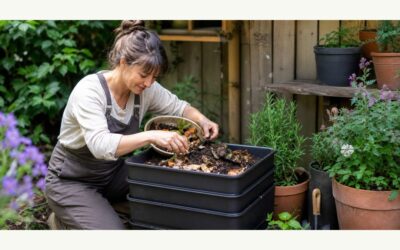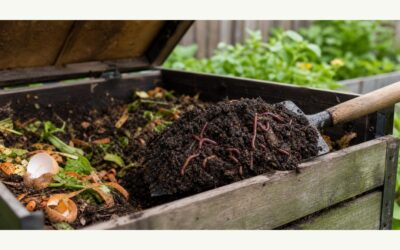



Una buona compostiera da esterno aiuta a trasformare scarti di cucina, foglie, erba tagliata e altri rifiuti del giardino in compost utilizzabile, senza lasciare un disordinato cumulo aperto in giardino. Per i principianti, la scelta principale è solitamente tra una compostiera fissa con molta capacità e una compostiera rotante, più facile da girare.
Ci siamo concentrati su capacità, aerazione, sportelli di accesso, metodo di rotazione, montaggio, informazioni sui materiali dove indicate e adattabilità a terrazze, piccoli giardini e giardini suburbani più grandi.
La scelta migliore dipende dalla quantità di rifiuti prodotta e dall’impegno che desideri dedicare alla rotazione. Le compostiere rotanti possono essere più facili da usare per i giardinieri anziani o per chi non vuole rivoltare il cumulo con il forcone, mentre le compostiere grandi e aperte possono contenere più foglie e residui del giardino a un prezzo inferiore.
VIVOSUN 43 Gallon Dual-Chamber Tumbling Composter for Easier Backyard Compost Mixing REDMON Since 1883 Model 8000 65-Gallon Outdoor Compost Bin for Yard and Kitchen Scraps Marcytop Dual-Chamber Compost Tumbler for Easier Backyard Composting Hourleey 43 Gallon Dual Chamber Tumbling Composter for Kitchen Scraps and Yard Waste Prices and availability can change. We may earn a commission from qualifying purchases.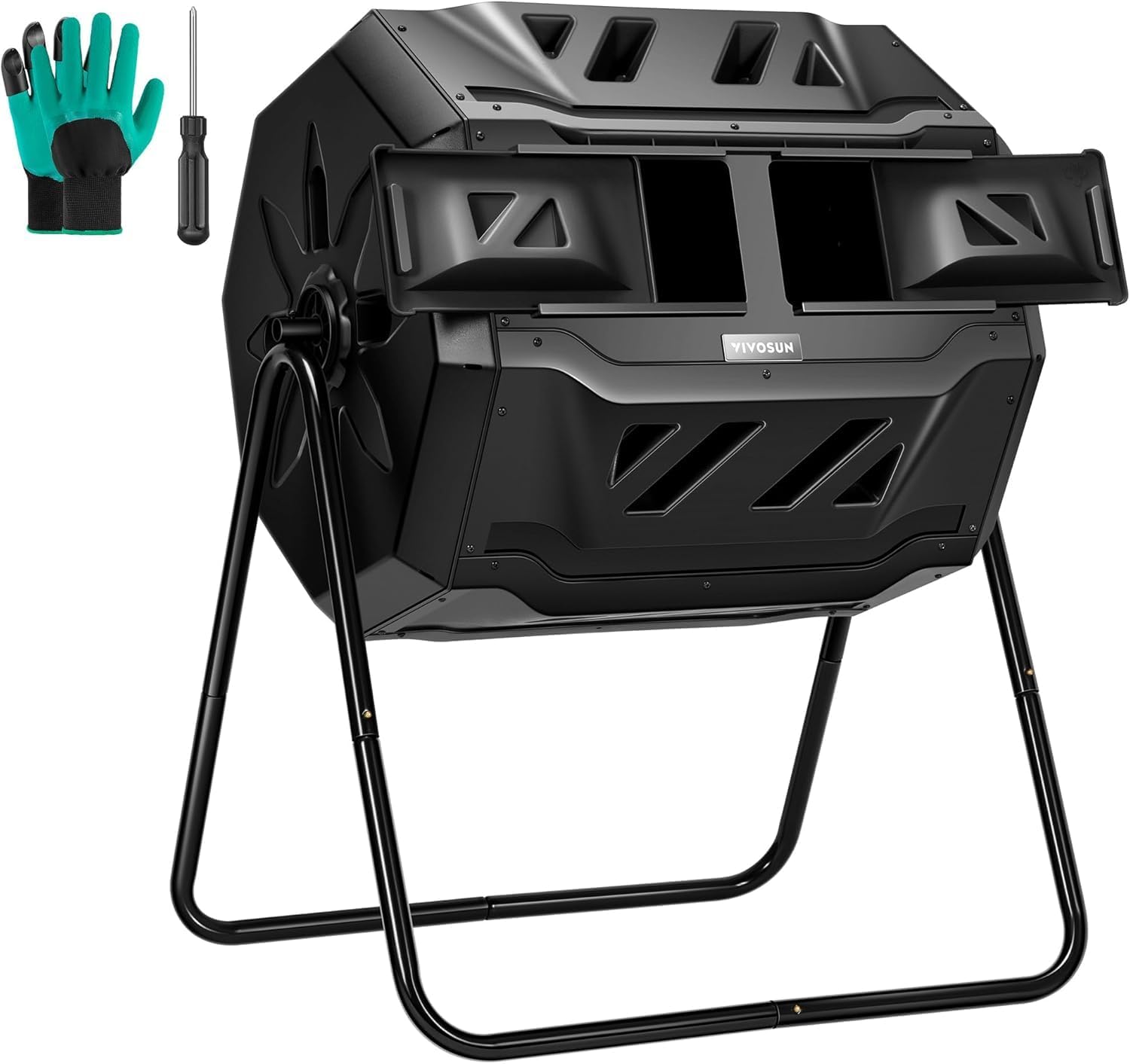


Alcune schede qui sotto sono ancora in inglese; la traduzione è in revisione.
Pros
- Two-bin setup supports batch composting instead of continuously mixing new scraps into one unfinished pile.
- Tumbling action can be easier for older gardeners or anyone who wants to avoid manual stirring.
- Listed dimensions give it a relatively compact footprint for a raised outdoor composter.
- Reviewers commonly mention that it feels sturdy once assembled and turns easily.
- Included gloves are a useful extra for routine garden cleanup and compost loading.
Cons
- Assembly may take time, and several reviewers say a second person makes panel alignment easier.
- The door opening may feel small for gardeners dumping larger bowls or countertop compost bags.
- Gardeners who generate a very large volume of yard waste may prefer a larger stationary bin or multi-bin system.
The VIVOSUN Outdoor Tumbling Composter is a 43 gallon compost bin for turning kitchen scraps and garden waste into compost in a contained outdoor setup. Based on the listed specifications, it is best suited to homeowners, raised-bed gardeners, and small-yard growers who want a cleaner alternative to an open compost pile and do not want to stir material by hand.
The main practical advantage is the dual-chamber layout. One side can hold material that is already composting while the other side stays available for fresh additions. For gardeners who add fruit and vegetable scraps, coffee grounds, leaves, or other compostable garden materials on a regular schedule, that batch-style setup can make it easier to let one side finish without constantly resetting the process.
The barrel rotates 360 degrees, and the product information lists air vents plus deep fins inside the panels. In plain terms, the tumbler is designed to mix the contents and introduce airflow as it turns, both of which are important for active composting. The octagonal shape, black body, and raised frame also keep the material off the ground, which can make turning and access more comfortable than working at soil level.
Its listed dimensions are 26.25 inches long by 23.6 inches wide by 36.5 inches high, with a listed capacity of 43 gallons and item weight of 21.67 pounds. The product description indicates a metal frame and PP plastic body, while the specifications also list galvanized steel. Reviewers commonly note that assembly involves many panels, screws, and a center divider, so beginners should plan time, organize parts first, and consider having a helper hold pieces in place.
In everyday backyard use, this composter fits gardeners who want to process a moderate stream of household scraps and light garden waste near a vegetable bed, patio edge, or utility area. The included garden gloves are a helpful extra for loading material or doing nearby planting work, though they do not replace careful hygiene. Always wash hands after handling compost materials, avoid adding unsuitable waste, and keep the unit on stable ground before rotating it.
The tradeoff is access size and assembly effort. Review feedback suggests the sliding doors may be less convenient when dumping larger containers, and gardeners with heavy compost output may want a larger bin. For many home gardeners, however, the VIVOSUN 43 gallon dual tumbler offers a useful balance of contained composting, easier mixing, and batch management in a compact outdoor footprint.
Best For / Avoid If
Best for buyers prioritizing
- Two-bin setup supports batch composting instead of continuously mixing new scraps into one unfinished pile.
- Tumbling action can be easier for older gardeners or anyone who wants to avoid manual stirring.
- Listed dimensions give it a relatively compact footprint for a raised outdoor composter.
Consider another option if
- Assembly may take time, and several reviewers say a second person makes panel alignment easier.
- The door opening may feel small for gardeners dumping larger bowls or countertop compost bags.
- Gardeners who generate a very large volume of yard waste may prefer a larger stationary bin or multi-bin system.
Pros
- Large 65-gallon listed capacity suits regular household food scrap and yard waste composting.
- Vented design supports airflow, an important part of active compost management.
- Four-door access is useful for removing lower compost without fully emptying the bin.
- No-tool assembly keeps initial setup simpler than bins requiring hardware or special tools.
Cons
- As a stationary bin, it may require manual turning or an aerator tool if you want to mix materials more actively.
- The listed product data includes conflicting dimension entries, so gardeners with tight spaces should confirm the assembled footprint before buying.
- Plastic bins can be easier to place than heavier systems, but gardeners wanting a tumbler-style composter may prefer a rotating design.
The REDMON Since 1883 Model 8000 is an outdoor composting bin built for homeowners who want to recycle kitchen food scraps, decomposed leaves, plant material, soil, and other suitable organic waste into compost for the garden. With a listed 65-gallon capacity, it is aimed at backyard and small homestead use rather than tiny countertop collection.
The most useful feature set is the combination of ventilation and access. Multiple vent holes are designed to help air move through the bin and allow gases to escape, both of which matter when managing a compost pile. The lift-off lid provides top access for adding fresh materials, while the four side doors help with reaching lower, more finished compost.
Based on the published information, the bin is made from plastic and contains 80 percent post-consumer recycled materials. It is described as weather resistant for outdoor use and requires no tools for assembly. The product information lists the outdoor composter at 26 x 26 x 30.75 inches, although some specification fields show conflicting smaller dimensions, so it is wise to verify the footprint if placement space is limited.
In a typical home garden, this bin could sit near raised beds, a vegetable patch, or a convenient side-yard location where kitchen scraps and garden debris can be added regularly. Its 65-gallon size should be more practical for homeowners with seasonal leaves, spent plants, and routine food scrap collection than for gardeners who only generate a very small amount of organic waste.
Like most stationary compost bins, this model still depends on good composting habits. Gardeners may need to balance moist green materials with dry brown materials, keep the contents from becoming too wet, and turn or aerate the pile as needed. Because it has a lift-off lid and side doors, place it where there is enough room to access the top and all sides comfortably.
This is a sensible choice for beginners and backyard gardeners who want a basic outdoor compost bin with a large capacity, ventilation, and multiple access points. Gardeners who need a very compact patio composter, a sealed indoor system, or a rotating tumbler for easier mixing may want to compare other composting formats before deciding.
Specifications
| Brand Name | REDMON Since 1883 |
|---|---|
| UPC | 741435462932 270612116264 773822286876 773490750815 027061211626 785934140793 |
| Manufacturer | Redmon |
| Unit Count | 1.0 Count |
| Global Trade Identification Number | 00027061211626 |
| Item Type Name | bin |
| Model Number | 8000 |
| Manufacturer Part Number | 8000 |
| Manufacturer Warranty Description | 1 year limited |
| Best Sellers Rank | #21,743 in Patio, Lawn & Garden (See Top 100 in Patio, Lawn & Garden) #11 in Outdoor Composting Bins |
Verify the current product variation before purchase; specifications may change.
Best For / Avoid If
Best for buyers prioritizing
- Large 65-gallon listed capacity suits regular household food scrap and yard waste composting.
- Vented design supports airflow, an important part of active compost management.
- Four-door access is useful for removing lower compost without fully emptying the bin.
Consider another option if
- As a stationary bin, it may require manual turning or an aerator tool if you want to mix materials more actively.
- The listed product data includes conflicting dimension entries, so gardeners with tight spaces should confirm the assembled footprint before buying.
- Plastic bins can be easier to place than heavier systems, but gardeners wanting a tumbler-style composter may prefer a rotating design.
Pros
- Dual chambers support a continuous composting workflow.
- Rotating operation may be easier than manually mixing a ground-level compost pile.
- Aeration holes and internal fins are designed to improve airflow and material mixing.
- Large access openings and sliding doors can simplify loading and unloading.
Cons
- The tumbler still requires regular turning, with the product recommending 5 to 6 rotations every few days.
- Its listed dimensions may be less suitable for very small patios, balconies, or tight storage areas.
- The published information does not detail the assembly process, finished-compost timing, or any included accessories.
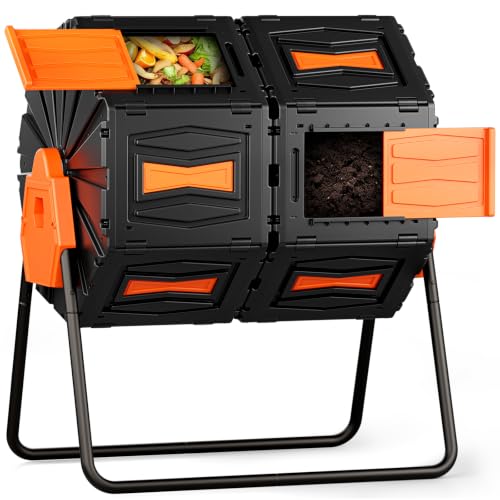
The Marcytop Compost Tumbler is an outdoor rotating compost bin for homeowners who want to process kitchen scraps and yard waste without building or digging into a traditional compost pile. Its 45-gallon capacity is divided into two 22.5-gallon chambers, making it suitable for beginners and small to medium backyard composting routines.
The dual-chamber layout is the main practical advantage. One compartment can receive fresh organic material while the other continues breaking down, which may make it easier to maintain a steady composting cycle. Deep fins and multiple aeration holes are designed to improve airflow and help distribute materials as the bin rotates.
Routine operation is straightforward in concept. The product information recommends turning the tumbler 5 to 6 times every few days, eliminating the need to dig through a pile with a fork or shovel. Large openings and sliding doors are intended to make adding materials and removing finished compost cleaner and more accessible.
With listed dimensions of 29.5 by 25.6 by 37.4 inches, this composter needs a dedicated outdoor footprint and a location where its doors can be accessed comfortably. It could suit a backyard near a kitchen garden, lawn, or raised beds, although gardeners with very limited patio or balcony space may prefer a smaller bin.
The bin is listed as using extra-thick polypropylene with reinforced powder-coated steel, along with UV-resistant and weather-resistant construction for outdoor use. Regular turning is still required, and users should follow appropriate composting practices for balancing materials and preventing unsuitable waste from entering the chambers. Overall, it is a reasonable option for gardeners who value separated compost batches and easier mixing, while those seeking minimal maintenance or a compact indoor solution should consider a different design.
Specifications
| Color | Orange |
|---|---|
| Dimensions | 29.5 x 25.6 x 37.4 Inches |
| Product Group | Lawn & Patio |
| Binding | Unknown Binding |
Verify the current product variation before purchase; specifications may change.
Best For / Avoid If
Best for buyers prioritizing
- Dual chambers support a continuous composting workflow.
- Rotating operation may be easier than manually mixing a ground-level compost pile.
- Aeration holes and internal fins are designed to improve airflow and material mixing.
Consider another option if
- The tumbler still requires regular turning, with the product recommending 5 to 6 rotations every few days.
- Its listed dimensions may be less suitable for very small patios, balconies, or tight storage areas.
- The published information does not detail the assembly process, finished-compost timing, or any included accessories.
Pros
- Dual-bin layout is useful for batch composting and ongoing household food scrap collection.
- Tumbling action can be easier than manually stirring a compost pile, especially for smaller yards.
- Enclosed design may appeal to gardeners who want a tidier composting setup than loose piles or open cans.
- Reviewers commonly mention that the composter feels sturdy once assembled.
Cons
- Several reviewers mention that assembly takes time and that the instructions could be clearer.
- The product information does not list a turning handle, and some reviewers wished it had one.
- Sliding door openings may feel small for gardeners adding bulky clippings or removing larger amounts of compost.
The Hourleey 43 gallon dual chamber tumbling composter is made for outdoor composting of kitchen scraps, garden clippings, and other fermentable compost materials. Based on the listed features, it is best suited to homeowners, beginner composters, and small to medium backyard gardeners who want a contained bin rather than a traditional open compost pile.
The main benefit is the two-chamber design. One side can hold a batch that is actively breaking down while the other side remains available for new material. For gardeners who regularly bring out vegetable scraps or yard trimmings, that layout is more convenient than stopping a single batch every time fresh waste is added.
The tumbler design is intended to rotate 360 degrees, helping mix the compost without digging into it with a garden fork. Aeration holes and deep fins are included to move air through the material and help break up clumps during rotation. As with any composter, results still depend on the right mix of greens, browns, moisture, and regular turning.
Product information lists the composter at 43 gallons with stated assembled dimensions of 27.6 by 25.8 by 36 inches. The body is plastic with a metal frame, and the listing describes it as weather resistant and corrosion resistant. Sliding and removable doors provide access for adding scraps and removing finished compost, although some reviewers note that the openings can feel a bit small.
For backyard use, this style works well near a vegetable garden, raised-bed area, or patio edge where you can conveniently add kitchen scraps and later carry compost to beds or containers. Reviewers commonly mention that it is sturdy once assembled and easy to spin, but assembly is a recurring caution. Several users report unclear instructions or a time-consuming setup, so it is sensible to sort the hardware first and allow extra time.
This is a practical choice for gardeners who want a compact, enclosed, dual-batch composting system and do not mind assembling a panel-style tumbler. Gardeners who need very large compost volume, extra-wide access doors, or a built-in crank handle may want to compare larger or more feature-heavy composters before choosing this model.
Specifications
| Brand Name | Hourleey |
|---|---|
| Manufacturer | Hourleey |
| Item Type Name | Compost Bin |
| Model Number | Compost Bin |
| Manufacturer Part Number | Compost Bin |
| Best Sellers Rank | #23,177 in Patio, Lawn & Garden (See Top 100 in Patio, Lawn & Garden) #12 in Outdoor Composting Bins |
| ASIN | B0CMK4ZZ6W |
| Customer Reviews | 4.3 4.3 out of 5 stars (635) 4.3 out of 5 stars |
| Capacity | 43 gallons |
| Item Dimensions L x W x H | 6"L x 10"W x 24"H |
Verify the current product variation before purchase; specifications may change.
Best For / Avoid If
Best for buyers prioritizing
- Dual-bin layout is useful for batch composting and ongoing household food scrap collection.
- Tumbling action can be easier than manually stirring a compost pile, especially for smaller yards.
- Enclosed design may appeal to gardeners who want a tidier composting setup than loose piles or open cans.
Consider another option if
- Several reviewers mention that assembly takes time and that the instructions could be clearer.
- The product information does not list a turning handle, and some reviewers wished it had one.
- Sliding door openings may feel small for gardeners adding bulky clippings or removing larger amounts of compost.

Pros
- Large dual-chamber layout supports continuous composting instead of waiting for one full bin to finish.
- Tumbler format makes routine mixing simpler than manually turning a ground pile.
- Listed weatherproof, UV-stabilized plastic construction is intended for outdoor use.
- Locking pins add useful stability when loading or positioning the drum.
- Compact rectangular footprint works well for many suburban yards and patio edges.
Cons
- Assembly involves multiple panels and small screws, and reviewers report mixed experiences with how easy it is to put together.
- Each chamber is 26.5 gallons, so gardeners processing very large volumes of yard debris may still need a secondary compost area.
- Ventilation openings and wet scraps mean it is intended for outdoor use, not indoor or garage composting.
The THEGROWING GWDUALOR is a 53-gallon outdoor compost tumbler built for homeowners who want a contained way to process kitchen scraps, leaves, grass clippings, and routine garden cleanup. Its two 26.5-gallon rotating sections make it especially useful for gardeners who want one side actively filling while the other side rests and continues breaking down.
The main gardening benefit is batch management. With a single open pile, fresh scraps often get mixed into material that is nearly finished. This dual-chamber layout helps keep new and curing compost separate, while the tumbler format reduces the need to turn material with a fork or shovel. The listed agitating fins and cross-ventilation slots are intended to lift, split, and aerate dense compost materials during rotation.
Based on the listed specifications, the unit measures 28.7 inches long, 23.6 inches wide, and 36.6 inches high, with an octagonal plastic drum on a reinforced frame. The product information describes pre-embedded metal nuts for bolt assembly without loose washers, plus dual position locking pins that hold the barrel in place while loading. Reviewers commonly mention that assembly can range from straightforward to tedious, so it is wise to sort hardware first, avoid overtightening screws, and make sure panels are fully seated before fastening.
In a backyard setting, this composter fits well near a vegetable garden, along a patio edge, or beside raised beds where finished compost can be used as a soil amendment once fully matured. The orange color is noticeable, so it may be a good choice for gardeners who do not mind a bright utility piece in the yard. Its size is generous for regular household scraps and small-to-moderate yard cleanup, but it is still more contained than a traditional open compost heap.
There are a few practical cautions. Compost tumblers work best when the contents are balanced with moist green materials and dry brown materials, and wet scraps may drip through ventilation areas, so the unit should stay outdoors on a level, washable, or soil-covered surface. Gardeners in wildlife-prone areas should also position and monitor any compost bin carefully, since no tumbler should be treated as a guaranteed animal-proof container.
Overall, this is a sensible option for beginner-to-intermediate composters who want larger capacity, separated batches, and easier mixing than a static pile. Gardeners with very heavy seasonal debris, limited patience for multi-piece assembly, or a need for indoor composting may prefer a different setup.
Best For / Avoid If
Best for buyers prioritizing
- Large dual-chamber layout supports continuous composting instead of waiting for one full bin to finish.
- Tumbler format makes routine mixing simpler than manually turning a ground pile.
- Listed weatherproof, UV-stabilized plastic construction is intended for outdoor use.
Consider another option if
- Assembly involves multiple panels and small screws, and reviewers report mixed experiences with how easy it is to put together.
- Each chamber is 26.5 gallons, so gardeners processing very large volumes of yard debris may still need a secondary compost area.
- Ventilation openings and wet scraps mean it is intended for outdoor use, not indoor or garage composting.

Pros
- Separate chambers make it easier to manage fresh and curing material at the same time.
- Rotating operation can reduce the lifting and digging associated with turning a stationary compost pile.
- Weatherproof resin construction and UV-stabilized material are listed for outdoor use across changing seasons.
- At 21 pounds, the tumbler is relatively manageable to position during setup compared with heavier compost structures.
Cons
- The 43-gallon total capacity may be less suitable for large yards that generate substantial volumes of leaves or grass clippings.
- The published information does not specify assembly time, included tools, or access-door dimensions.
- Gardeners who need a stationary bin with maximum volume may prefer a larger composting system.
THE GROW'ING 43-Gallon Outdoor Compost Bin Tumbler is designed for turning kitchen scraps, lawn clippings, and other suitable organic garden waste into composting material. Its two 21.5-gallon chambers make it a useful choice for homeowners and small-space gardeners who want to keep a newer batch separate from material that is curing.
The main benefit is the rotating drum. Based on the listed feature set, the balanced axis allows the barrel to be turned without manually digging through a stationary pile. Deep internal fins help lift and separate compressed material during rotation, while cross-ventilation slots are intended to move air through the contents to support natural breakdown.
The bin measures 27 x 25.2 x 34.3 inches and weighs 21 pounds. Its compact rectangular footprint is suited to a patio, backyard corner, or space beside a raised bed. Pre-embedded nuts in the resin panels are intended to make solo assembly more straightforward by helping keep the hardware aligned with the iron support frame.
The dual-chamber layout supports a simple routine: add fresh scraps to one side while leaving the other side closed for continued curing, then rotate the drum to mix the active material. This arrangement may work well for households with regular food scraps and moderate garden waste, especially where a traditional open compost pile would be inconvenient.
Capacity is limited to 43 gallons, so it may be less suitable for large properties with heavy seasonal leaf or grass volumes. The published information does not detail cleaning access, assembly time, included tools, or a specific composting schedule, so users should follow suitable composting practices and avoid overfilling the chambers. Overall, it is a practical option for gardeners who value separated batches and easier turning in a relatively compact outdoor bin.
Specifications
| Color | Green |
|---|---|
| Dimensions | 27 x 25.2 x 34.3 inches |
| Weight | 21 Pounds |
| Product Group | Lawn & Patio |
| Binding | Unknown Binding |
Verify the current product variation before purchase; specifications may change.
Best For / Avoid If
Best for buyers prioritizing
- Separate chambers make it easier to manage fresh and curing material at the same time.
- Rotating operation can reduce the lifting and digging associated with turning a stationary compost pile.
- Weatherproof resin construction and UV-stabilized material are listed for outdoor use across changing seasons.
Consider another option if
- The 43-gallon total capacity may be less suitable for large yards that generate substantial volumes of leaves or grass clippings.
- The published information does not specify assembly time, included tools, or access-door dimensions.
- Gardeners who need a stationary bin with maximum volume may prefer a larger composting system.

Pros
- Simple roll-and-lock style assembly is well suited to beginners and low-maintenance composting routines.
- Excellent ventilation is listed as a core feature and is useful for aerobic composting.
- Adjustable size gives more flexibility than a fixed rigid bin.
- Lightweight plastic construction is easier to move and store than many heavy compost systems.
Cons
- Because it is a lightweight, flexible bin, some gardeners may want separate stakes or supports for better shape and stability, especially before it is full.
- Gardeners who need a fully enclosed composter for wildlife-prone areas may prefer a lidded or closed-bin design.
- Turning a tall, full pile may require a fork and some effort, so it may be less convenient for gardeners with limited strength or mobility.
The GEOBIN outdoor compost bin is a flexible, cylindrical plastic composter intended for backyard use with yard debris, plant trimmings, leaves, and suitable kitchen scraps. Based on the listed features, it is best suited to homeowners and beginner-to-intermediate gardeners who want a straightforward composting setup with more volume than a countertop pail or small enclosed bin.
The key gardening benefit is capacity combined with airflow. The product information describes a large, expandable bin with excellent ventilation, and those two traits matter for composting because a pile needs enough mass and oxygen to break down well. For gardeners who regularly collect fall leaves, grass clippings, spent vegetable plants, or coffee grounds, this format can help keep organic material contained instead of piled loosely in the yard.
Assembly is designed around closure keys, so the bin can be set up, taken apart, and reassembled without a complex frame. The listed 7-pound weight also makes it easier to move than many rigid composters. The specifications identify the material as plastic, the color as black, and the shape as cylindrical. Product information lists expandable capacity details, while the specification table lists 216 gallons, so shoppers should treat the exact usable volume as dependent on how the bin is adjusted during setup.
In a practical backyard, this bin fits well near a vegetable garden, behind a shed, along a fence line, or in a corner where leaves and garden cleanup waste are easy to add. It may also suit small-space gardeners who have enough outdoor room for a compost station but do not want a permanent wooden bin. Reviewers commonly mention using stakes, rebar, or similar supports to help the flexible sides keep their shape, especially when the bin is not yet full.
The main limitation is that this is not a sealed tumbler or enclosed pest-resistant composter. Gardeners in areas with raccoons, deer, or other wildlife may want to be careful about what they add, cover fresh green material with browns, or choose a closed composter if animal access is a major concern. As with any compost bin, avoid adding materials that are not appropriate for home composting, and use safe lifting and forking habits when turning a heavy pile.
Overall, the GEOBIN is a sensible choice for gardeners who value capacity, airflow, adjustability, and simple assembly over a rigid, fully enclosed design. It is especially appealing for leaf-heavy yards and vegetable gardeners who generate steady organic waste. Gardeners who need a neater sealed system, built-in supports, or easier turning may be better served by a different composting style.
Best For / Avoid If
Best for buyers prioritizing
- Simple roll-and-lock style assembly is well suited to beginners and low-maintenance composting routines.
- Excellent ventilation is listed as a core feature and is useful for aerobic composting.
- Adjustable size gives more flexibility than a fixed rigid bin.
Consider another option if
- Because it is a lightweight, flexible bin, some gardeners may want separate stakes or supports for better shape and stability, especially before it is full.
- Gardeners who need a fully enclosed composter for wildlife-prone areas may prefer a lidded or closed-bin design.
- Turning a tall, full pile may require a fork and some effort, so it may be less convenient for gardeners with limited strength or mobility.
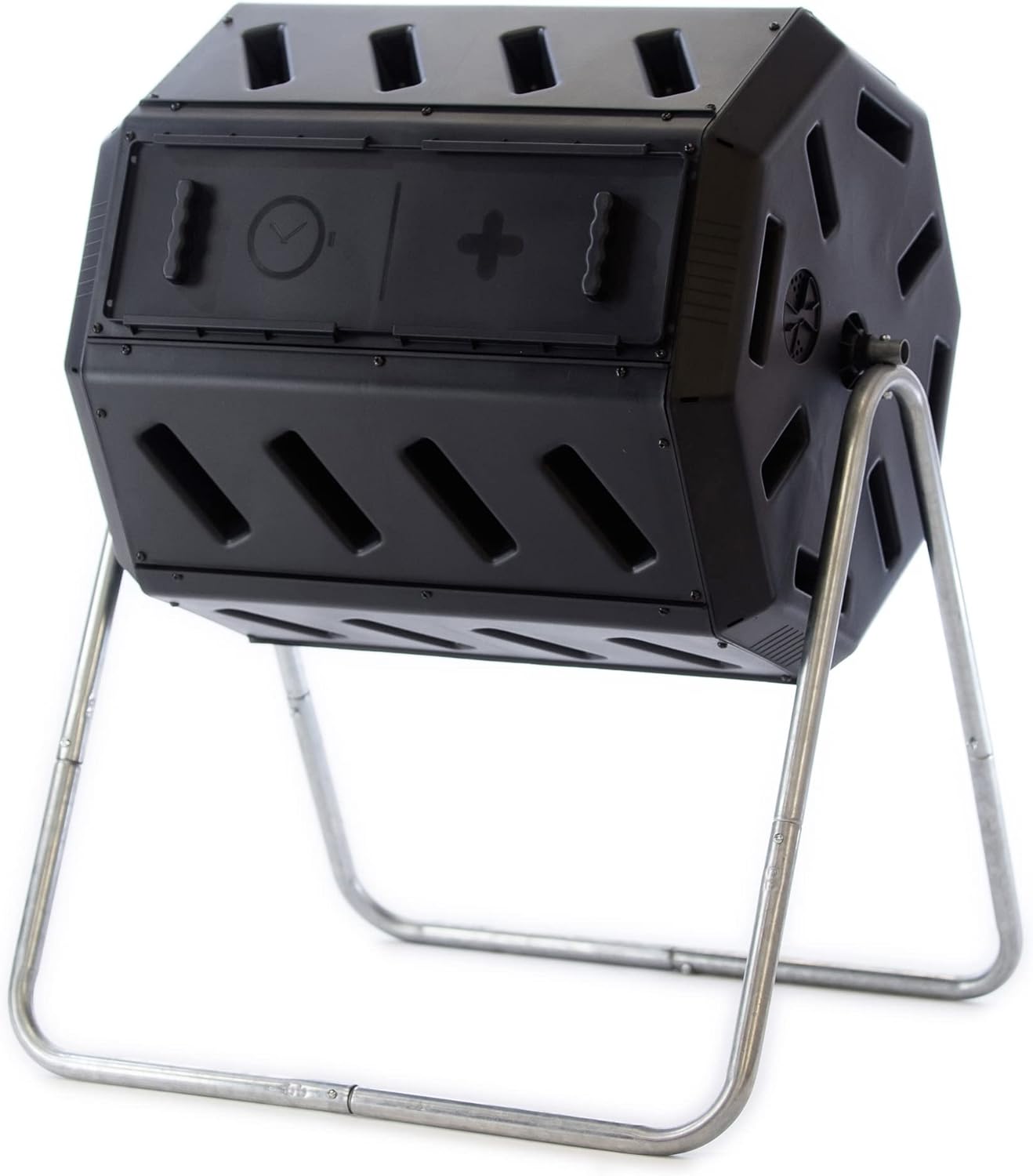
Pros
- Two-chamber layout supports batch composting instead of mixing fresh waste into nearly finished compost.
- Elevated rotating design helps reduce direct ground contact and makes routine turning simpler than managing an open pile.
- BPA-free, UV-inhibited polypropylene is listed as contact safe and intended to resist fading and damage from direct sunlight.
- Octagonal shape and built-in hand holds are designed to make rotation easier during regular maintenance.
- Made in Canada from 100% post-consumer recycled resin, according to the product information.
Cons
- Compost timing depends on warm conditions and balanced ingredients, so the listed two-week result should not be expected in every climate or season.
- At 30 inches long by 28 inches wide by 36 inches high, it may need more dedicated space than very compact countertop or worm composting options.
- Gardeners who produce large volumes of leaves, grass clippings, or livestock bedding may prefer a larger composting system.
The FCMP Outdoor IM4000 is a 37-gallon tumbling composter built for turning kitchen scraps and yard waste into garden compost without maintaining an open pile. Its dual-chamber layout is especially useful for homeowners, beginner composters, and small-space gardeners who want a more organized way to manage compost in batches.
The main advantage is the two-sided system. One chamber can be filled with fresh material while the other side cures, which helps avoid the common problem of continually adding scraps to compost that is almost finished. The product information recommends rotating the bin 5 to 6 times every 2 to 3 days for best results, and notes that compost can be ready in as little as two weeks in warm, sunny conditions with balanced ingredients.
Based on the listed specifications, the IM4000 measures 30 inches long by 28 inches wide by 36 inches high and weighs 28 pounds. The 8-sided polypropylene body includes deep fins for gripping and mixing, aeration holes for airflow, wide openings, and a removable door for loading and unloading. The frame is galvanized steel, and the plastic is described as BPA-free, UV-inhibited, and made from 100% post-consumer recycled resin.
For backyard gardens, raised-bed growers, and patio-adjacent composting areas, this style of elevated tumbler can be easier to manage than a ground pile. It keeps the compost contained, rotates instead of requiring fork turning, and provides enough listed capacity for regular household vegetable scraps, plant trimmings, and moderate yard debris. Its black color and compact upright footprint may also fit neatly beside a shed, fence line, or garden work area.
There are a few practical limits to keep in mind. Like any composting system, results depend on moisture, airflow, temperature, and the balance of green and brown materials, so it is not a set-and-forget bin. The 37-gallon capacity is useful for many home gardeners, but people with heavy seasonal leaf loads or large lawns may need additional composting space. Gardeners should also place the unit on a stable surface and avoid overfilling, since extra weight can make turning more difficult.
Overall, the FCMP Outdoor IM4000 is a sensible choice for gardeners who want a contained, rotating, dual-batch composting setup made with recycled plastic. It is best suited to routine kitchen and garden waste rather than high-volume yard cleanup, and it will be most rewarding for users willing to turn it regularly and manage the ingredient balance.
Best For / Avoid If
Best for buyers prioritizing
- Two-chamber layout supports batch composting instead of mixing fresh waste into nearly finished compost.
- Elevated rotating design helps reduce direct ground contact and makes routine turning simpler than managing an open pile.
- BPA-free, UV-inhibited polypropylene is listed as contact safe and intended to resist fading and damage from direct sunlight.
Consider another option if
- Compost timing depends on warm conditions and balanced ingredients, so the listed two-week result should not be expected in every climate or season.
- At 30 inches long by 28 inches wide by 36 inches high, it may need more dedicated space than very compact countertop or worm composting options.
- Gardeners who produce large volumes of leaves, grass clippings, or livestock bedding may prefer a larger composting system.

Pros
- Two-bin design supports a more continuous composting routine than a single-chamber tumbler.
- Raised rotating design reduces the need to fork or shovel a traditional compost pile.
- Listed dimensions make it compact enough for many home garden spaces.
- Reviewers commonly mention that it is lightweight and generally easy to rotate when not overfilled.
Cons
- Assembly may take patience, as several reviewers note many small fasteners and limited instructions.
- The tumbler does not list a side crank or handle, and some users report it can become harder to turn as it fills.
- Small sliding doors may be less convenient for gardeners emptying larger kitchen scrap containers or removing finished compost.
The Nazhura 43-gallon dual chamber compost tumbler is an outdoor composting bin for gardeners who want a cleaner, more contained alternative to an open compost pile. Based on the listed product information, it is intended for kitchen throw-outs, grass clippings, leaves, and other organic yard waste, making it suitable for homeowners, beginner composters, and small-yard gardeners who want to recycle everyday organic material.
The main benefit is the dual-bin design. One chamber can be used for new scraps while the other chamber continues breaking down, which helps avoid constantly disturbing a batch that is already composting. The rotating barrel is designed to mix materials and bring oxygen into the compost, a key part of keeping the process active without using a pitchfork.
The product specifications list a 43-gallon capacity, plastic and galvanized steel materials, and dimensions of 26.25 inches long by 23.6 inches wide by 36.5 inches high. At 21 pounds, the unit itself is not especially heavy before filling, though compost materials can add substantial weight. The sliding doors provide access for adding scraps and removing finished material, and the included garden gloves are a useful extra for routine garden handling.
In a typical backyard, this tumbler could sit near raised beds, a vegetable garden, or a side-yard utility area where kitchen scraps and dried leaves are easy to add. Its compact footprint may also work for gardeners who do not have space for a large three-bin compost system. For best results with any tumbler-style composter, gardeners should pay attention to the balance of wet green materials and dry brown materials so the contents do not become overly soggy.
The most common caution from reviewers is assembly. Several users describe the setup as doable but tedious, with many small nuts and bolts and instructions that may require careful interpretation. Some reviewers also mention that the unit can be harder to rotate as it gets fuller, and a few note leakage when the contents are too wet, so it is sensible to avoid overfilling and to add dry leaves or similar brown material when needed.
This is a sensible choice for gardeners who want an affordable-style, contained, dual-chamber composting system and do not mind a time-consuming assembly process. Gardeners who need a larger composting capacity, very large loading doors, or a built-in crank handle may want to compare other compost bin designs before choosing this one.
Best For / Avoid If
Best for buyers prioritizing
- Two-bin design supports a more continuous composting routine than a single-chamber tumbler.
- Raised rotating design reduces the need to fork or shovel a traditional compost pile.
- Listed dimensions make it compact enough for many home garden spaces.
Consider another option if
- Assembly may take patience, as several reviewers note many small fasteners and limited instructions.
- The tumbler does not list a side crank or handle, and some users report it can become harder to turn as it fills.
- Small sliding doors may be less convenient for gardeners emptying larger kitchen scrap containers or removing finished compost.

Pros
- 53-gallon capacity is useful for households that generate regular kitchen scraps and garden cleanup material.
- Two-chamber layout supports staggered batches instead of waiting for one full tumbler load to finish.
- Rotating design reduces the need for manual pile turning, which may help gardeners who prefer less lifting and digging.
- Product information lists adjustable vents, sliding doors, brake locks, and a gear-assisted handle for more convenient routine use.
Cons
- Assembly may take patience, and reviewers mention that the center divider and some instruction steps can be unclear.
- As with most tumblers, compost quality and speed still depend on the right mix of greens, browns, moisture, and airflow.
- Gardeners who want a no-assembly compost solution may prefer a simpler stationary bin.
The Maygrove MGN-CBG53X1-US is a 53-gallon outdoor compost tumbler designed for turning kitchen scraps and garden waste into usable compost for backyard beds, vegetable gardens, and container plantings. Its main appeal is the dual chamber setup, which lets one side receive new material while the other side continues decomposing.
Based on the listed features, the 360-degree rotating drum and built-in mixing bars are intended to reduce the work of turning compost by hand. The product information also lists adjustable air vents, which are helpful because compost needs oxygen and moisture balance to break down properly and reduce odor problems.
The design includes extra-wide sliding doors for loading and unloading, a gear-assisted handle for rotation, and dual-direction brake locks to help hold the drum steady during use. The listed construction combines polypropylene plastic with a solid steel frame, reinforced leg supports, and UV-resistant material for outdoor placement.
This tumbler is a practical fit for homeowners who want a contained composting system near a garden, raised beds, or a backyard growing area. It may also suit gardeners who do not want an open compost pile, since the rotating barrel keeps materials enclosed while still allowing mixing and airflow.
Assembly is the main point to approach carefully. Several reviewers describe setup as manageable, but some mention tricky steps, especially around the barrel panels, center divider, or instruction wording. Having a level work surface, reading the instructions before starting, and sorting hardware first may make the process easier.
For best results, users should follow the product guidance on what not to add and keep a balanced mix of moist green materials and dry brown materials. Gardeners who want continuous composting in a contained tumbler are a good match, while those who need the simplest possible setup or very large-volume composting may want to compare stationary bins or larger systems.
Specifications
| Brand Name | Maygrove |
|---|---|
| Manufacturer | Maygrove |
| Model Number | MGN-CBG53X1-US |
| Manufacturer Part Number | MGN-CBG53X1-US |
| Best Sellers Rank | #11,873 in Patio, Lawn & Garden (See Top 100 in Patio, Lawn & Garden) #2 in Outdoor Composting Tumblers |
| ASIN | B0G338V3V7 |
| Customer Reviews | 4.0 4.0 out of 5 stars (92) 4.0 out of 5 stars |
| Capacity | 53.01 gallons |
| Item Dimensions L x W x H | 23.8"L x 8.26"W x 30.3"H |
| Item Weight | 35.5 Pounds |
Verify the current product variation before purchase; specifications may change.
Best For / Avoid If
Best for buyers prioritizing
- 53-gallon capacity is useful for households that generate regular kitchen scraps and garden cleanup material.
- Two-chamber layout supports staggered batches instead of waiting for one full tumbler load to finish.
- Rotating design reduces the need for manual pile turning, which may help gardeners who prefer less lifting and digging.
Consider another option if
- Assembly may take patience, and reviewers mention that the center divider and some instruction steps can be unclear.
- As with most tumblers, compost quality and speed still depend on the right mix of greens, browns, moisture, and airflow.
- Gardeners who want a no-assembly compost solution may prefer a simpler stationary bin.

Pros
- Continuous two-bin workflow in one compact tumbler.
- Rotating drum simplifies mixing compared with turning a pile by hand.
- Vented design supports oxygen flow for composting materials.
- Raised frame helps keep the composter tidy and off the soil.
- Includes assembly hardware, gloves, screwdriver, and instruction manual.
Cons
- Assembly may take patience because the package includes many screws and nuts, and reviewers commonly mention that setup can be time-consuming.
- There is no listed crank handle, so turning a heavy, loaded drum may require more effort for some gardeners.
- The sliding door openings may feel limiting for bulky leaves, grass clippings, or unloading larger amounts of finished compost.
The VEVOR XDB-436B2 is a dual chamber outdoor compost tumbler built for gardeners who want to turn kitchen scraps and suitable yard waste into compost without maintaining an open ground pile. With a listed 43-gallon capacity and two internal compartments, it is aimed at homeowners, vegetable gardeners, and small-space growers who want a more contained composting setup.
The main benefit is the two-chamber workflow. One side can be left to decompose while the other side receives fresh organic material, which is helpful if your household produces a regular stream of fruit and vegetable scraps. The product information also describes a 360-degree tumbling design, vents, and internal grooves, all intended to mix materials and provide oxygen, two basics of successful aerobic composting.
Based on the listed specifications, the tumbler measures 29 by 24.6 by 37.6 inches and weighs about 21.9 pounds before filling. The body is made from PP plastic, with Q235B steel frame components, and the listed maximum loading capacity is 110 pounds. The octagonal drum uses two sliding doors for access, and the package includes hardware, gloves, a screwdriver, and an instruction manual.
In a typical backyard or side-yard setup, this composter can sit near a garden bed, shed, or kitchen door where scraps are easy to carry out. It is also a reasonable option for gardeners who want a cleaner-looking alternative to an open pile. Because it is elevated, users do not have to dig into a ground bin, although the drum still needs to be rotated regularly and balanced with appropriate green and brown materials.
There are a few practical limitations to consider. Reviewers commonly mention that assembly involves many small fasteners, so setting aside time and working on a flat surface is wise. The product does not list a crank handle, and some users note that turning can feel more cumbersome when the drum is heavier. The manufacturer also advises against adding meat, fish, dairy, oils, diseased plant material, pet droppings, plastics, metals, glass, chemicals, toxic plants, and large wood pieces.
This tumbler is a good match for gardeners who want a contained, dual chamber composting system for moderate household and garden waste. Gardeners who need to process very bulky seasonal leaf loads, want extra-large access doors, or prefer a no-assembly compost setup may want to compare larger stationary bins or different tumbler designs before choosing.
Best For / Avoid If
Best for buyers prioritizing
- Continuous two-bin workflow in one compact tumbler.
- Rotating drum simplifies mixing compared with turning a pile by hand.
- Vented design supports oxygen flow for composting materials.
Consider another option if
- Assembly may take patience because the package includes many screws and nuts, and reviewers commonly mention that setup can be time-consuming.
- There is no listed crank handle, so turning a heavy, loaded drum may require more effort for some gardeners.
- The sliding door openings may feel limiting for bulky leaves, grass clippings, or unloading larger amounts of finished compost.

Pros
- Two composting chambers support batch composting instead of mixing fresh scraps into nearly finished material.
- Moderate 45-gallon capacity is useful for home gardeners without taking up the space of a very large bin.
- Tumbler format can make routine mixing easier than turning a ground pile by hand.
- Enclosed design may be more acceptable in small yards, patio areas, or communities where open piles are discouraged.
Cons
- Assembly may require extra time, careful attention to the illustrated instructions, and possibly a second person based on recurring reviewer feedback.
- Several reviewers mention the doors are small, so adding bulky material or emptying finished compost may be less convenient.
- As with many enclosed tumblers, gardeners may need to monitor moisture carefully and add enough dry browns to avoid a wet, gummy mix.
The PatioZen 180A is a 45-gallon dual chamber tumbling composter designed for outdoor batch composting. It is intended for gardeners who want to turn kitchen scraps and garden waste into compost without maintaining an open pile on the ground. Its enclosed format makes it especially relevant for homeowners with small yards, patio areas, or community settings where a loose compost heap may not be welcome.
The main advantage is the two-chamber design. One side can hold newer material while the other side continues breaking down, which helps prevent finished or nearly finished compost from being mixed with fresh scraps. For beginner gardeners, that batch system is easier to understand than a single large pile that is constantly being added to.
Based on the listed specifications, the composter measures 28.23 inches long, 25.59 inches wide, and 36.02 inches high, with a cylindrical black body and a listed weight of 25 pounds. The material is specified as ABS and metal, and the product information describes the construction as rust-resistant. The tumbling design is meant to make mixing easier, and reviewers commonly note that it rotates easily once assembled.
In practical use, this composter fits gardeners who collect fruit and vegetable scraps, coffee grounds, small garden clippings, and dry carbon materials such as leaves or shredded paper. It can serve a raised-bed gardener who wants homemade compost for seasonal soil improvement, or a patio gardener who needs a contained system that looks neater than a pile.
The main tradeoff is setup and access. Multiple reviewers describe assembly as somewhat challenging, with some saying a second person helps hold parts in place. Reviewers also commonly mention small doors, which may make it slower to load larger scraps or remove finished compost. Like other enclosed tumblers, it also requires moisture balance, so adding enough dry brown material is important if the contents become too wet.
Overall, the PatioZen 180A is a sensible option for home gardeners who want a compact, enclosed, batch-style tumbler and are willing to spend time on assembly. Gardeners who process large volumes of yard waste, want wide access doors, or prefer a no-assembly composting setup may be better served by a larger stationary bin or a different tumbler design.
Best For / Avoid If
Best for buyers prioritizing
- Two composting chambers support batch composting instead of mixing fresh scraps into nearly finished material.
- Moderate 45-gallon capacity is useful for home gardeners without taking up the space of a very large bin.
- Tumbler format can make routine mixing easier than turning a ground pile by hand.
Consider another option if
- Assembly may require extra time, careful attention to the illustrated instructions, and possibly a second person based on recurring reviewer feedback.
- Several reviewers mention the doors are small, so adding bulky material or emptying finished compost may be less convenient.
- As with many enclosed tumblers, gardeners may need to monitor moisture carefully and add enough dry browns to avoid a wet, gummy mix.

Pros
- Generous capacity for routine household and garden waste collection.
- Portable design with handles and a foldable form for easier handling and storage.
- Multiple access points make loading and removing compost more convenient.
- Viewing window helps gardeners check material changes without fully opening the bin.
Cons
- The product information does not specify a weather rating, so placement may require protection from prolonged exposure.
- The listed specifications do not describe a dedicated drainage system or rigid base.
- Gardeners who prefer a hard-sided bin may find a felt bag less structured for long-term placement.
The Atvkov 34-gallon compost bin is a flexible outdoor composting bag for collecting and fermenting fruit peels, weeds, fallen leaves, plant fragments, and other garden waste. Its size and portable design make it suitable for homeowners, beginner gardeners, and anyone who wants a simple compost container without a rigid bin structure.
Based on the listed specifications, the main convenience comes from the combination of generous capacity, breathable felt construction, and several access points. The top zipper provides a broad loading area, while the transparent side window lets gardeners observe changes inside the bag during fermentation. These features can make routine monitoring and material handling more straightforward.
The bin measures 17.7 by 17.7 by 31.5 inches and is described as having a 34-gallon capacity. Handles on both sides support repositioning, and the foldable design is useful for storage when the container is not needed. Top and bottom square ports provide separate ways to add material or remove soil and compost during the process.
In a backyard or garden setting, the bag can serve as a central collection point for fallen leaves, plant trimmings, and kitchen fruit peels. Its portable format may also suit gardeners who need to move the container between outdoor areas, although the available information does not specify a required surface, drainage arrangement, or weather protection.
The thick felt is described as breathable, tear-resistant, lightweight, and intended for repeated use. Gardeners should keep the bag in a suitable location and monitor moisture and material condition during composting, especially because the product information does not list a weather-resistance rating or dedicated drainage feature. Overall, it appears well suited to users who value accessible loading, visual monitoring, and compact storage.
Choose this bin if you want a portable, large-capacity compost bag with handles and multiple openings. A different option may be preferable if you need a rigid container, a specified weather rating, or clearly documented drainage and base features.
Best For / Avoid If
Best for buyers prioritizing
- Generous capacity for routine household and garden waste collection.
- Portable design with handles and a foldable form for easier handling and storage.
- Multiple access points make loading and removing compost more convenient.
Consider another option if
- The product information does not specify a weather rating, so placement may require protection from prolonged exposure.
- The listed specifications do not describe a dedicated drainage system or rigid base.
- Gardeners who prefer a hard-sided bin may find a felt bag less structured for long-term placement.

Pros
- High 80-gallon capacity suits households and gardens that generate a steady amount of compostable waste.
- Ventilation and heat-and-moisture management features support a more active composting environment.
- Top loading and bottom-door access make routine filling and material removal straightforward.
Cons
- The 23.5 by 23 by 32-inch footprint may be more space than needed for a small patio or low-volume kitchen-scrap setup.
- Because the bin has no bottom shelf, it may be less suitable for gardeners who want to collect compost liquid separately or keep the contents fully off the ground.
The Goplus 80-gallon compost bin is an outdoor composting box for recycling kitchen scraps, grass clippings, and other suitable garden waste into material for vegetable or flower beds. Its large capacity is best suited to homeowners, active backyard gardeners, and families who produce compostable waste regularly.
The listed design focuses on airflow and usable capacity. Twelve vents on each side increase contact with oxygen, while the PP construction is described as helping maintain heat and regulate moisture during the composting process. The product information indicates that compost may be ready in about 6 to 8 weeks, with conditions such as warmer summer temperatures affecting the timing.
At 23.5 by 23 by 32 inches, the bin needs a stable outdoor location with enough clearance for the top lid and bottom exit door. Assembly does not require tools or screws, since the four sides and lid are designed to fit together according to the included instructions. The flip-latch lid helps keep the top closed between additions.
The ground-contact layout can work well in a backyard compost area, near garden beds, or beside a growing space where compost will be used. With no shelf at the bottom, liquid can flow into the soil and worms can access the interior, which may suit gardeners who prefer a direct-to-ground composting setup.
This bin is not a sealed countertop composter or a small-space container, and its ground-contact design will not suit everyone. Place it where drainage into the soil is appropriate, balance food scraps with suitable dry garden materials, and follow basic composting practices. It is a sensible choice for larger-volume backyard composting, while gardeners with limited space or a need to collect finished liquid separately may prefer a different design.
Specifications
| Color | Black |
|---|---|
| Size | 80 Gallon |
| Dimensions | 23.5 x 23 x 32 inches |
| Product Group | Lawn & Patio |
| Binding | Lawn & Patio |
Verify the current product variation before purchase; specifications may change.
Best For / Avoid If
Best for buyers prioritizing
- High 80-gallon capacity suits households and gardens that generate a steady amount of compostable waste.
- Ventilation and heat-and-moisture management features support a more active composting environment.
- Top loading and bottom-door access make routine filling and material removal straightforward.
Consider another option if
- The 23.5 by 23 by 32-inch footprint may be more space than needed for a small patio or low-volume kitchen-scrap setup.
- Because the bin has no bottom shelf, it may be less suitable for gardeners who want to collect compost liquid separately or keep the contents fully off the ground.
Guida all’acquisto di una compostiera da esterno
Scegli la capacità giusta per il volume dei tuoi rifiuti
La capacità è la prima scelta pratica. Una compostiera rotante a doppia camera da 37 galloni, come il modello FCMPOutdoor, può essere adatta a una produzione costante di scarti di cucina e a una pulizia leggera del giardino, mentre le compostiere rotanti da 43 a 45 galloni di NazhuraGoodCompanionAtHome, VIVOSUN, Hourleey, VEVOR e OutdoorLivingPerfected offrono un po’ più di spazio per ogni ciclo senza diventare troppo ingombranti.
Se raccogli regolarmente foglie autunnali, erba tagliata in quantità o grandi volumi di rifiuti del giardino, sono più indicate le opzioni di dimensioni maggiori. THEGROWING e MAYGROVE indicano compostiere rotanti a doppia camera da 53 galloni, REDMON Since 1883 indica una compostiera fissa da 65 galloni e YardfullyProducts indica Geobin, espandibile fino a 237 galloni.
Scegli tra una compostiera rotante e una fissa
Una compostiera rotante è progettata per girare, facilitando la miscelazione del materiale organico senza dover scavare manualmente nel cumulo. Molte compostiere rotanti della selezione confrontata utilizzano due camere, così un lato può continuare il compostaggio mentre l’altro riceve gli scarti freschi.
Una compostiera fissa è più semplice e spesso contiene più materiale in rapporto allo spazio occupato o al prezzo. Geobin è espandibile e ben ventilata, mentre la compostiera REDMON Since 1883 utilizza un coperchio rimovibile sollevabile, fori di ventilazione e accesso al compost finito tramite quattro sportelli. Questi modelli possono richiedere una gestione manuale maggiore rispetto a una compostiera rotante, ma sono utili quando il volume di foglie conta più della facilità di rotazione.
Cerca funzioni di aerazione e miscelazione
Il compost ha bisogno di aria. Nei dati del produttore, le compostiere rotanti utilizzano comunemente fori di aerazione, prese d’aria, alette profonde, scanalature interne o barre di miscelazione per far circolare l’ossigeno nel materiale e rompere i grumi.
THEGROWING indica alette di agitazione e fessure per la ventilazione trasversale. FCMPOutdoor indica alette profonde e fori di aerazione. Anche VIVOSUN, Hourleey e VEVOR sottolineano la presenza di prese d’aria o funzioni di aerazione. Questi dettagli sono utili se vuoi una compostiera che favorisca la rotazione regolare senza usare un forcone.
Controlla gli sportelli di accesso e la praticità di riempimento
Gli sportelli piccoli possono rendere più difficile aggiungere bucce, erbacce o sfalci, soprattutto se stai svuotando un secchio con una sola mano. Aperture ampie, sportelli rimovibili, sportelli scorrevoli e coperchi sollevabili possono rendere l’uso quotidiano meno frustrante.
FCMPOutdoor indica aperture ampie e uno sportello rimovibile. Hourleey indica aperture grandi e uno sportello rimovibile. MAYGROVE indica sportelli scorrevoli extra-large, mentre REDMON Since 1883 include un coperchio sollevabile e un accesso al compost finito tramite quattro sportelli. Per i giardinieri anziani, l’altezza di accesso e la stabilità dello sportello possono essere importanti quanto la capacità totale.
Considera l’ingombro in spazi piccoli e sulle terrazze
I piccoli giardini, i cortili laterali e le terrazze traggono generalmente vantaggio da compostiere contenute che non si espandono verso l’esterno come un cumulo aperto. Le compostiere rotanti sono spesso più facili da collocare vicino alle aiuole rialzate o alla porta della cucina, purché ci sia spazio sufficiente per ruotare il tamburo e aprire gli sportelli.
THEGROWING descrive specificamente un ingombro compatto, adatto a essere collocato vicino alle terrazze del giardino o agli angoli delle aiuole rialzate. Hourleey indica dimensioni di 27,6 × 25,8 × 36 pollici, un dato utile per verificare se una compostiera rotante da 43 galloni entrerà nel tuo spazio. Se lo spazio per gli attrezzi da giardino è complessivamente limitato, la nostra guida su come organizzare un piccolo capanno da giardino può aiutarti a pianificare insieme la disposizione degli attrezzi e dell’area per il compost.
Confronta il montaggio e i dettagli costruttivi
Il montaggio può essere un vero fattore decisivo. Alcune compostiere rotanti utilizzano numerosi pannelli e dispositivi di fissaggio, mentre le compostiere fisse più semplici possono essere assemblate più velocemente. THEGROWING indica dadi premontati progettati per ridurre la gestione di rondelle sciolte durante il montaggio in autonomia. MAYGROVE indica una struttura a incastro con un numero minimo di viti, mentre REDMON Since 1883 indica un montaggio senza utensili.
Anche i dettagli costruttivi sono importanti all’aperto. Diverse compostiere rotanti della selezione indicano telai metallici, corpi in plastica PP, materiali in resina, resistenza ai raggi UV, alla corrosione o agli agenti atmosferici. Usa queste indicazioni come punti di confronto e segui sempre le istruzioni del produttore per il montaggio e il posizionamento, in modo che la compostiera poggi in piano e rimanga stabile.
Evita gli errori comuni nella scelta di una compostiera
Un errore comune è acquistare una compostiera troppo piccola. Una compostiera rotante compatta può essere pratica, ma una grande raccolta di foglie può riempirla rapidamente. Un altro errore è scegliere una compostiera fissa molto grande quando produci solo pochi scarti di cucina alla settimana, perché un compost poco pieno può essere più lento e difficile da gestire.
Non ignorare l’accesso e l’impegno necessario per la rotazione. Se hai una presa limitata o non vuoi chinarti e scavare, una compostiera rotante a doppia camera con impugnature sicure, telaio stabile e sportelli facili da usare può essere più pratica della compostiera più grande. Se il problema principale è la grande quantità di residui del giardino dopo il taglio dell’erba, abbinare il compostaggio a strumenti per la cura del terreno, come quelli discussi nella nostra guida agli arieggiatori per prato, può aiutarti a valutare l’intero ciclo di cura del giardino.
Manutenzione, posizionamento e uso attento alla sicurezza
Posiziona la compostiera da esterno su una superficie stabile e piana, dove sia possibile raggiungerla con un secchio per gli scarti e un carrello da giardino. Le compostiere rotanti devono avere spazio sufficiente per ruotare completamente. Le compostiere fisse devono essere collocate in un punto da cui sia possibile rimuovere il compost finito senza bloccare i passaggi o le aiuole.
Tieni chiusi gli sportelli, usa i perni di bloccaggio o i freni quando indicati e segui le istruzioni di sicurezza del produttore per la rotazione e il caricamento. VEVOR indica una chiusura sicura progettata per tenere lontani topi e insetti, mentre MAYGROVE indica freni di blocco bidirezionali. Se la presenza di animali selvatici è un problema ricorrente, il posizionamento e l’esclusione fisica sono importanti; la sezione più ampia Parassiti e fauna selvatica del giardino può aiutarti ad affrontare i problemi correlati.
Compostiera da esterno: come abbiamo condotto la ricerca
Gli articoli in questa guida sono compostiere da esterno o compostiere rotanti destinate a scarti di cucina, rifiuti del giardino, foglie, erba tagliata o compostaggio domestico.
Questa è un’analisi dei prodotti basata sulla ricerca. Abbiamo invece confrontato specifiche dichiarate, capacità, sistemi di accesso, sistemi di aerazione, dettagli del montaggio, materiali quando indicati, valutazioni, numero di recensioni e descrizioni dei prodotti.
Per luglio 2026, l’enfasi della classifica è stata posta sull’adattabilità pratica al giardinaggio domestico: se la compostiera ha capacità sufficiente per i rifiuti tipici, se riduce l’impegno necessario per la rotazione manuale, quanto sembra facile da riempire e svuotare in base agli sportelli e alle aperture indicate e se il design è adatto a principianti, giardinieri anziani, spazi piccoli o giardini più grandi.
Raccomandazioni finali
Scelta migliore in assoluto: THE Growing 53 Gallon Large Outdoor Compost Bin Tumbler Barrel, Orange è adatta alle famiglie che hanno bisogno di più spazio rispetto a una compostiera rotante compatta. Le sue due sezioni da 26,5 galloni, le alette di agitazione, la ventilazione trasversale, i perni di bloccaggio a doppia posizione, il telaio rinforzato e le caratteristiche della resina resistente agli agenti atmosferici la rendono adatta al compostaggio costante degli scarti di cucina e dei rifiuti del giardino.
Scelta per principianti: FCMP Outdoor Heavy Duty 37 Gallon 8 Sided Steel Portable Plastic Dual Chamber Tumbling Composter Outdoor Elevated Rotating Garden Compost Bin, Black è facile da usare perché combina due camere, impugnature, fori di aerazione, alette profonde, aperture ampie e uno sportello rimovibile. La capacità di 37 galloni è più contenuta rispetto ai modelli da 53 galloni, ma può essere un vantaggio per chi desidera una prima compostiera da esterno facile da gestire.
Scelta conveniente ad alta capacità: Geobin Compost Bin – 246 Gallon, Expandable, Easy Assembly, Made in the USA, Outdoor & Backyard Composter si distingue per i giardinieri che hanno bisogno di spazio per foglie e rifiuti del giardino a un prezzo indicato contenuto. Non è una compostiera rotante, quindi richiede una gestione più manuale, ma la capacità espandibile di 237 galloni, il montaggio semplice, la facilità di spostamento e l’eccellente ventilazione la rendono pratica per i cumuli di compost più grandi.
Domande frequenti
Di quale dimensione deve essere la mia compostiera da esterno?
Per pochi scarti di cucina e un piccolo giardino, può essere sufficiente una compostiera rotante da 37 a 45 galloni. Per tagli frequenti dell’erba, foglie autunnali o una famiglia numerosa, considera una compostiera rotante da 53 galloni, una compostiera fissa da 65 galloni o un modello espandibile come Geobin.
Una compostiera rotante è migliore di una normale compostiera da esterno?
Una compostiera rotante è generalmente più facile da miscelare perché il tamburo gira, invece di richiedere un forcone o una pala. Una compostiera fissa può essere preferibile quando serve la massima capacità per foglie e rifiuti del giardino e non dispiace occuparsi di più rotazioni o operazioni manuali.
Quali caratteristiche rendono una compostiera da esterno più facile da usare per i giardinieri anziani?
Cerca sportelli di accesso facili da usare, telai stabili, impugnature, perni di bloccaggio o freni quando indicati e un design che eviti di dover scavare manualmente nel cumulo. Una compostiera rotante a doppia camera può ridurre la necessità di chinarsi e di miscelare a mano rispetto a un cumulo aperto.
Posso usare una compostiera da esterno in un piccolo giardino?
Sì, ma misura l’area di posizionamento e lascia spazio sufficiente per aprire gli sportelli o ruotare la compostiera. Le compostiere rotanti compatte da 43 a 45 galloni sono spesso più facili da collocare vicino a terrazze, cortili laterali o aiuole rialzate rispetto alle compostiere fisse molto grandi.
Quanto è importante l’aerazione in una compostiera da esterno?
L’aerazione è importante perché gli organismi che effettuano il compostaggio hanno bisogno di ossigeno. Prese d’aria, fori di aerazione, alette, scanalature e barre di miscelazione sono tutte caratteristiche indicate che possono aiutare a far circolare l’aria nel materiale e a ridurre la formazione di grumi durante la rotazione ordinaria.
Dove devo posizionare una compostiera da esterno?
Scegli un punto piano e stabile, comodo rispetto alla cucina e al giardino, ma lontano dai passaggi o dai percorsi del tosaerba. Segui le istruzioni del produttore per il posizionamento e il montaggio, soprattutto per le compostiere rotanti che hanno bisogno di spazio per ruotare e di un supporto stabile.